



Autonomous Manufacturing: Revolutionizing Production Efficiency and Workforce Empowerment
While the term “Autonomous Manufacturing” may be new, the concept of leveraging industrial capacity for greater independence has shaped economies since antiquity.
Autonomous Manufacturing is a comprehensive technology framework that enables today's manufacturers to enhance productivity, profitability, and resilience—no matter the market conditions. It is built on three core pillars:
- Simplify Through Agility: Move beyond rigid, highly predictable production lines. Embrace flexibility that adds value and resilience to your operations.
- Opt for Elegant Solutions: Patch‑work systems invite frequent maintenance and failure. Replace them with streamlined, scalable technologies that reduce core costs and unlock unique opportunities.
- Empower the Workforce: As market dynamics shift, people become your greatest asset. Equip them with tools that enable autonomous decision‑making and higher‑value contributions.
Many manufacturers already benefit from traditional automation, yet rising labor costs and a shrinking supply‑chain talent pool mean that “good enough” no longer suffices. Flexibility is now a prerequisite for success, and adopting an autonomous approach is essential to thrive in tomorrow’s landscape.
Why Simplicity Drives Agility
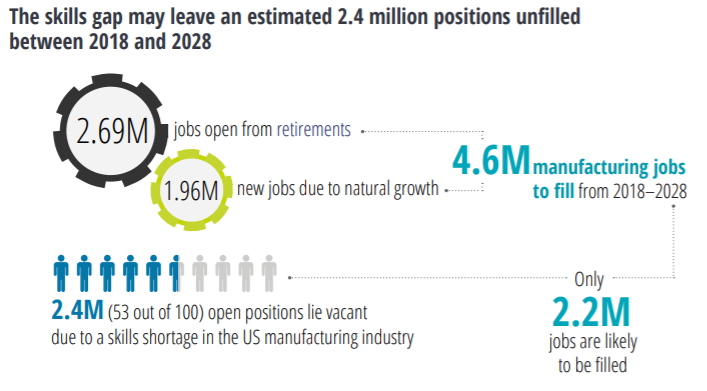
COVID‑19, lockdowns, and social distancing exposed fundamental vulnerabilities in manufacturing. They also accelerated a labor‑market shift: by 2030, Deloitte projects 2.4 million skilled roles in the U.S. will remain unfilled.
Relying on scarce, experienced talent is no longer a viable long‑term strategy. The right technology—paired with a creative, agile workforce—lets companies respond to demand without over‑relying on specialized labor.
Adding flexibility can actually add value. Consumer and B2B demands evolve rapidly, even for high‑mix manufacturers. Custom solutions become more precise, and a skilled team may lack the specific expertise that the right machine can deliver.
Even mass‑production plants face “mass customization” demand that drives growth. An “if it ain’t broke, don’t fix it” mindset fails to anticipate change; flexibility enables proactive adaptation.
Elegant Solutions as a Smart Investment
Automation projects often require multi‑year capital forecasting to assess ROI. Hardware costs usually represent only 20–33 % of the total; programming and integration dominate the balance. This can limit flexibility, especially when part mix varies.
Conversely, adaptable autonomous systems keep integration costs low across any part mix. While they may not pay off when existing systems are already profitable, they can dramatically improve productivity when workforce skills are scarce, making them a worthwhile investment regardless of current performance.
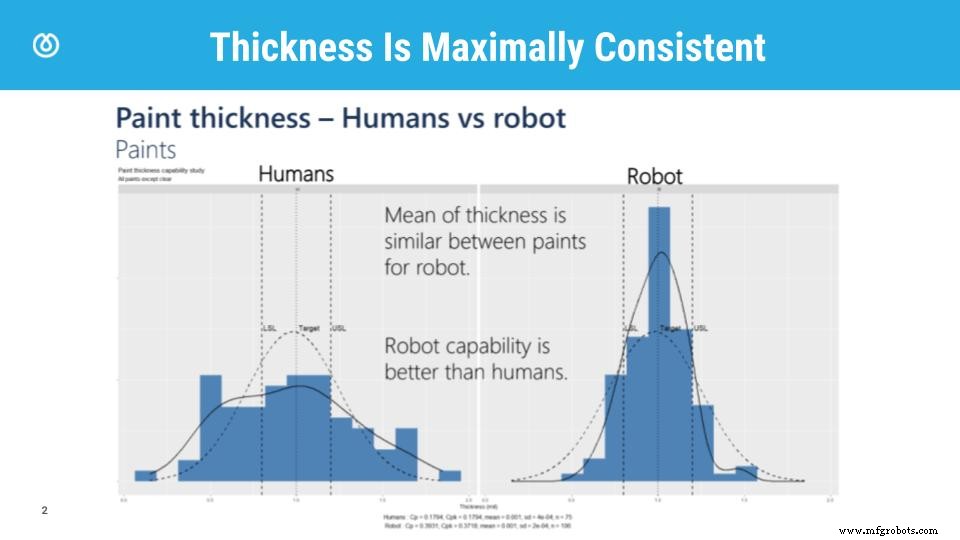
In production lines, low demand allows inefficiencies to persist unnoticed. Bottlenecks only become apparent when demand spikes—often too late to rectify. Autonomous technology smooths these peaks, providing bandwidth during high demand while offering workforce slack during low periods. This balance boosts quality, reduces energy use, and accelerates growth.
Large, complex automation setups also introduce many failure points. Autonomous, modular cells aligned with short‑term production goals consistently outperform monolithic integrations while mitigating Murphy’s Law.
Empowering People for Long‑Term Value
Manufacturing’s true growth potential lies beyond economics; it depends on how firms create jobs, support talent, and serve stakeholders.
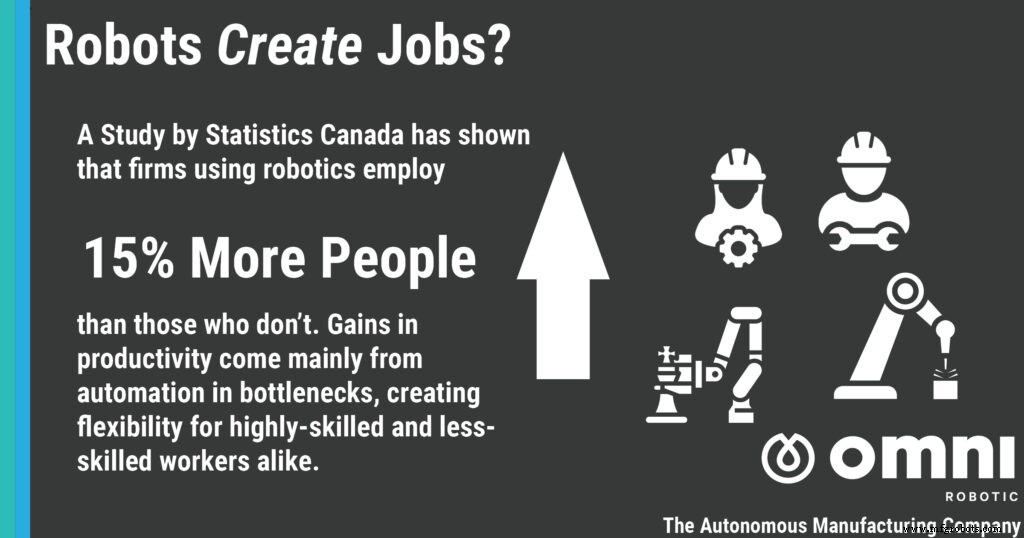
Robotics can create more jobs by enhancing productivity at bottlenecks. When robots handle repetitive, time‑consuming tasks, employees gain flexibility, autonomy, and satisfaction.
This aligns with the Kaizen philosophy—continuous improvement driven by frontline insights. Providing workers with advanced tools amplifies their impact, unlocking unprecedented productivity gains.
Getting Started with Autonomous Manufacturing
Autonomous Manufacturing is not merely a step forward for high‑mix manufacturers—it is a transformative methodology that surpasses the current Industry 4.0 narrative.
It goes beyond connected devices to deliver process improvements that maximize flexibility through cutting‑edge technology. Companies can establish production hubs anywhere with access to raw materials, parts, and markets—benefiting workers, profitability, and the environment.
Omnirobotic offers Autonomous Robotics Technology for spray processes, enabling industrial robots to perceive parts, autonomously plan motion, and execute critical coating and finishing tasks. Leveraging 3D vision and AI-powered Shape‑to‑Motion™ technology, high‑mix manufacturers can finally harness robotics on unprecedented parts without manual programming. See what kind of payback you can get from it here.
Industrial robot
- What is VMC Machining? An Expert Overview of Vertical Machining Centers
- Strand Casting in Manufacturing: Process, Benefits, and Applications
- Press Joining: The Fast, Clean Sheet‑Metal Bonding Technique
- Top 5 Flexible Manufacturing Systems to Drive Speed and Quality
- Understanding Human-Machine Interfaces (HMIs) in Modern Industry
- Smart Manufacturing Explained: Transforming Production with IoT
- Manufacturing 2012: Anticipated Job Recovery in the U.S. as China Costs Rise
- Automated Manufacturing: How Computerized Control Transforms Production
- Microfabrication Explained: Small-Scale Manufacturing for Advanced Technologies
- Robotic Automation Drives Alaska's Manufacturing Growth