



Leveraging Machine Learning to Counteract Automotive Sensor Degradation
As vehicles evolve from legacy systems to cutting‑edge technology, inductive position sensors are set to replace Hall effect sensors. This transition hinges on superior management of automotive sensor degradation.
Microchip Technology has launched inductive position sensors tailored for key automotive applications—including throttle bodies, transmission gear detection, electronic power steering, and accelerator pedals. These sensors deliver position data that is immune to stray magnetic fields and eliminate the need for an external magnet.
Engineers must ensure sensor performance across a wide temperature range, yet they remain concerned about mechanical variations and magnet degradation that can erode accuracy. Inductive sensors, which use a metal element instead of a magnet, exhibit far less aging over time, addressing this core issue.
“Sensor degradation is a critical component to monitor, whether the issue lies within the IC or the external environment,” said Mark Smith, Senior Marketing Manager at Microchip. He emphasized that longevity of the PCB is the primary concern when deploying inductive position sensors.
Microchip’s inductive position sensors—LX3301A, LX3302A, and LX34050—meet ASIL‑B certification requirements, enabling system designers to detect ≥90 % of all single‑point failures. Figure 1 shows the LX3302A’s expanded EEPROM, which supports eight calibration points to maintain measurement accuracy. Source: Microchip
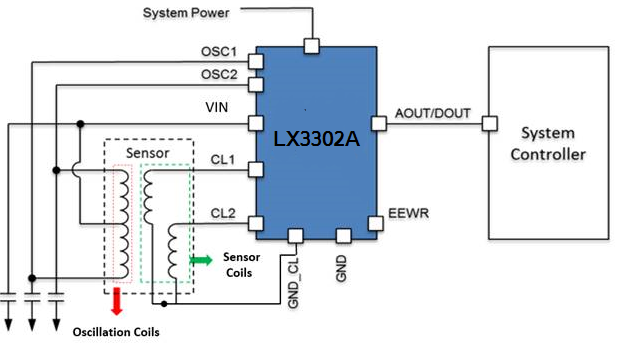
Figure 1. Greater EEPROM space in the LX3302A inductive position sensor facilitates eight calibration points for precise measurement. Source: Microchip
Managing Sensor Degradation
Current industry practice addresses sensor degradation from the ground up to satisfy ASIL standards. Engineers must anticipate potential transistor failures or circuit malfunctions and assess their impact. "It’s a deterministic and time‑consuming approach," Smith noted.
Targeted experiments validate coverage rates, and reliability charts from industry standards help engineers ensure faults are detectable. "It’s a relatively simple system that engineers can handle efficiently," he added.
Modern vehicles typically employ around 50 position sensors, making the shift from Hall effect to inductive sensors pivotal for degradation management. Beyond selecting durable materials, engineers are exploring advanced strategies—most notably machine learning—to streamline degradation monitoring.
Smith explained that machine learning models can perform pattern recognition before failures manifest. "Automotive engineers can analyze data from five different sensors and detect system‑level failures and degradation at a higher level," he said.
Machine Learning Is the Future
While the automotive sector traditionally approaches sensor degradation deterministically, there is significant potential to leverage advanced computing techniques. Machine learning can conduct degradation analysis more efficiently, though the approach remains in its infancy and demands substantial computational resources.
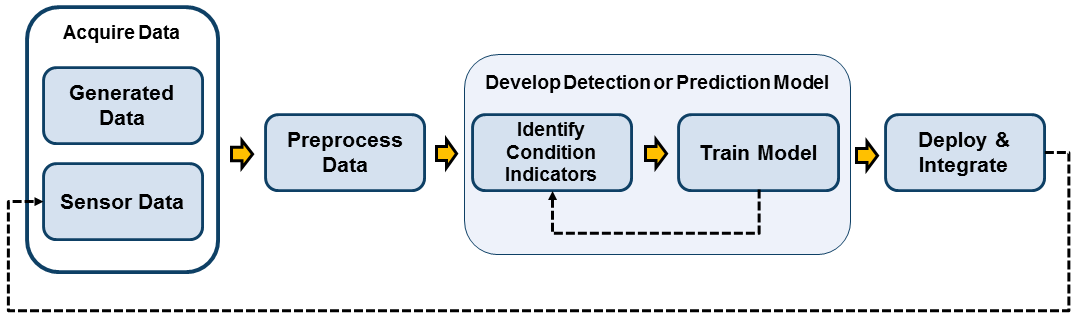
Figure 2. Machine learning, emerging at the sensor level, can model and mitigate automotive sensor degradation. (Source: MathWorks)
By gathering extensive data, feeding it into a machine learning model, and searching for signatures of impending failure, engineers can anticipate issues—an approach already adopted in autonomous vehicle design. "Machine learning is rising at the sensor level, simplifying degradation measurement and improving mitigation efficiency," Smith stated.
Automotive sensor degradation represents another arena where machine learning can deliver significant reliability gains and cost savings.
» This article was originally published on our sister site, EDN.
Embedded
- Mastering Machine Learning on AWS: A Comprehensive Guide
- Harnessing Machine Learning to Optimize MRO Supply Chain Management
- STMicroelectronics LSM6DSOX: Machine‑Learning‑Enabled Inertial Sensor for Precise, Energy‑Efficient Activity Tracking
- STMicroelectronics Launches 2‑Axis IIS2ICLX Inclinometer with Embedded Machine Learning for Ultra‑Low‑Power Precision Sensing
- Deep Learning vs. Machine Learning: Understanding the Key Differences
- Revolutionizing Asset Reliability: Machine Learning for Predictive Maintenance
- Harnessing Machine Learning for Industrial Innovation
- Inside the Role of AI Researchers & ML Engineers at JPMorgan
- Unlocking Machine Learning: Practical Insights for Industry Leaders
- Integrating Machine Learning into PLCnext Controllers