



Key Drivers Behind Successful Open‑Source Hardware Innovation
Over the past decade, open‑source initiatives have reshaped multiple technology sectors. By making the software stack publicly available, developers worldwide can collaborate, share code, and transform concepts into collective achievements that transcend corporate limits. Though initially overlooked, the growing volume and caliber of open‑source projects eventually cemented their status as the industry’s benchmark—yet the same momentum has not yet fully translated into the hardware arena.
In contrast, hardware evolution has traditionally stayed within company walls, fostering proprietary designs that aimed to secure competitive edges. Historically, fragmented, non‑collaborative approaches have produced divergent standards and a fragmented market. Instead of delivering sustainable advantage, these proprietary ecosystems often became bottlenecks, eventually rendering the original standard obsolete—Sony’s Blu‑Ray is a notable example.
A key driver behind this divergence is the reliance on intellectual‑property protection in hardware, prompting firms to keep designs in‑house. This strategy, however, has limited scalability and stifled the pace of hardware platform growth. When the demand for lean yet high‑performance AI solutions surged, established players—FPGA, GPU, CPU—could not meet the specialized inference workloads. Even Arm’s advanced instruction set fell short of keeping pace.
Recognizing the need for custom compute, Amazon and Google began investing in semiconductor R&D to craft inference‑optimized processors. This pivot opened a path toward open‑source hardware initiatives that could bridge the gap between data science and big‑data‑driven intelligence. The following article maps the open‑source software journey and extracts lessons to accelerate open‑source hardware adoption.
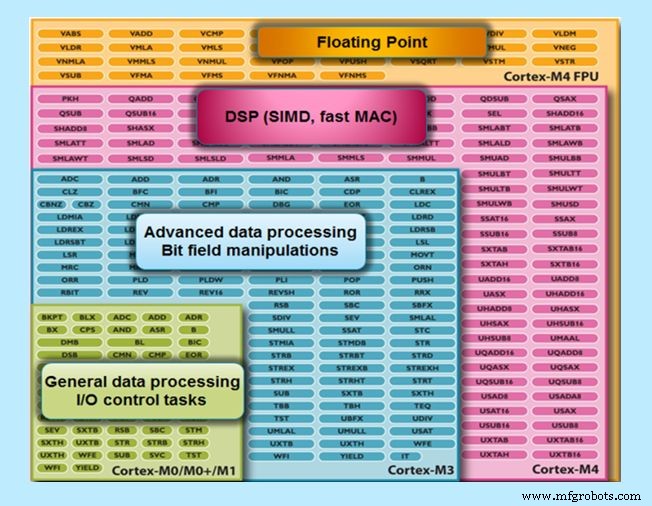
Figure 1: Arm and its instruction set architecture (ISA) have been a knowledge hub for years. (Source: Arm)
When the open‑source movement first emerged over twenty years ago, monetization was unclear, and diverse models gradually evolved. Today, more than 35 million developers contribute code, powering billions of devices and generating immense economic value. Public listings of MongoDB ($7.9 bn), Elastic ($7.3 bn), and high‑profile acquisitions—GitHub by Microsoft ($7 bn), RedHat by IBM ($34 bn), MuleSoft by Salesforce ($6.5 bn)—illustrate the commercial traction of open‑source.
All major corporations now incorporate open‑source components in some capacity, as it enables the rapid delivery of optimised solutions to pressing problems. While the computer and telecommunications sectors consume roughly 60 % of open‑source software, industrial and healthcare markets are increasingly adopting it. The availability of rigorously tested, high‑performance modules dramatically shortens development cycles.
Open source also demonstrates a unique marketing dynamic: users become customers before they realize it. By the time they recognize their reliance on open‑source stacks, they often prefer a commercial license that includes dedicated support, security patches, and long‑term maintenance. This evolution—from Apache‑incubated licences to more business‑friendly models used by MongoDB, Elastic, and Cockroach—has effectively pioneered freemium without the need for aggressive marketing.
The core of open‑source software success lies in identifying a problem that resonates across the industry and allowing the business model to mature organically. As the demand for the code grows, so does developer engagement and capital inflow. Projects that address high‑impact challenges tend to attract a critical mass of contributors, while many smaller initiatives remain community‑driven and free.
Paying for open‑source code is justified by the promise of professional support, rapid security updates, and sustained maintenance—services that cater to varying industry requirements and risk tolerances.
Advent of LinuxOpen‑source software has evolved both technically and commercially, driven by the involvement of leading firms that catalysed long‑lasting ecosystems.
Google’s trailblazing releases—Android, TensorFlow, Kubernetes—demonstrate how open‑source can launch transformative products. Start‑ups that solve a clear pain point, gain mass adoption, and eventually achieve commercial success exemplify this trajectory.
Central to this evolution is Linux, a scalable foundation capable of integrating diverse components and hardware while delivering robust performance. Whether meeting stringent real‑time demands or accommodating architecture‑specific nuances, Linux has consistently fulfilled complex use cases.
Building Linux‑like glueArmed with this software perspective, we turn to open‑source hardware. While hardware has witnessed successes—Arduino’s open‑source microcontrollers—scalability and mass adoption remain elusive.
Arduino, a quintessential open‑source microcontroller platform, showcases how open‑hardware can democratise experimentation and rapid prototyping for researchers and hobbyists alike.
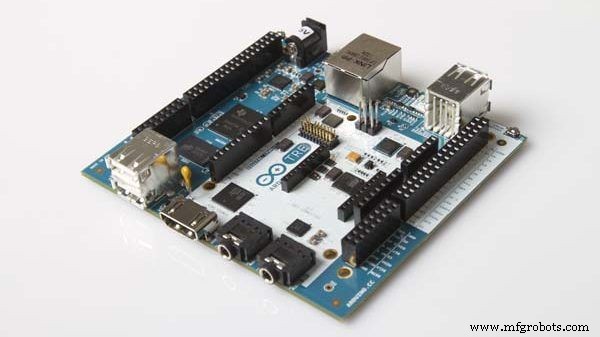
Figure 2: Arduino microcontroller boards are a testament to open‑source hardware’s promise. (Source: Arduino)
Modular hardware promises to let customers mix and match components from multiple vendors, crafting custom devices that match their exact specifications. The concept is compelling, yet translating it into widespread commercial offerings has proven difficult.
The shortfall stems largely from a lack of foundational hardware‑code standards that would make modularity truly functional. The tightly coupled, siloed nature of existing development cycles hampers the creation of reusable, plug‑in modules, especially as processors approach the limits of Moore’s Law and demand breakthrough innovations.
Open‑source hardware must emulate the software path: focus first on performance and reliability, rather than user friendliness. Linux proved that a robust, modular architecture can become the backbone for a diverse ecosystem—an approach that hardware must replicate.
Linux’s ascendancy as the de‑facto server OS and MySQL’s challenge to Oracle underscore how architectural robustness and modularity can disrupt monolithic solutions. Today, Amazon’s modular services illustrate how a fragmented approach can thrive.
What would be the Linux equivalent for open‑source hardware? Building such an ecosystem is hampered by hardware complexity, which makes a universal glue layer difficult to craft. Physical, legal, and economic barriers persist, stalling the creation of a democratic hardware marketplace. Nonetheless, 5G radio‑access‑network prototypes built on open hardware hint that the vision is attainable.
Instruction‑set architectures such as RISC‑V could ignite the same wave of open‑source hardware proliferation that Linux sparked for software. Understanding why early players did not succeed in establishing this ecosystem is essential for future progress.
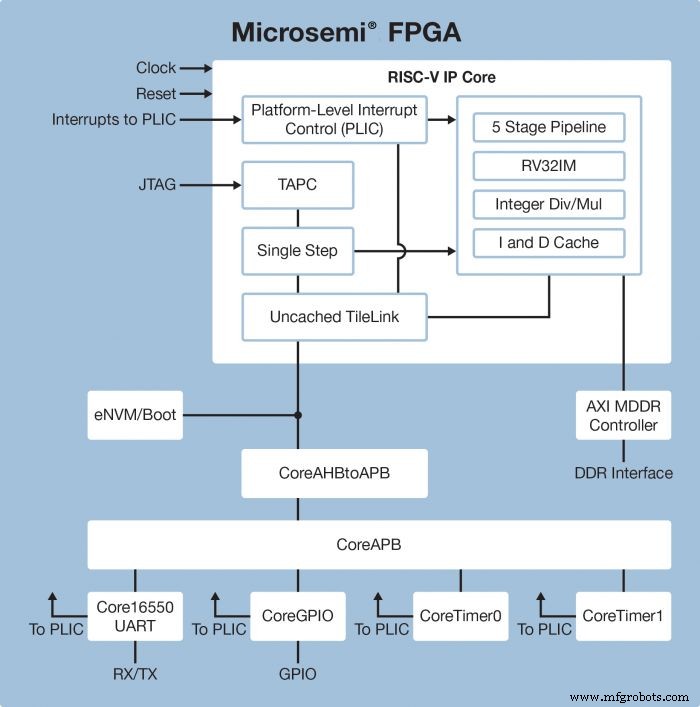
Figure 3: Microsemi has implemented RISC‑V cores in its FPGA designs. (Source: Microchip)
Arm has long served as a knowledge hub, offering a widely adopted ISA that many companies prefer to avoid locking into proprietary options. RISC‑V presents a distinct opportunity to become the new industry standard, especially as Arm’s prospects face consolidation.
Trigger to mass adoptionThe remaining hurdle is the steep learning curve associated with new hardware design tools. The industry has relied on SV‑UVM for decades; introducing a superior alternative would require a significant leap in value.
While open‑source specifications such as PCIe, USB, OpenCL, and OpenCV have proven viable, the full open‑source hardware journey hinges on overcoming the production bottleneck. A new tier of foundries that supports flexible, end‑to‑end pipelines—from RTL verification to tape‑out—would be indispensable.
Incremental improvements to existing toolchains may take a century before they catalyse a transformative shift. Instead, pioneers must chart a bold new roadmap, invest heavily in design tools and production, and retrain designers to adopt a modern, agile hardware development flow.
If the open‑source hardware community can solve the end‑to‑end design and manufacturing puzzle, it will unlock a Linux‑like ecosystem that attracts widespread participation and sustains long‑term growth.
Prasant Agarwal has worked with STMicroelectronics, Samsung, and Solarflare Communications in various strategy, marketing, and product management roles.
Related Contents:
- Extending the RISC‑V architecture with domain specific accelerators
- Taking the mystery out of custom extensions in RISC‑V SoC design
- A guide to accelerating applications with just‑right RISC‑V custom instructions
- RISC‑V ready to come of age
- RISC‑V ISA IP proliferates
- RISC‑V initiative leverages standard platform for custom designs
For more Embedded, subscribe to Embedded’s weekly email newsletter.
Embedded
- The Three Pillars of 3D Printing Success: Hardware, Materials, and Software
- Building the Hardware Foundations of the Metaverse
- Can Open‑Source Hardware Rival Linux’s Legacy?
- Why Every Facility Needs a CMMS Champion – The Key to Successful Implementation
- Building Foundations for Industrial Data Science Success
- Why Open Source Drives Innovation at the Edge – Essential eBook
- Budget-Friendly Prototyping: Tools & Tips for Cost-Effective Innovation
- Maximizing ROI in Smart Manufacturing: Payback & Data-Driven Success
- Choosing the Ideal Electronic Parts Supplier for Business Success
- Expert Guide for Engineers: Selecting Reliable Machine Parts Efficiently