



Designing Cost‑Effective IoT Asset‑Tracking Systems: A Practical Guide

Authored by Ankur Gohel, IoT expert at Volansys Technologies
Asset Tracking Blog Overview
The primary goal of an asset‑tracking system is to streamline workflows, cut inventory shrinkage, and enable process optimisation that boosts overall operational efficiency and productivity.
As Ankur Gohel, a seasoned IoT engineer, explains, “In any asset‑tracking system, real‑time location data of stationary or mobile assets is transmitted to the cloud via a gateway/router over a secure communication channel.”
This article outlines key considerations for building an accurate and low‑cost IoT asset‑tracking solution tailored to your industry. It is split into two parts: Part 1 covers the high‑level architecture, essential components, and cost drivers, while Part 2 delves into protocol compression techniques and popular industry applications.
Advantages of IoT‑Based Asset Tracking
Unlike legacy passive systems, IoT‑enabled asset tracking delivers smart, efficient, and intelligent monitoring. Sensors attached to assets provide real‑time, application‑specific data without human intervention. These sensors can complement traditional tags such as QR codes, RFID, or barcodes.
- Automation of the tracking process
- Real‑time information access
- Live inventory management
- Environmental and usage data collection
- Automated reminders and alerts
- Accurate device location tracking
- Regulatory compliance assurance
- Rapid asset audits
Key Components of an Asset Tracking Solution
A robust system comprises five core elements: Tags, Reader/Hub, Gateway, Cloud, and Mobile App. The selection of each component determines the system’s performance and cost profile.
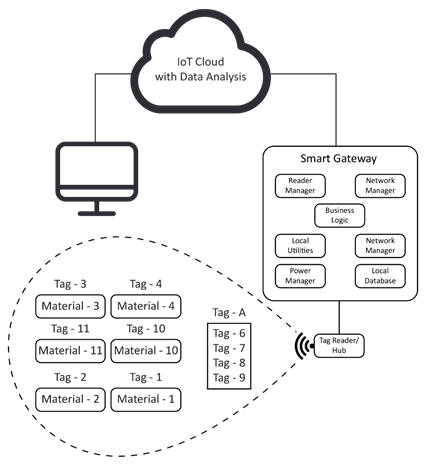
- Tag: The tag is the identity core of every asset. It supports wireless protocols (RFID, QR, Zigbee, Z‑wave, Thread, BLE/Bluetooth 5.1) and may include advanced features like Angle of Arrival (AOA) or Angle of Departure (AoD). Tags can be active or passive.
- Reader/Hub: This device detects nearby tags and forwards the data to the Gateway or directly to the cloud. Modern readers can operate in various modes—Passive Reader, PRAT (Passive Reader with Active Tag), ARPT (Active Reader with Passive Tag), or ARAT (Active Reader with Active Tag).
- Smart Gateway: The gateway orchestrates connectivity to the IoT cloud, buffers data during network outages, performs local analytics, and conserves battery life. It typically runs on lightweight OSs such as VxWorks, AWS FreeRTOS, Zephyr, uC/OS, or Linux, enabling custom application development.
- IoT Cloud: The cloud provides the central interface for real‑time inventory visibility. It supports HTTPS, MQTT, CoAP, and can integrate AI/ML analytics to transform raw data into actionable insights. Multiple cloud services can be layered for monitoring, data analysis, and gateway management.
- Connected Mobile Application: A mobile app offers on‑the‑go visibility, navigation assistance, and alerts for critical events. It serves as the primary user interface for many solutions.
Major Cost Drivers: Tags vs. Infrastructure
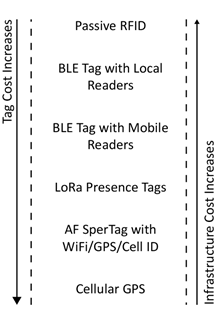
Optimising an asset‑tracking system hinges on balancing tag cost against infrastructure investment. High‑end tags are pricier but often require less complex infrastructure, whereas low‑cost tags demand a more sophisticated network of readers and gateways.
Our forthcoming article will explore wireless protocol selection, influencing parameters, and how industry‑specific applications benefit from IoT‑based tracking.
The author of this blog is Ankur Gohel, IoT expert, Volansys Technologies.
About the Author
Ankur Gohel brings over eight years of experience in IoT, specializing in RF‑based connectivity and cloud integration for industrial applications. As an Embedded Engineer at Volansys Technologies, he has led the design of numerous high‑performance tracking solutions.
Internet of Things Technology
- SuperTag: Advanced Asset Tracking & Monitoring for Modern Supply Chains
- Strengthening IIoT Asset Tracking: Proven Security Practices
- Choosing the Right IoT Connectivity: XLE vs Bluetooth Low Energy for Enterprise Asset Tracking
- Four Phases of IoT Asset Management: A Blueprint for Digital Transformation
- 16 Key Advantages of Asset Management and Tracking Software
- What Is Asset Tracking? A Practical Guide to Managing High‑Value Assets
- How IoT Asset Tracking Is Revolutionizing Manufacturing Efficiency
- How IoT is Revolutionizing Asset Management Solutions
- Ruuvi Node: Open-Source, Industrial-Grade Gateway for LTE‑M/NB‑IoT, Thread, Zigbee, GPS, and NFC Asset Tracking
- Choosing the Right Wireless Protocol for IoT Asset Tracking Solutions