



Rethinking IIoT: Prioritize Impact Over Technology to Excel in the Fourth Industrial Revolution
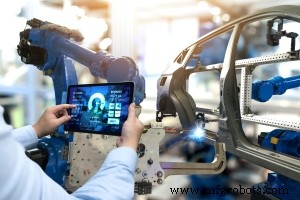
Industry 4.0, the Industrial Internet of Things (IIoT), and smart manufacturing are transforming production landscapes. While technology powers these changes, the true success metric is the tangible business value each solution delivers.
As managing director of Novotek UK and Ireland, a specialist in industrial automation, I’ve seen the pitfalls of treating IIoT as a silver bullet. The buzzword hyper‑automation often suggests an effortless, fully automated environment, but in practice it can lead to an overly complex web of “smart” systems that actually hinder rather than help.
Over‑Automated Plants
Many factories deploy dozens of individual automation components—each intended to perform a single task—when a single integrated solution could accomplish the same objective more efficiently. This fragmentation is especially prevalent in software platforms, where overlapping capabilities generate redundant investment and operational friction.
Missed Opportunity
The common focus on acquiring the latest IIoT-enabled widgets—whether sensors, controllers, or edge devices—often occurs in isolation, with payback calculated on a component‑by‑component basis. The result is a patchwork of technology that inflates costs and complicates maintenance.
When businesses first map their data requirements and cross‑functional use cases, they uncover hidden overlaps between departments. This alignment prevents duplicate spending on IT and OT systems and ensures that every investment directly supports a clearly defined goal.
Successful digital adopters follow a proven framework: start by defining strategic objectives, then work backwards to select the technology that best enables those outcomes. This approach nurtures a culture of collaboration and innovation, allowing stakeholders to see how their individual needs intersect.
Illustrating the Challenge
Our team frequently encounters scenarios where field‑service monitoring software and plant SCADA systems provide virtually identical performance insights. Because technicians and plant managers are unaware of each other’s tools, both systems are maintained independently, inflating network complexity and cost.
Defining business goals first, then identifying the systems that support them, turns technology into a strategic enabler rather than a distraction. Partnering with experienced automation consultants—such as Novotek UK and Ireland—ensures that the vision is not only realistic but also fully achievable.
The fourth industrial revolution and IIoT represent powerful opportunities, but they must be leveraged to advance core business objectives. When the focus shifts from technology for technology’s sake to technology that delivers measurable impact, companies unlock the full potential of the 4IR.
The author is George Walker, Managing Director, Novotek UK and Ireland
Internet of Things Technology
- Industrial Internet of Things (IIoT): What It Is, Why It Matters, and How It Drives Industrial Transformation
- Industrial Internet Security Framework: Safeguarding IIoT Systems – Why It Matters
- A Practical Taxonomy for Industrial Internet of Things (IIoT) Systems
- Securing Industrial Control Systems and IIoT Amid a Growing Threat Landscape
- How AirFinder and Apple AirTags Shape Industry 4.0: Four Key Insights
- How 5G Fuels IoT: Current State, Opportunities, and Key Challenges
- How Industrial IoT Sensors Drive Modern Factory Efficiency
- How IIoT & Industrial Robotics Drive Factory Transformation
- How Globalization and Industry 4.0 Are Transforming International Business
- How Automation Is Transforming the Fabrication & Welding Industry