



Can IoT End World Hunger? HPE & WEF Say Yes—Here’s How
In an ambitious move, Hewlett Packard Enterprise (HPE) and the World Economic Forum (WEF) are launching a grand challenge to end world hunger by 2030, inviting partners and cutting‑edge technologies to join the effort.
"Our core purpose is to advance how we live and work," said HPE Chief Technology Officer Mark Potter. “From the day Bill Hewlett and David Packard founded the company in a garage, the DNA has been about creating technology that benefits society, not just products.” Potter stressed that the mission now extends beyond innovation to positively impacting communities worldwide.
The challenge is stark: today roughly 800 million people suffer chronic undernourishment and 2 billion lack essential micronutrients. With droughts on the rise and the UN projecting an 8.5 billion population by 2030 (nearly 10 billion by 2050), farmers will need to produce 70 % more food than current consumption levels, according to WEF forecasts. “It’s a shame if we fail to meet this goal,” Potter warned. “We’re not looking for a single magic bullet but a series of coordinated solutions that bring government, industry, and academia together.”
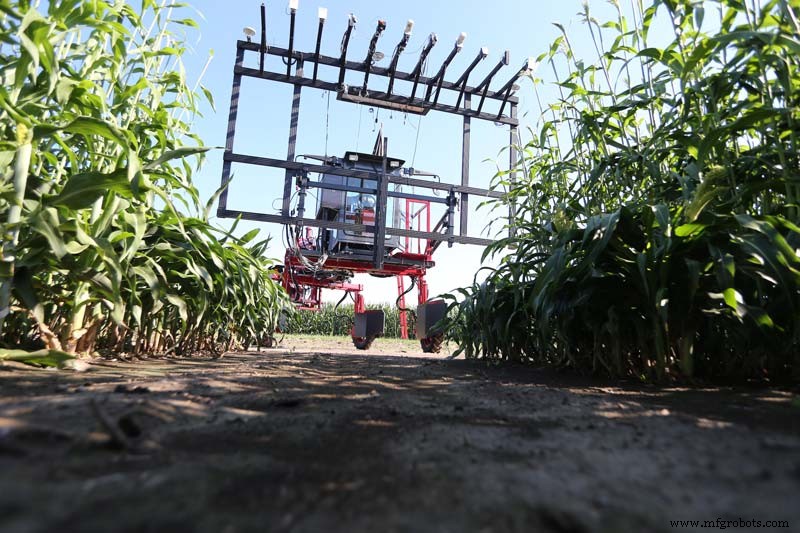
WEF’s matchmaking expertise has already identified key partners, including McKinsey, to explore how technology can accelerate food‑system transformation. Purdue University’s College of Agriculture has joined the initiative, collaborating with HPE on wireless IoT implementations and research that could later incorporate autonomous tractors, robotics, and drones.
Purdue’s agricultural researchers challenged HPE to focus on economic development, job creation, and commercialization of promising IoT and AI research. "We met with about 50 researchers and realized we could help deploy technology solutions that accelerate their findings," said Janice Zdankus, HPE Vice President working with Purdue. Together, they launched a proof‑of‑concept that has grown into a broader platform for sharing IoT insights with farmers across the United States and abroad.
[Industrial IoT World is the event that takes IIoT from inspiration to implementation, supercharging business and operations. Get your ticket now.]
So far, HPE’s digital infrastructure is processing 113 terabytes of data per week from Purdue’s farms. Current research includes weather‑impact studies, hyperspectral imaging for chlorophyll assessment, CRISPR‑driven gene editing for nutrient density, and livestock health monitoring that reduces unnecessary antibiotic use.
As agriculture becomes increasingly data‑driven, machine learning and deep learning will play critical roles in improving efficiency for both large agribusinesses and small family farms, Potter noted.
The coalition is also examining potential unintended consequences—policy shifts, health and safety concerns, and the equitable application of these technologies across diverse regions—to ensure responsible deployment worldwide, Zdankus added.
Beyond the obvious health benefits, ending world hunger could accelerate societal progress. "When a society is no longer focused on survival, it can elevate living standards and innovate faster," Potter said, envisioning a future where a 10 billion‑person planet thrives together.
Internet of Things Technology
- How Design Thinking Unlocks IoT Monetization for Manufacturers
- How IoT Drives Climate Action: Turning Connectivity into Carbon Savings
- How IoT Empowers Children with ASD to Learn, Play, and Thrive
- IoT World 2019 Preview: 9 Tracks, 4 Industrial Sessions, Keynotes from CEOs, 5G Insights & Developer Focus
- Edge Computing & IoT Strategy Insights from IoT World 2019
- Harnessing IoT to Protect the Planet: Proven Success Stories
- IoT Meets LPWA: Why Low‑Power Wide‑Area Networks Are the Future of Connected Infrastructure
- Harnessing IoT to Accelerate Smart Cities and Boost UK Connectivity
- Leveraging IoT to Drive Retail Success in the Post-Pandemic Era
- Boost IT Performance: Leveraging AIOps & Observability to Reduce Downtime & Enhance User Satisfaction