



iOS vs. Android: Which Platform Offers Superior Enterprise App Security?
Enterprises increasingly prioritize mobile solutions, and iOS has emerged as the most favored platform for secure, high‑performance business apps. The 2016 Adobe Enterprise Mobile Apps Report highlighted the growing demand for mobile initiatives, while Apple’s dominance in the global smartphone market further cements its position in corporate environments.
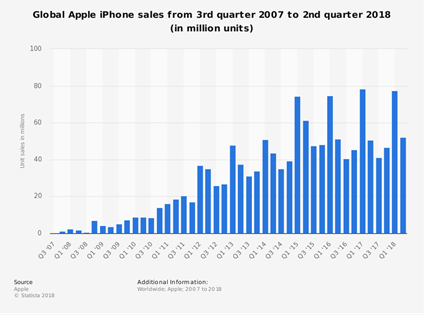
The graph illustrates a steady climb in Apple’s iPhone sales, underscoring the platform’s reliability and widespread adoption among business users.
iOS is renowned for its robust architecture and stringent security protocols, traits that make it a natural fit for enterprises needing to protect sensitive data. However, Android’s open‑source model and tight integration with Google services have propelled it into a strong competitive position, especially in terms of flexibility and device diversity.
Which platform delivers stronger security for enterprise app design?
Security: The Cornerstone of Enterprise Applications
Globally, security is paramount for businesses that handle confidential data and customer information. A single breach can lead to substantial financial losses, data corruption, and reputational damage.
For example, a banking app that processes account details must enforce the highest security standards to protect thousands of customers.
Enterprise application security is critical because:
- It safeguards sensitive data and ensures privacy.
- It protects the company’s reputation by mitigating cyber‑attack risks.
Addressing Security Vulnerabilities in iOS and Android
According to Norton, both iOS and Android encounter security threats, but the scale differs. The CVE Details database lists 1,457 vulnerabilities for iOS and 1,834 for Android.
iOS consistently reports fewer vulnerabilities. In 2018, only 86 were identified compared to 387 in 2017, reflecting swift patching and proactive updates. Android, meanwhile, still contended with 301 vulnerabilities in 2018.
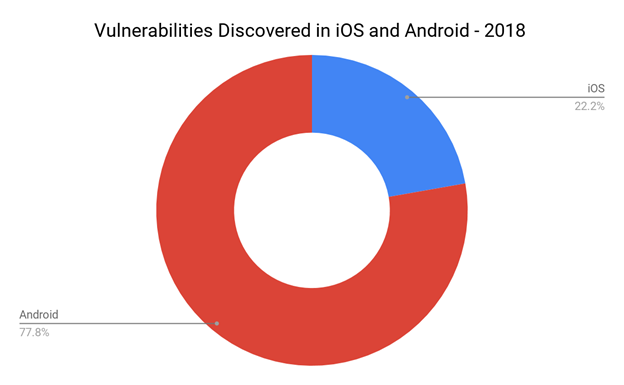
Apple’s rapid rollout of updates and bug fixes has mitigated many risks, whereas Android’s fragmented ecosystem has slowed consistent patch deployment.
Android and iOS from a Security Perspective
Enterprise apps differ from consumer ones: they embed additional safeguards to protect corporate data. Developers prioritize strong encryption, certificate pinning, and cloud integration to enhance security.
Threat Landscape
Android’s open‑source nature allows third‑party apps, which is why 97% of malware targets Android. This inherent risk makes Android a less suitable choice for sensitive business operations.

iOS’s closed ecosystem restricts third‑party app installation, reducing exposure to malware. While vulnerabilities exist, they are easier to remediate through mandatory updates.
Device Fragmentation
Fragmentation increases security risk by expanding the attack surface. Android’s numerous OS versions create higher fragmentation, whereas iOS’s limited versions maintain a tighter, more secure environment.
Software Security Management
Both platforms emphasize security, issuing frequent updates. iOS requires mandatory updates, ensuring devices remain protected. Android allows users to defer updates, potentially leaving devices exposed.
Enterprise Management: iOS vs. Android
Both platforms support mobile device management (MDM) for business use, but iOS excels in centralized administration.
With iOS you benefit from:
- BYOD support through robust MDM tools.
- Centralized device control across the organization.
- Enhanced customer experience that drives operational efficiency.
Android’s varied manufacturer implementations hinder consistent MDM deployment, limiting centralized oversight.
iOS Sets the Benchmark for Enterprise App Design
Enterprise adoption increasingly favors iOS. Jamf’s Annual Apple Trends Survey reveals that 91% of enterprises rely on Apple devices for core operations.
Apple’s closed‑source model and rigorous security protocols make iOS ideal for protecting corporate data and communications. Centralized administration further simplifies device management.
While Android’s openness offers flexibility, its vulnerability profile and fragmentation present challenges for enterprise deployment. Nevertheless, ongoing improvements may shift the balance in the future.
Author Bio

Vinod leads the development of specialized mobility solutions across logistics, media, and non‑profit sectors. He mentors and coaches a team of Project Coordinators & Analysts at Fingent.
https://www.facebook.com/vsaratchandra
https://in.linkedin.com/in/vsaratchandran
Internet of Things Technology
- Cisco IoT Webinar Recap: Expanding Enterprise Connectivity with Cisco IoT Solutions
- REWE International Leverages Cisco Catalyst App Hosting to Streamline IoT Deployments
- IoT Security Services Market to Reach $8 B by 2026 Amid 5G Expansion
- Securing IoT Embedded Designs with Advanced Security ICs
- Essential Hardware Security Vulnerabilities Every Engineer Must Understand
- Streamline Electrical Harness Design with E3.series
- Control NeoPixel LED Strip via Wi-Fi: ESP8266 Project with Android App
- Control Your Arduino Robot Arm via a Dedicated Android App
- 8 Key Security Challenges Facing Industrial IoT
- Maximizing Production with Advanced Additive Manufacturing Software