



Deploy Predictive Maintenance Without Machine‑Learning Expertise
A growing perception among engineers is that predictive maintenance is now an almost exclusive domain of AI techniques, forcing them to acquire machine‑learning skills. In reality, experts at MathWorks show that robust predictive maintenance can be built without deep ML knowledge.
During a recent talk with EDN, senior product marketing manager Aditya Baru outlined a four‑step workflow and highlighted specialized tools that cover each phase.
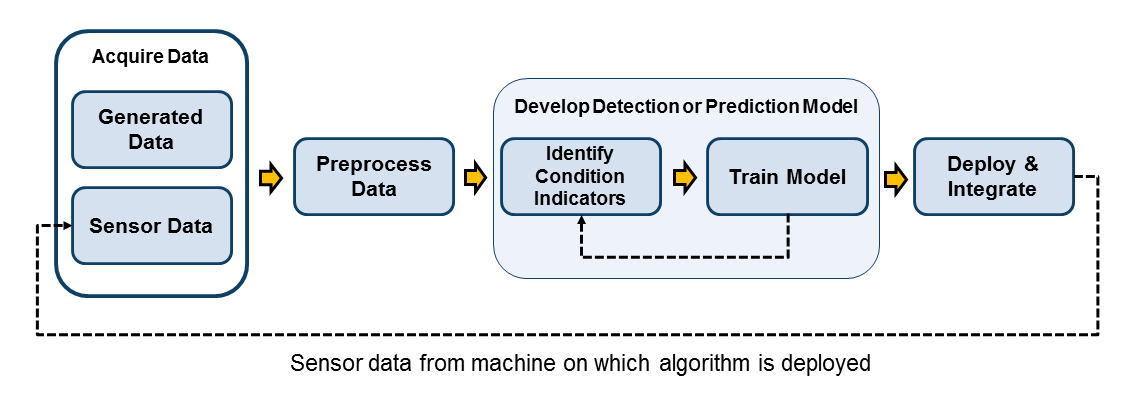
Figure 1. A basic predictive maintenance workflow comprises four steps. Source: MathWorks
1. Data processing
For engineers who are not data scientists, sifting through the vast amounts of raw sensor data generated by industrial assets—wind turbines, generators, pumps, motors—can be daunting. A jet engine or an oil pump in an exploration operation can easily produce a terabyte of data per day, making fault detection in such volumes seem impossible.
Baru explains that engineers can start by monitoring incoming data streams for subtle changes, identifying early signs of degradation, and determining the root cause of abnormal behavior. For example, spectral analysis of a continuously spinning pump can reveal the fault frequencies that distinguish normal operation from impending failure.
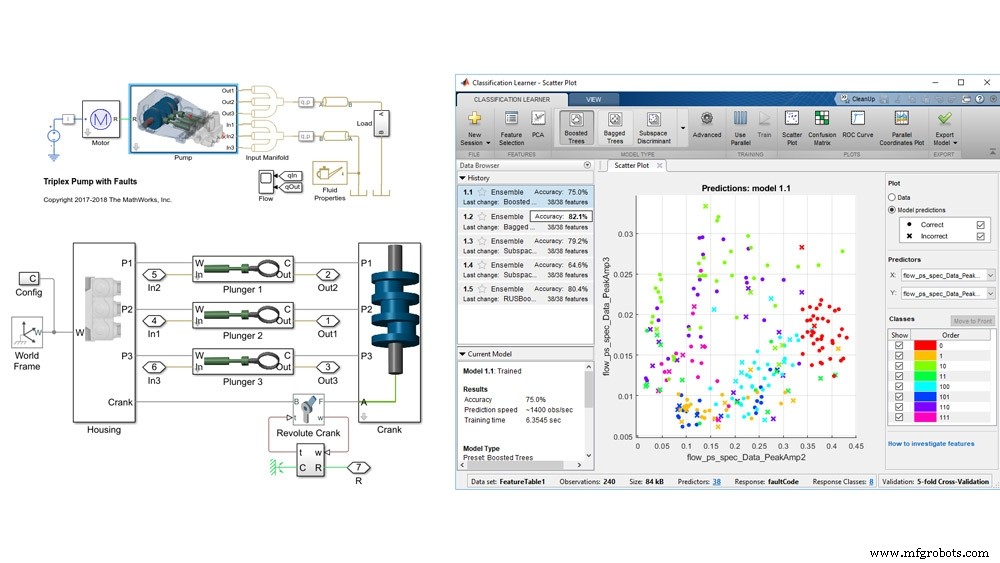
Figure 2. Engineers can detect leaks and clogs in pumps by tracking changes in motor friction. Source: MathWorks
2. Condition indicators
When faced with 100 samples of time‑series data, the goal is to reduce them to a single, information‑rich number—a condition indicator. This data‑reduction step condenses a large dataset into a manageable set of features that still capture all relevant dynamics.
In a recent collaboration with Daimler Mercedes, MathWorks tools distilled massive time‑series data from a manufacturing line into a compact feature set—patterns, time delays, and other statistics—shrinking the data footprint by a factor of 250.
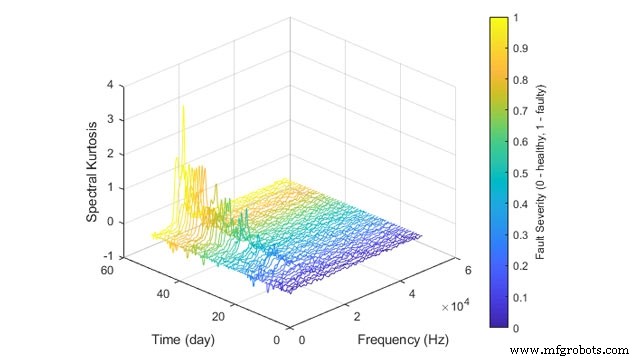
Figure 3. Engineers can extract features from raw sensor data and create condition indicators using time‑ and frequency‑based techniques. Source: MathWorks
3. Predictive model
With a condensed dataset that faithfully represents the original data, engineers can employ a range of classical modeling techniques—time‑series, statistical, or probability‑based—without needing deep AI or ML expertise. These methods are well‑established in the engineering community and are supported by MATLAB’s Predictive Maintenance Toolbox.
Baru cites Safran, an aerospace company that leverages signal‑conditioning techniques in MATLAB to forecast component failures, demonstrating that traditional engineering methods remain highly effective.
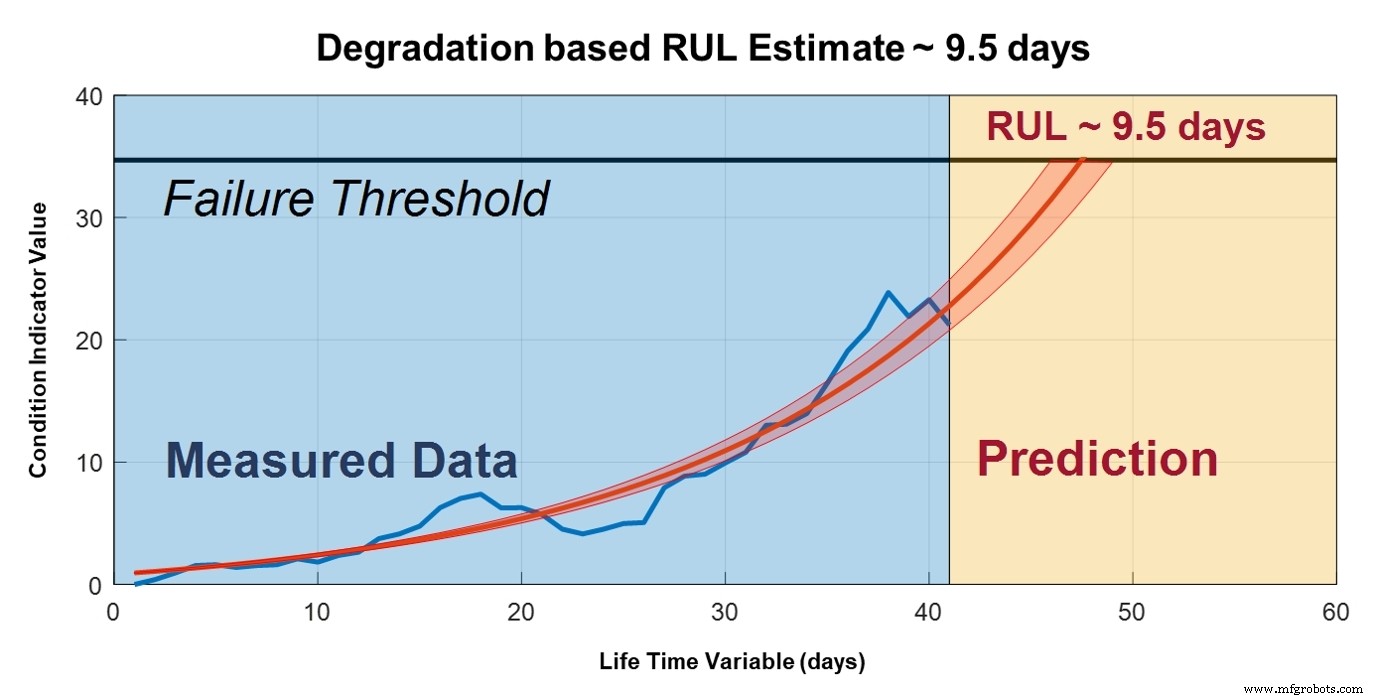
Figure 4. Predictive Maintenance Toolbox enables engineers to estimate the remaining useful life (RUL) and provide confidence intervals associated with the prediction. Source: MathWorks
4. Algorithm deployment
The final and arguably most critical step is deploying the predictive model into production. Engineers have several options: embed the model locally on the machine, run it on a nearby edge computer, or stream data to cloud services when connectivity permits.
Implementing predictive maintenance via this four‑step workflow empowers engineers to deliver a maintenance service that keeps machines operational 90% of the time. A suite of specialized tools is available to manage each step efficiently.
>> This article was originally published on our sister site, EDN.
Internet of Things Technology
- Predictive Maintenance: Current Landscape and Future Directions
- How Preventive Maintenance Paves the Way for Predictive Maintenance Success
- Predictive Maintenance: The Complete Guide to Reducing Downtime and Maximizing ROI
- From Reactive Repairs to Predictive Reliability: Elevating Maintenance for Peak Productivity
- Predictive Maintenance: Unlocking Efficiency and Risk Reduction with Data-Driven Insights
- Mastering Predictive Maintenance at Scale: Proven Strategies for Success
- Predictive Maintenance Explained: How to Minimize Downtime and Maximize Asset Performance
- Predictive Maintenance: Harnessing Continuous Intelligence for Unmatched Asset Reliability
- Maintenance Data Explained: The Key to Reliable Asset Management
- Overcoming Common Hurdles in Predictive Maintenance Implementation