



UFS 3.0 Card Extension Doubles Speed, Cuts Power for Mobile, Automotive, IoT & Edge AI
Toronto – The latest revision of the Universal Flash Storage (UFS) Card Extension Standard, JESD220‑2B v3.0, delivers twice the throughput of its predecessor while tightening power usage, positioning it for a new wave of high‑speed, low‑power applications in mobile, automotive, IoT and edge AI.
Version 3.0 aligns closely with the popular UFS 3.0 embedded device standard that powers many high‑end smartphones. It raises the maximum interface bandwidth from 600 MB/s to 1.2 GB/s, meeting the demands of 5G data rates and ultra‑HD video content.
Designed for “instant‑on” environments, the UFS card now supports boot capability. Devices can start up faster by reading the operating system directly from a removable UFS card, a feature that is especially valuable in smartphones, automotive infotainment systems and IoT edge devices.
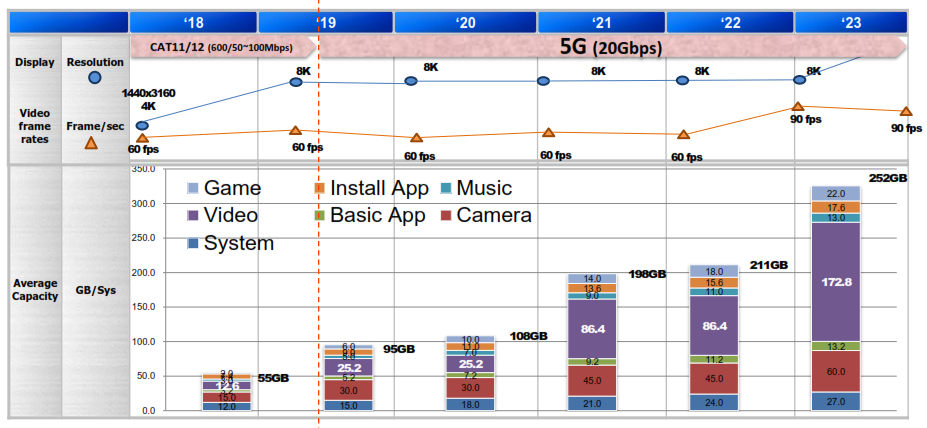
The UFS card specification updates and improvements are aimed at meeting the increased transfer speeds of 5G and content sizes of ultra‑HD video. (Image source: HeeChang Cho, JEDEC)
Version 3.0 streamlines the interface by removing features unnecessary for removable media—such as Product State Awareness, Replay Protected Memory Block, Context, Priority of Logical Unit, and Dynamic Capacity—and simplifies logical‑unit management. These changes reduce development complexity and improve interoperability.
“Mobility remains the core driver,” says HeeChang Cho, co‑vice‑chair of JEDEC’s Electrical Specifications and Command Protocols subcommittee. “High performance, high reliability, and low power are non‑negotiable for 5G, automotive, IoT, and edge AI.” He notes that 5G speeds and ever‑larger media files are pushing smartphones toward faster, larger storage solutions.
“UFS was built for mobile from day one,” adds Desi Rhoden, chair of JEDEC’s Solid State Memories committee. “Doubling performance without a proportional power increase is a significant engineering achievement.” He stresses that reliability is paramount, especially in automotive contexts where failure could compromise safety.
Embedded UFS powers most modern smartphones, but a card adds flexibility while retaining the performance of integrated controllers. A bootable card enables fully self‑contained devices that rely solely on the card for all memory needs. Security can also be confined to the card, simplifying cryptographic management.
Fast boot times are now expected by consumers and critical for vehicle infotainment systems. “When you turn the key, you shouldn’t wait for the system to load,” Rhoden notes.
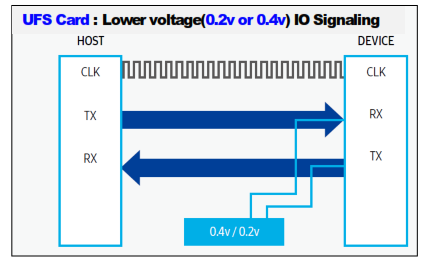
The UFS Card’s low power consumption profile makes it ideal for smartphones and IoT edge devices, as its power reliability contributes overall stability. (Image source: HeeChang Cho, JEDEC)
IoT edge devices also benefit from UFS’s high reliability and low power. The boot feature allows the card to serve as both primary and removable storage, while continuous command support means the host can issue new operations without interrupting ongoing data transfers.
Reaching its third iteration, the UFS card specification is mature yet still flexible, Rhoden observes. “The interface can wrap around any persistent memory type,” he explains, “so we’re essentially defining the protocol, not the memory itself.”
>> This article was originally published on our sister site, EE Times.
Internet of Things Technology
- Defining the Edge: Where Edge Computing Truly Happens
- IoT Edge Computing: Bridging Devices and Cloud for Real‑Time Insights
- AImotive Achieves 98% Vision Efficiency on Nextchip Apache5 NPU
- Choosing Industrial Flash Storage: A Comprehensive Guide to Reliability, Temperature, and Long‑Term Support
- ept EC.8: 0.8 mm Pitch High‑Speed Edge Card for 24 Gbps Transfer
- Hyperstone Showcases Next‑Gen SSD Controller & Health Monitoring at Embedded World 2019
- Renesas Launches 28 nm Automotive MCU with Virtualization‑Assisted Safety Features
- NXP & Moter Launch Edge Platform Bridging Vehicle Data to Insurance Ecosystem
- Protecting Flash Memory in IoT & Edge Devices: Best Practices & Security Trends
- Driving Innovation: How Edge Computing Is Transforming the Automotive Industry