



3D NAND Flash Evolves: Manufacturers Push Limits in Capacity, Reliability, and Performance
The global storage market is experiencing a surge in demand for NAND flash, driven by the relentless growth of data‑intensive applications such as IIoT, smart factories, autonomous vehicles, and edge analytics. As these use cases evolve, the need for higher capacity, faster access, and greater reliability has pushed manufacturers toward more sophisticated architectures.
In a recent interview, Lena Harman, marketing communications manager at Hyperstone, highlighted how 3D NAND flash is shaping the future of data storage. “NAND flash is rapidly becoming the backbone of global storage,” Harman noted. “Its dominance has spurred continuous innovation over the past two decades, prompting manufacturers to refine process flows, increase cell density, and shrink feature sizes. The transition to 3D architecture has mitigated many of the challenges inherent in 2D NAND.”
Unlike conventional memory, NAND flash lacks built‑in logic; it relies on a flash memory controller to orchestrate data flow between a host interface and the raw memory cells. The controller’s design must accommodate the specific protocol of each form factor—USB, SATA, CF PATA, or SD—ensuring reliable operation across diverse platforms.
3D NAND: Floating‑Gate vs. Charge‑Trap
2D NAND offers excellent access times, low latency, and small form factors, but the 15 nm limit has introduced significant error rates and reduced data integrity. 3D NAND addresses these issues by stacking multiple layers of cells, effectively increasing storage density without shrinking individual cell size.
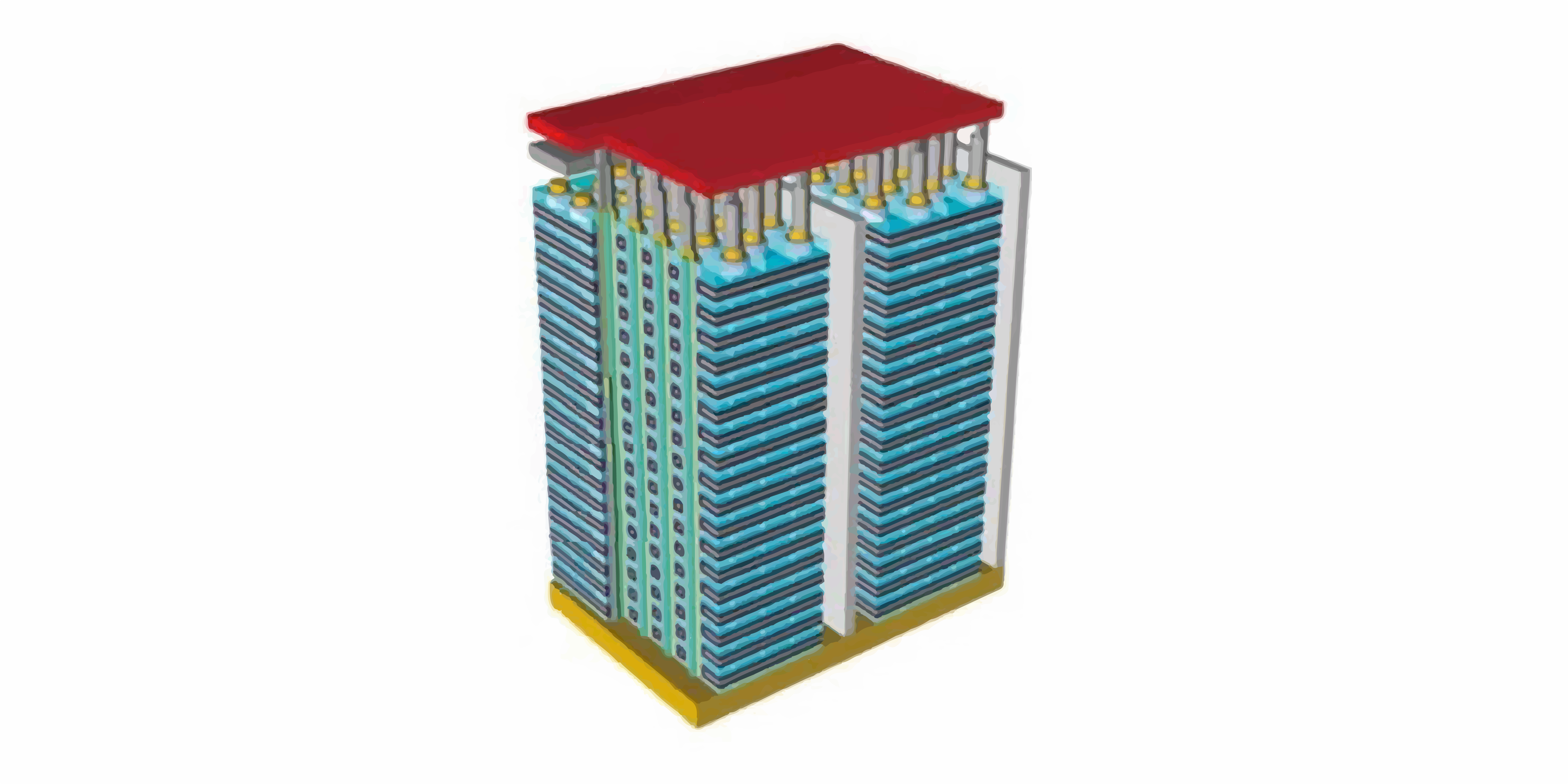
3D NAND Flash
3D NAND delivers higher density, allowing suppliers to produce gigabyte‑rich devices on a single silicon wafer while maintaining yield. The architecture stacks layers of cells, each separated to minimize interference, and can be built using either floating‑gate or charge‑trap technology.
Floating‑gate cells store charge on an isolated gate situated between the channel and control gate. In contrast, charge‑trap cells capture charge within silicon‑nitride traps. Both approaches rely on a robust flash memory controller to manage data integrity and performance.
With the proliferation of 3D NAND, the demand for high‑end controllers has surged. These controllers enhance endurance and longevity by employing advanced error‑correction schemes and sophisticated data‑management algorithms.
Current 3D stacks reach up to 176 layers, and while there is no hard physical ceiling, further expansion may require hybrid stacking techniques. Over the last decade, these advancements have made high‑capacity drives more accessible worldwide, albeit with complex and costly manufacturing.
Flash Controllers: The Backbone of Reliable Storage
Flash controllers translate host commands into NAND operations, eliminating the need for bulky connectors while preserving interface standards. Hyperstone’s U9 family delivers a turnkey solution for industrial, high‑endurance flash drives and modules that support USB 3.1 SuperSpeed (5 Gbps). Its firmware incorporates proprietary FlashXE (eXtended Endurance) technology.
FlashXE leverages Bose–Chaudhuri–Hocquenghem (BCH) codes, complemented by a Generalized Concatenated Codes (GCC) module that rivals LDPC in error‑correction performance. When deployed as a Disk‑on‑Board (DoB) solution—discrete components soldered directly onto the host PCB—this architecture offers deep‑embedding capability, cost efficiency, and full control over the Bill of Materials.
>> This article was originally published on our sister site, EE Times Europe.
Internet of Things Technology
- Flash ADC (Parallel Analog‑to‑Digital Converter) – Design, Operation, and Applications
- What Is a Differential? Understanding Its Role, Types, and Maintenance
- Manufacturing Trends for 2021: Cloud, AI, 3D Printing, Blockchain, Cobots & RTLS
- FusionHD: Intelligent Flash Memory for Next‑Gen IoT
- Hyperstone Showcases Next‑Gen SSD Controller & Health Monitoring at Embedded World 2019
- Hyperstone Unveils FlashXE Technology, Boosting 3D NAND Reliability
- Swissbit Launches U‑50n Nano USB 3.1 Flash Drive – Rugged, High‑Performance Storage for Industrial & IoT
- How Data Visualisation Drives Efficiency for Machine Builders
- 5 Cutting‑Edge Technologies Transforming Modern Manufacturing
- How Advanced Robot Simulation Software Accelerates Integration & Cuts Costs for Manufacturers