



Startups Push Sensors to Power Thought‑Driven Smart‑Home Analytics
SAN JOSE, Calif. — Petal, a two‑year‑old startup, is pioneering a brain‑wave monitoring platform that could enable mobile and cloud leaders to tap into users’ thoughts. The company showcased its technology at the Sensors Expo, where it answered Google’s invitation for smart‑home devices to extend its Assistant ecosystem.
While real‑time thought monitoring is far from mainstream, the sector is rapidly climbing the value chain—from raw sensor hardware to advanced software and data analytics, according to several exhibitors.
Petal leverages off‑the‑shelf EEG headsets to capture brain signals, then processes the data with custom neural‑network models built on Google’s TensorFlow framework. Its demo software lets players control video games with their thoughts.
The startup impressed Samsung during a demonstration at the company’s Korean headquarters. Petal is now looking to partner with Google’s home and embedded teams and plans to ship a developer kit within a month that supports Android, iOS, macOS, and Windows.
Google aims to grow its ecosystem to 35,000 certified devices that can interact with Assistant’s APIs. Assistant relies on HomeGraph, a platform that mines smart‑home data for actionable insights.
“Today the service is voice‑centric, but the future lies in contextual understanding and visual cues—areas where additional sensors will be crucial,” said Wendy Kam, Google’s business development manager. “We need more devices with sensors to deliver a richer, predictive experience.”
Existing partners include Philips Hue for lighting and LG and iRobot for appliances, but Kam noted that the Assistant ecosystem is still in its infancy. “If your sensor can work across devices, let us know so we can define the traits and APIs,” she added.
Google competes with Apple, Amazon and, in China, Baidu, all of whom are building their own smart‑home ecosystems. No universal standards yet dictate how devices can support multiple services.
Google plans to launch a home‑security service comparable to Amazon’s Alexa Guard and is driving a TensorFlow Lite initiative to run deep‑learning models on its own controllers in just tens of kilobytes, enabling low‑latency embedded services that don’t require cloud connectivity.
In the long term, third‑party add‑ons—such as door and window security devices—will become embedded in new homes and furnishings. “Clients often ask how to future‑proof their businesses, and we steer them toward system integrators,” Kam said.
This trend reflects a broader shift toward software‑as‑a‑service models, a sentiment echoed by many speakers at the event.
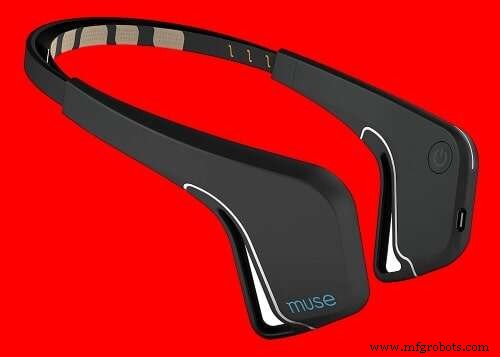
Startup Petal uses the Muse headset from InteraXon. (Image: InteraXon)
Internet of Things Technology
- How Connected Sensors and Smart Processors Power Industry 4.0
- MEMS Sensors: Powering the Invisible IoT
- Installing Google Assistant on a MATRIX Voice Raspberry Pi – Step‑by‑Step Guide
- The 8 Essential Traits of an Outstanding Assistant Manager
- Nanodiamonds: Ultra‑Precise Magnetic Sensors for Biomedical and Quantum Applications
- BI Dashboards Power Smart Factory Analytics: Turning IoT Data into Actionable Insights
- Optimizing PdAu/VGCNF Anode Catalyst for Enhanced Glycerol Fuel Cell Performance
- How Predictive Mobile Analytics Revolutionizes Retail Success
- Real‑Time Analytics Highlights: Google Cloud's New Manufacturing Solutions – May 7 Edition
- Robust Sensors for Smart Production Line Optimization