



Maximising Collaboration in Machine Manufacturing with an IIoT Platform
The Industrial Internet of Things (IIoT) is reshaping how machines and people collaborate. By unlocking vast streams of real‑time data, manufacturers can drive efficiency, reduce downtime, and unlock new revenue streams.
"Collaboration is the process by which two or more people, entities or organisations work together to complete a task or achieve a goal."
The Strategic Value of Collaboration
In the era of Industry 4.0, IIoT connects teams, companies and technologies, turning siloed information into a shared asset. Machine builders who once relied solely on internal expertise now extend that expertise throughout a machine’s life cycle—improving performance, cutting energy use, and enabling global market reach.
Data is the new catalyst for partnership, making collaboration more critical than ever to stay competitive.
Key Collaboration Models in Machine Building
Modern manufacturing thrives when each stakeholder focuses on core strengths while leveraging a central platform for synergy and maximum ROI.
- Internal teamwork across engineering, service and management
- Unified customer portals that provide real‑time insight
- External partners—service providers, integrators and data consultancies—working from the same data set
- Seamless integration of legacy and new systems
How does an IIoT platform enable each of these collaborations?
Internal Team Collaboration
Every machine involves multiple stakeholders, each with distinct access needs. For example:
- Software engineers require secure VPNs to deploy firmware.
- Service technicians need instant HMI access to diagnose issues.
- Executives demand dashboards that summarize performance and forecast maintenance.
- Administrators oversee role‑based permissions.
A robust platform delivers VPN, VNC, data logging, visualization and alerting, all governed by granular user management.
Illustration of role‑based access control:
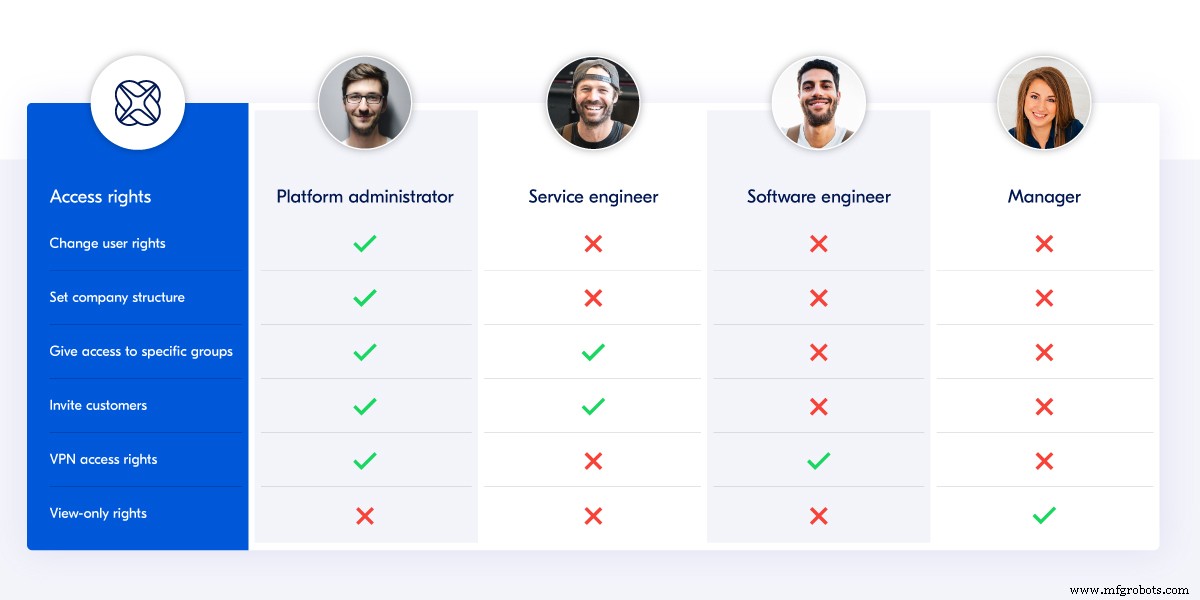
This diagram shows how permissions can be tailored to every role.
Customer Collaboration via a Single Portal
Manufacturers increasingly add advisory services across a machine’s life cycle. An IIoT platform lets customers view their own production data, receive proactive maintenance alerts, and access historical trends—all in one place.
Benefits include:
- Reduced confusion and faster decision‑making.
- Centralized data for both the manufacturer and the end‑user.
- Data‑driven recommendations that pre‑empt downtime.
Engaging External Partners
Collaboration often extends beyond the organization. With a role‑based system, partners can be granted targeted access:
Service Partners
Local depots receive limited access to their regional machines, receiving alerts and performance metrics directly through the platform.
System Integrators
Integrators can troubleshoot and optimize machines in real time, leveraging the platform’s live data streams.
Data Consultancies
Consultants extract and analyze data to deliver advanced insights, freeing in‑house teams to focus on core manufacturing.
Integrating Systems and Expanding Capabilities
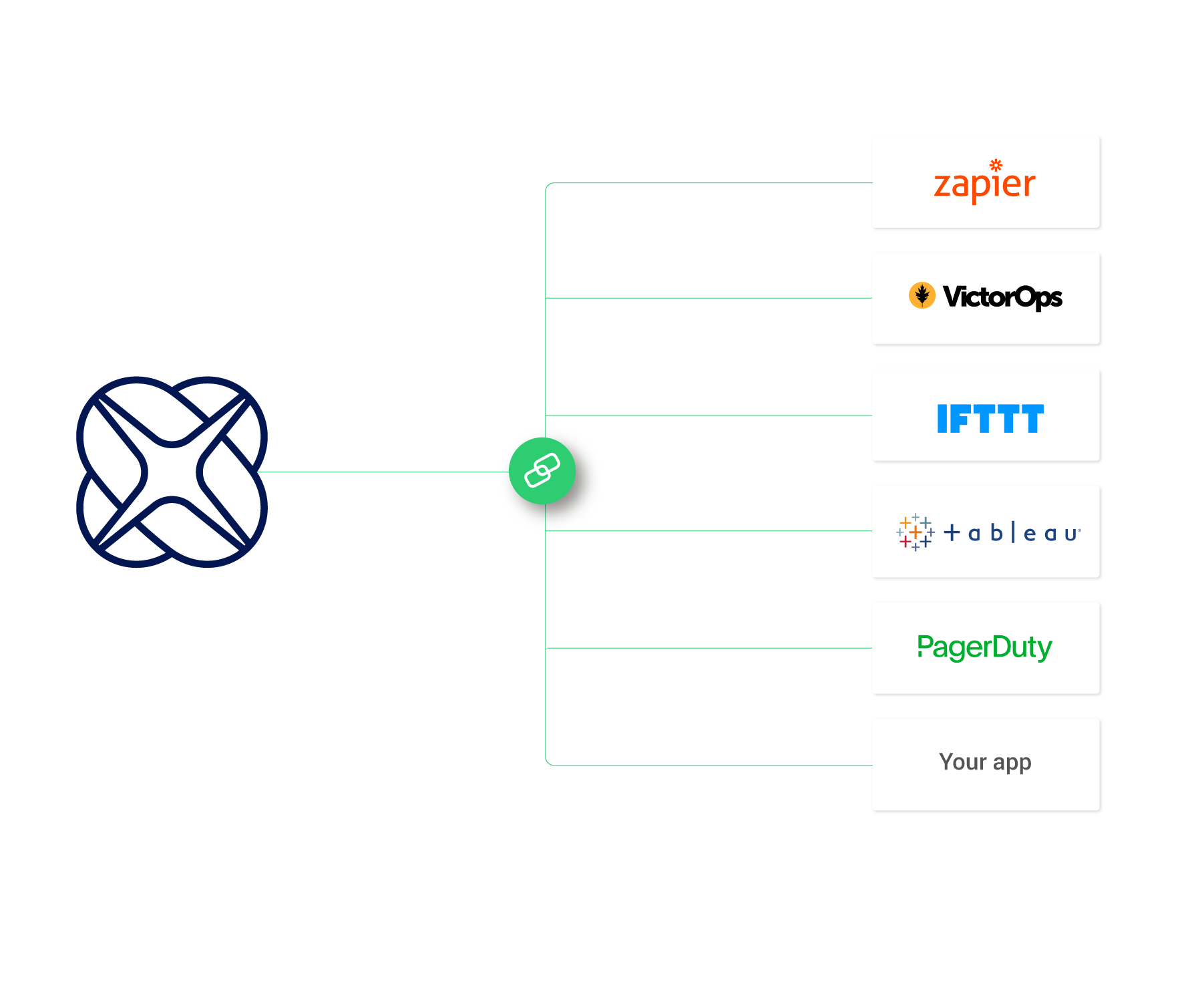
Beyond core functions, an open IIoT platform supports REST APIs and webhooks, enabling integration with AI, AR/VR, ERP, and custom applications.
Typical integrations include:
- Machine learning models that auto‑tune operations based on historical data.
- AR tools like HoloLens for remote commissioning support.
- Automated reorder triggers in ERP systems when parts reach critical levels.
Choosing the Right IIoT Platform
Selecting a platform requires balancing current needs with future growth. Key criteria:
- Open architecture for extensibility.
- Comprehensive, cost‑effective user management.
- Granular security controls and audit trails.
- Built‑in remote access, data logging, and visualization.
- White‑labeling options for brand‑centric service portals.
Ready to Implement IIoT?
IXON Cloud offers an end‑to‑end solution—hardware, cloud, and services—enabling rapid deployment and continuous evolution. Its role‑based access model lets you grant service agents and customers the exact permissions they need.
Start small with remote access, then scale to full data analytics and API integrations. The platform’s white‑labeling capability transforms it into a bespoke portal for your clients.
For a deeper dive, download our white paper, The Road to IIoT Maturity in Machine Manufacturing, and discover your current maturity stage and next steps.

Internet of Things Technology
- 9 Proven Best Practices for Deploying DevOps in the Cloud
- Essential Security Practices for Fog Computing
- Leveraging DSPs for Real‑Time Audio AI at the Edge
- Choosing the Right Industrial IoT Platform for Machine Builders: A Comprehensive Comparison
- Early Detection of Machine Issues: Operator Best Practices
- Essential Hygiene Protocols for Manufacturing Success
- Mastering Aluminum Welding: Proven Techniques for Strong, Reliable Joints
- Robotic Welding Best Practices: Boost Quality, Speed, and Savings
- Seven Proven Marketing Strategies for Manufacturers to Boost Engagement & Sales
- Manufacturing Marketing: Proven Best Practices for 2019 Success