



Building Sustainable IoT Products: A Practical Guide for Product Leaders
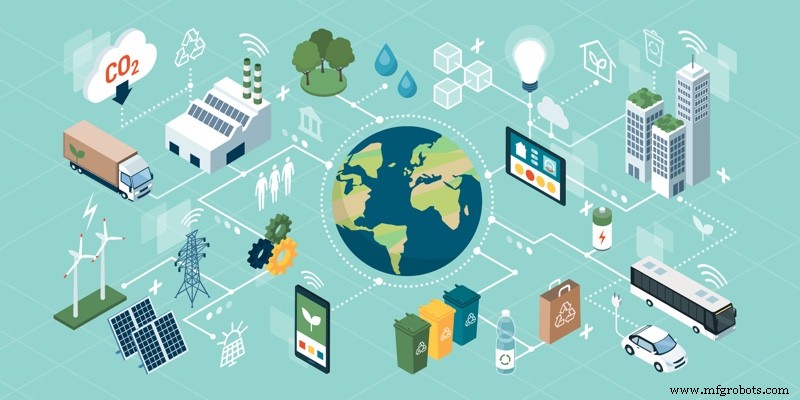
In today’s technology landscape, sustainability is a strategic imperative, not a luxury. Yet most organizations still lack a clear roadmap for embedding environmental stewardship into their IoT portfolios. This guide provides a step‑by‑step framework that product leaders can use to turn sustainability into measurable business value.
Table of contents:
- Background – Why Incorporate Sustainability into Your IoT Product
- Making the Case to Executives – Sustainability is Good for Business
- Setting Your Sustainability Targets
- A Structured Approach to Sustainable IoT Products
- Defining your baseline
- Identifying opportunities for your IoT product
- Balancing decisions with the rest of your product strategy
- Creating a Plan of Action
Background – Why Incorporate Sustainability into Your IoT Product
Companies worldwide are tightening their focus on climate action, and IoT is poised to be a major lever. From enabling renewable energy integration to optimizing industrial processes, IoT can dramatically cut emissions. But the devices that deliver these benefits also consume energy. According to the latest Transforma Insights Global IoT Forecast, the ecosystem will host 24.1 billion connected devices by 2030—each requiring power and resources.
Product leaders must therefore design solutions that not only deliver customer value but also minimize their own environmental footprint. Sustainable design is not a niche concern; it’s a core component of responsible product development.
While “sustainability” can feel abstract, a structured approach—much like the frameworks used for security or usability—makes it actionable. In the sections that follow, we’ll walk through that approach and show how to secure executive buy‑in.
Making the Case to Executives – Sustainability is Good for Business
Despite the urgency of the climate crisis, convincing senior leaders to allocate resources for sustainability can be challenging. Your role is to translate environmental goals into clear business benefits.
Reduce Total Cost of Ownership (TCO)
Industrial IoT delivers the highest return on investment, largely because customers monitor and manage energy usage. If your solution is more energy‑efficient than the competition, you gain a decisive competitive advantage.
Help Customers Meet Their Own Sustainability Goals
Leading companies such as Amazon, Google, and Microsoft are targeting net‑zero emissions. When your product enables customers to reach those milestones—whether through smarter grid integration, predictive maintenance, or energy‑saving analytics—you position your offering as a must‑have, even at a premium price.
Attract and Retain Talent
Tech talent increasingly seeks purpose. Firms that demonstrate a tangible commitment to sustainability attract top performers and reduce turnover, directly impacting your product’s long‑term success.
Setting Your Sustainability Targets
Many sustainability initiatives falter because they lack specific, measurable goals. A robust target should identify the sustainability domain (e.g., carbon, waste, water), the desired outcome, and a realistic timeline.
Example: Carbon Neutrality Roadmap
Carbon neutrality by 2030 is a common company‑wide goal. The Exponential Climate Action Roadmap illustrates how to achieve this through incremental reductions—50 % by 2030, another 50 % by 2040, and the remaining 50 % by 2050. Translate this into product‑level milestones, such as reducing device energy consumption by 15 % annually.
Secure executive endorsement early; sustainable initiatives require investment in time, tooling, and sometimes supply‑chain changes. Without leadership backing, even the best‑planned roadmap stalls.
A Structured Approach to Sustainable IoT Products
Once you’ve secured buy‑in and defined targets, it’s time to act. Below is a three‑step framework that aligns sustainability with product strategy.
1. Define a Sustainability Baseline for Your IoT Product
Begin by mapping your product to the five core layers of the IoT stack: Device, Connectivity, Edge/Cloud, Platform, and Application. Conduct a “walk the stack” workshop with cross‑functional teams to quantify energy use, material intensity, and supply‑chain emissions.
Ask seed questions such as:
- How many kWh does the end‑to‑end solution consume per customer per month?
- What proportion of that consumption originates from device hardware, communication, cloud processing, or front‑end applications?
2. Identify Sustainability Opportunities for Your IoT Product
With the baseline in place, systematically evaluate each stack layer for improvement. Use targeted questions to surface opportunities that align with your defined targets.
- Device Hardware: Identify power‑hungry components, explore low‑power microcontrollers, and assess renewable power options (solar, vibration).
- Device Software: Implement advanced power‑management, orchestrate device fleets to balance loads, and detect energy spikes.
- Connectivity: Choose the most efficient wireless protocol, reduce transmission frequency, and eliminate redundant data.
- Cloud Platform: Leverage providers with renewable‑energy commitments and schedule non‑real‑time workloads for off‑peak hours.
- Applications: Optimize UI for low energy consumption, instrument apps to report device usage, and enable remote troubleshooting to cut maintenance trips.
3. Balance Sustainability Decisions with the Rest of Your Product Strategy
Every sustainability change must be evaluated against user experience, data strategy, and business economics. Use the IoT Decision Framework to assess impacts across UX, data, and business dimensions.
For instance, swapping a high‑power chip for an efficient alternative may reduce energy by 20 % but could increase cost by 5 %. The framework helps you quantify such trade‑offs and decide whether the benefit outweighs the cost.
To learn more about how to use the IoT Decision Framework, read my article here. For a deep dive, consider the IoT Product Manager Certificate Program.
Creating a Plan of Action
Without a concrete execution plan, sustainability initiatives often languish. Structure your plan into discovery and execution phases.
1. Discovery Plan
Identify knowledge gaps—whether it’s missing data, unclear targets, or unassessed opportunities—and assign a cross‑functional team to fill them. This phase typically involves senior stakeholders beyond product management.
2. Execution Plan for Your Product
Update the product roadmap to include sustainability initiatives as first‑class features. Assign owners, define success metrics, and ensure that each initiative receives the same prioritization weight as functional enhancements.
Absent roadmap inclusion, stakeholder approval, and dedicated ownership, the initiative is unlikely to materialize.
The Bottom Line
Product leaders shape value for customers, the company, and society. As the environmental impact of IoT devices expands, integrating sustainability into product strategy is no longer optional—it's essential. Sustainability is a collective responsibility, and the tools and framework presented here equip you to make a measurable difference.
Internet of Things Technology
- How 5G Will Transform Industrial IoT: Boosting Automation, Reliability, and Connectivity
- Secure IoT: Best Practices for Building Trustworthy Connected Products
- How IoT and 5G Are Transforming Modern Workplaces
- Creating a Stakeholder‑Focused IoT Product Roadmap
- How IoT is Transforming Enterprise Mobility for Modern Businesses
- Elevate Your Operations: Leveraging IoT Tank Monitoring for Safer, Smarter, and More Profitable Petroleum Management
- How to Build a Profitable IoT Business Model
- How IoT is Transforming Workplace Safety: Real‑Time Monitoring and Risk Reduction
- Transforming Customer Experience with IoT: Smart Solutions for Superior Satisfaction
- How IoT Is Revolutionizing Commercial Insurance: Data, Claims, and Simpler Processes