



Combating Urban Floods with IoT Network Solutions
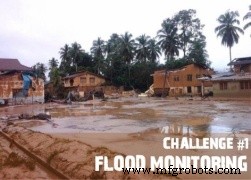
Flooding is the fastest‑moving natural disaster that can cripple a city’s economy, infrastructure, and residents’ wellbeing. A 2015 Pew Charitable Trusts study found that U.S. flood damage cost nearly $2 billion annually from 2006‑2015, and in 2016 alone, flood and hurricane disasters cost the nation $4 billion. Recent estimates suggest that the cost of Hurricane Harvey recovery will exceed $180 billion.
Traditional response tools struggle to keep pace with these events. Emerging Internet of Things (IoT) technologies, however, offer a proactive solution: real‑time monitoring, rapid data aggregation, and automated alerts that can transform emergency management and urban planning.
Rugged, Waterproof, and Accurate – Bringing Flood Monitors Online
Following the 2015 floods, the Calderdale community in Britain deployed a low‑power wide‑area (LPWA) network of water‑level sensors across residential, commercial, and river sites. Similar networks can be installed worldwide to deliver live updates for any floodplain, reservoir, bayou, or retention pond.
Once connected, sensor data is uploaded to a cloud platform where it is visualized in a single dashboard, giving officials a comprehensive view of the evolving crisis. LPWA and cellular water‑level monitors also support critical decision points—such as when to release aging dams or levees—by providing real‑time readings that trigger automated alerts to affected neighborhoods.
Cellular‑enabled cameras and motion sensors add another layer of situational awareness, allowing responders to monitor infrastructure shifts or potential breaches from a safe distance.
Sim‑card‑based alarms can be mounted on roads, underpasses, or low‑lying county roads. When water levels exceed a threshold, the system can immediately notify first responders, trigger digital signage with a “Road Flooded” message, or lower automated gates to block traffic.
Mobile weather labs equipped with SIM cards can stream barometric, wind, and camera data straight to the cloud, providing high‑speed updates while on the road and offering forecasters crucial lead time.
Flood Data: Predicting the Future from the Past
Real‑time data from IoT‑enabled gauges, barometers, and dam sensors stream into a central cloud platform, enabling rapid collaboration among emergency teams. Over time, this data builds a predictive model that identifies which roads flood first, which neighborhoods face the greatest risk, and the safest evacuation routes.
For instance, NetHope reports that communities in Honduras now use sonar‑based IoT alerts to detect impending floods and mudslides, allowing officials to issue timely evacuation notices.
Data analysis also informs urban planners: consistent flooding on a particular road signals the need for drainage upgrades, while a neighborhood that repeatedly experiences rapid water rise may benefit from raised roadways or reinforced infrastructure.
Author: Carmi Brandis, Aeris
Internet of Things Technology
- Industrial IoT Communication: 6 Proven Infrastructure Protocols
- IoT in the Edge Era: Growth, Data, Security, and Partner Strategy
- Unleashing the Power of Visual Data in the IoT Ecosystem
- How Smart Cities Harness IoT, Microservices, and Dashboards for Efficient Asset Management
- AWS IoT Solutions Design Best Practices
- IoT World: Inside Vertica’s Big‑Data Solution for IoT Analytics
- Wireless Network Devices and Sigfox Forge Partnership to Deploy Nationwide UK IoT Network
- Maximize IoT ROI with Advanced Performance Monitoring
- How 5G Will Empower Continuous Intelligence Apps with Real‑Time IoT Data
- Harnessing Cloud and IoT for Secure, Efficient Industrial Data Management