



AWS IoT Solutions Design Best Practices

AWS IoT Solutions Design Best Practices
With the rapid proliferation of IoT devices, enterprises need robust architectures that connect, collect, store, and analyze data securely. Amazon Web Services offers a portfolio of services that enable devices to communicate safely with cloud applications and with each other across a range of use cases.
By migrating or designing IoT workloads on AWS, organizations can concentrate on their core business while offloading infrastructure management to the cloud. When the right AWS services are chosen for specific requirements, IoT solutions become more secure, reliable, and scalable, says Chandani Patel, Tech Lead at Volansys Technologies.
Design for Reliable Scale
IoT systems must ingest high‑velocity, high‑volume data from devices and gateways. Architectures should route data through queues, buffers, or in‑memory stores before persistence to avoid bottlenecks.
Typical patterns involve publishing telemetry to AWS Kinesis or using an AWS IoT Rule to forward data to Amazon SQS and Kinesis. From there, the data can be persisted in time‑series stores such as AWS S3, Amazon Redshift, an Amazon Data Lake, or Amazon Elasticsearch. These repositories serve as the foundation for custom dashboards or AWS QuickSight visualizations.
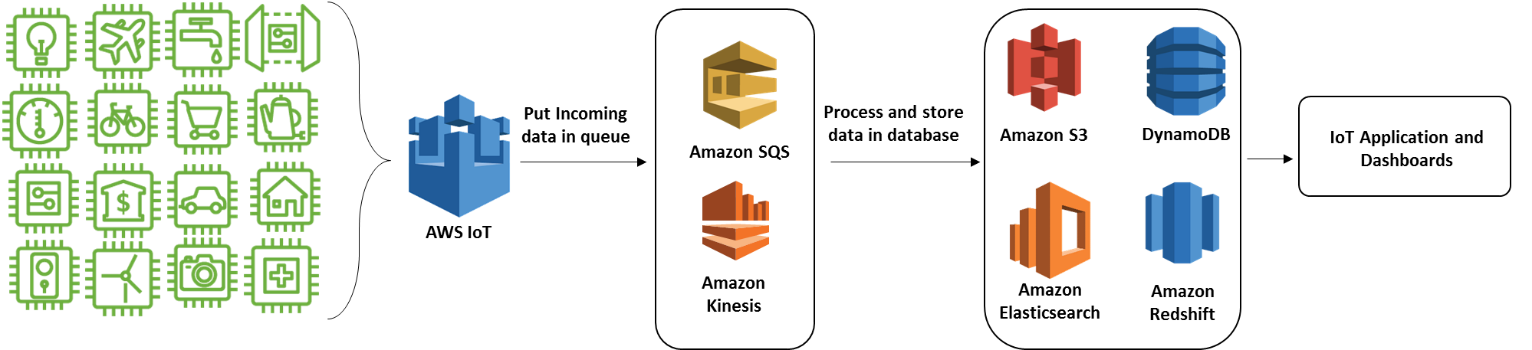
Route High‑Volume Data Through Pipelines
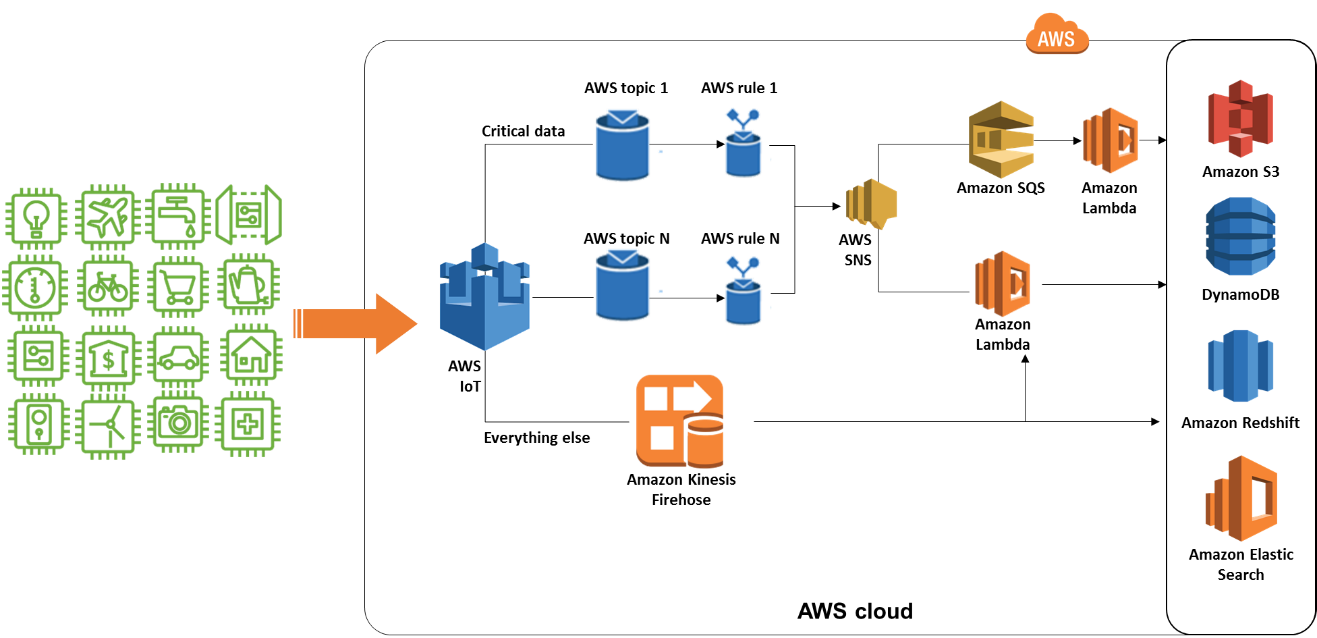
Ensuring that all device messages are processed and stored reliably starts with routing them to an AWS SNS topic, which is built to handle massive data bursts. From SNS, traffic can be distributed to multiple Amazon SQS queues, Lambda functions, or directly into Amazon Kinesis streams, depending on the device group or topic.
Storing the data first in a durable buffer—such as SQS, Kinesis, S3, or Redshift—protects against message floods, unexpected exceptions, or deployment hiccups, guaranteeing that no data is lost.
Automate Device Provisioning and OTA Upgrades
AWS IoT offers batch import capabilities and policy‑driven provisioning that can be integrated into a manufacturing workflow. Devices can be pre‑registered with certificates, then claimed and attached to an end‑user or asset during activation.
The platform also supports over‑the‑air (OTA) firmware updates, allowing you to trigger, monitor, and verify upgrades across fleets without manual intervention.
Leverage Scalable Architecture for Custom Extensions
Beyond connectivity, IoT solutions should be future‑proof. Integrate data‑science pipelines, machine‑learning models, or third‑party services such as IFTTT, Amazon Alexa, or Google Home without compromising performance.
Support Offline Access and Edge Processing
Many deployments face intermittent connectivity. AWS Greengrass brings compute to the edge, filtering and storing data locally. It can batch telemetry, send data on demand, or trigger actions when connectivity is restored, enabling efficient use of cloud resources.
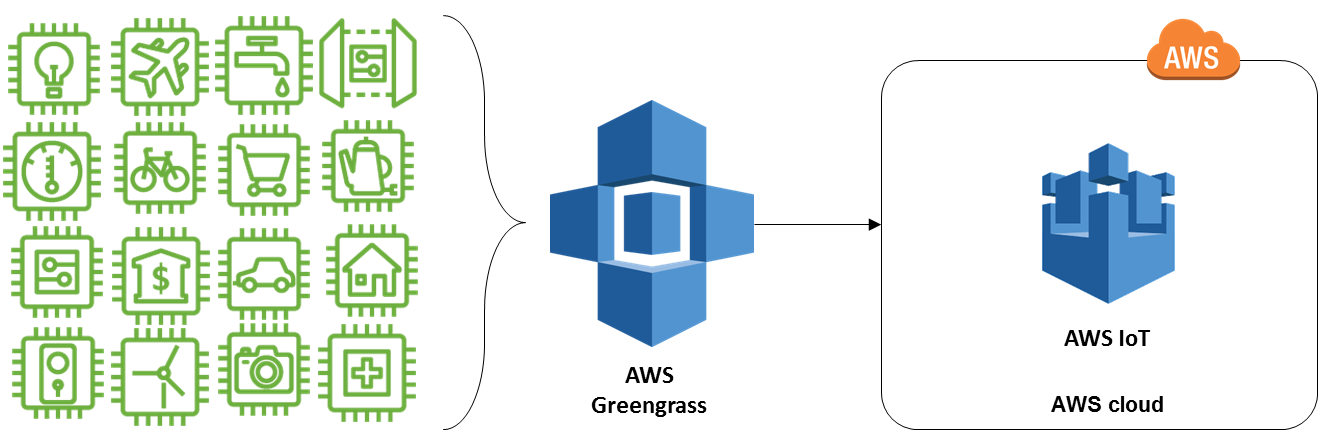
Select the Right Data Store
IoT workloads produce diverse data formats that may not fit a single database. Choose the storage type—whether a single store or a hybrid architecture—based on throughput, latency, and query patterns.
Frequently accessed configuration data can be cached in Amazon ElastiCache to accelerate application performance.
Filter and Transform Before Persisting
Incoming messages often require validation, enrichment, or routing decisions. AWS IoT Rules can apply transformations or filter out irrelevant data before forwarding it to the appropriate destination.
By categorizing traffic into processed, static (e.g., configuration), or direct‑store streams, you maintain clean data pipelines and simplify downstream analytics.
AWS IoT delivers rapid device connectivity, secure data ingestion, simplified device management, multi‑protocol support, and more.
The author is Chandani Patel, Tech Lead at Volansys Technologies.
About the Author
Chandani is an AWS Certified Solutions Architect and AWS Business & Technical Professional. She specializes in cloud, IoT, and machine‑learning solutions across public, private, and hybrid environments, including Azure, Google Cloud, and IBM Bluemix.
Internet of Things Technology
- Industrial IoT Communication: 6 Proven Infrastructure Protocols
- 5 Essential Security Practices for Protecting Data with AWS Backup
- IoT Edge Computing: Bridging Devices and Cloud for Real‑Time Insights
- Connectivity by Design: Unlocking Unified Data for Digital Twins and Real‑Time Decision‑Making
- Ensuring Data Compliance in the Internet of Things
- Accelerate IoT Design with Microchip’s Advanced Development Boards
- Combating Urban Floods with IoT Network Solutions
- Accelerating IoT Solution Development with Advantech's Ready‑to‑Use Platforms
- Democratizing the Internet of Things: Next‑Gen Satellite IoT Brings Universal, Affordable Connectivity
- How AI is Transforming Electronic Design for Superior Service Delivery