



Accelerate IoT Design with Microchip’s Advanced Development Boards
IoT design involves selecting the right microcontroller (MCU) and connectivity protocol for your application. Microchip Technology has unveiled a suite of full‑stack, embedded development solutions to streamline this process.
Microchip’s portfolio spans from compact PIC and AVR MCUs—ideal for sensors and actuators—to powerful 32‑bit MCU gateways and MPUs suited for edge computing. These devices can connect to any core or cloud via Wi‑Fi, Bluetooth, or 5G narrowband, all underpinned by the Trust Platform’s CryptoAuthentication family.
IoT networks interconnect sensors and intelligent devices across homes, transport, wearables, and even the human body, enabling data exchange and autonomous action. To unlock the full potential of IoT, workflows must be simplified and modular components leveraged to tackle real‑world challenges from software to hardware.
Typical IoT projects fall into three categories: cloud‑connected systems, local‑network (intranet) solutions, and gateway‑based architectures that bridge legacy devices to the Internet.
Choosing the right development kit is often the decisive first step. Building a cloud‑connected IoT system from scratch can be costly and time‑consuming, demanding expertise across engineering disciplines. Today’s developers face extended development cycles and heightened security risks, making prototyping platforms essential for rapid innovation and accessible IoT design.
Microchip Solutions
Microchip’s embedded development solutions enable fast, secure, and effortless connectivity to any cloud via Wi‑Fi, Bluetooth, or 5G narrowband, all reinforced by the CryptoAuthentication family’s robust security foundation.
“IoT adoption remains slower than expected,” notes Oyvind Strom, Marketing Director at Microchip. “Despite the abundance of solutions, many customers still feel hesitant. Our focus on edge nodes and gateways prioritizes ease of use.”
By combining proven security hardware with industry‑wide partnerships, Microchip safeguards against a spectrum of threats—from remote cyberattacks to counterfeit device proliferation. Such risks can incur significant deployment, recovery, and brand‑equity losses across all sectors.
Microchip has expanded its rapid‑prototyping portfolio with four Wi‑Fi‑based IoT development platforms, two Bluetooth prototyping boards for PIC and AVR, an IoT gateway that integrates AWS IoT Greengrass and Azure, and LTE‑M/NB‑IoT kits via a partnership with Sequans.
Each platform emphasizes ease of use and rapid iteration for industrial, medical, consumer, agricultural, and retail applications, with security embedded from the start. The selectable connectivity options, coupled with a full spectrum of MCU/MPU performance and peripheral features, make these solutions scalable across markets.
“Customers can build IoT solutions with or without cloud integration,” says Strom. “Cloud computing is booming, with Google, Amazon, and Microsoft leading the way. We’ve partnered with all three. The PIC‑IoT WA and AVR‑IoT WA boards, developed with AWS, enable native Wi‑Fi connection to AWS IoT Core.”
Plug the board’s USB into a PC, and a dedicated web portal guides you through Wi‑Fi credential entry. Within 30 seconds, the board streams data to the Amazon cloud, providing a rapid path from prototype to production. Built on cost‑efficient microcontrollers, the board demonstrates that robust edge‑node IoT does not require 32‑bit platforms.
The two boards include a temperature and a light sensor for demonstration. A microbus expansion socket supports more than 300 click boards, allowing easy integration of additional sensors via Microchip’s ecosystem (Figure 1).
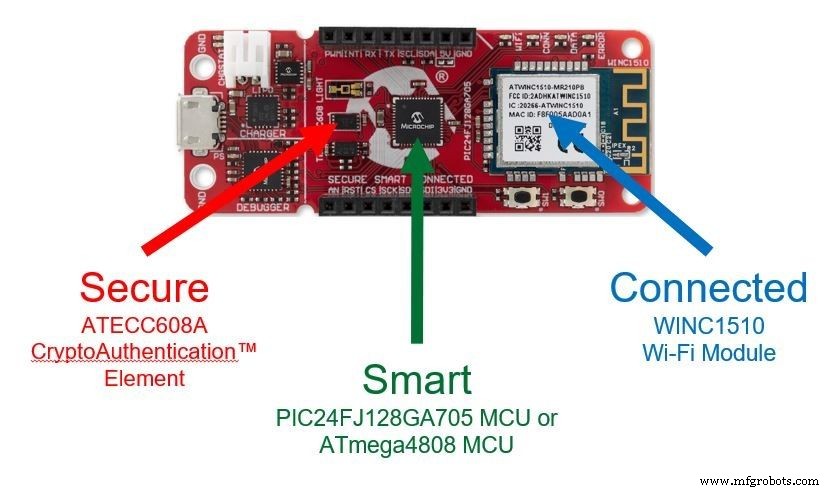
 Figure 1: PIC/AVR-IoT WA board (Image: Microchip Technology)
The SAM‑IoT WG board connects Google Cloud IoT Core with the popular SAM‑D21 Arm Cortex‑M0+ 32‑bit Microchip line (Figure 2).
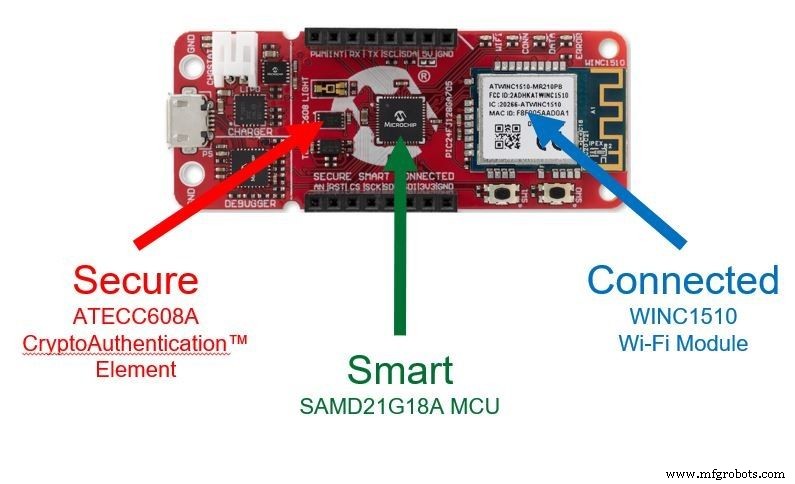
 Figure 2: SAM‑IoT WG board (Image: Microchip Technology)
Azure IoT SAM, a microcontroller‑based platform, integrates the Azure IoT SDK and services into Microchip’s MPLAB X ecosystem. It delivers superior computing power, enabling on‑board data transmission and AI‑driven analysis.
“Predictive maintenance, vision, and other high‑end applications are ideal for this platform,” Strom explains.
Industrial sectors increasingly rely on Bluetooth for maintenance and repair. Integrated Bluetooth allows technicians to retrieve error codes and diagnostics from tablets or smartphones, eliminating mechanical intervention.
The PIC‑BLE and AVR‑BLE boards are PIC/AVR‑based sensor nodes that connect to mobile devices via BLE and to the cloud through BLE gateways (Figure 3).
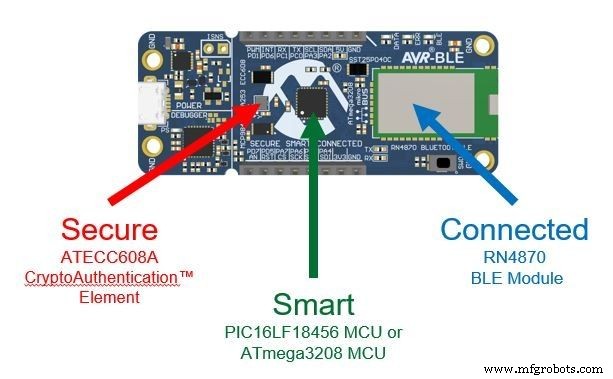
 Figure 3: PIC/AVR‑BLE board (Image: Microchip Technology)
An on‑board secure element IC establishes a root of trust, ensuring only authorized devices link to the embedded system and the cloud. The boards feature temperature, light, and a 3‑axis accelerometer sensors, with the option to expand via external click‑board sensors and develop custom apps using LightBlue, available on Google Play and the App Store (Figure 4).
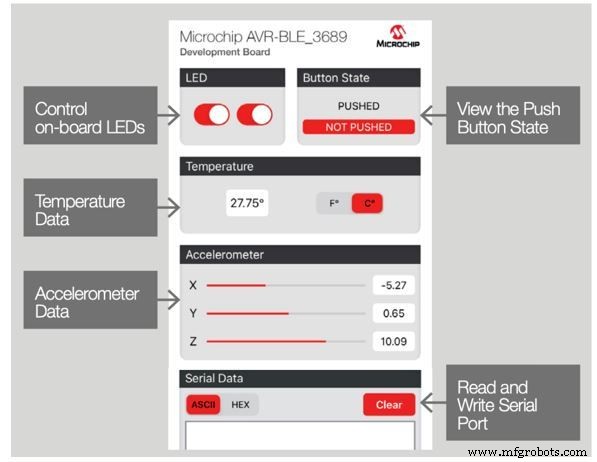
 Figure 4: The LightBlue app (Image: Microchip Technology)
While Wi‑Fi is adequate for home routers, closed networks demand gateway solutions. Microchip’s AWS IoT Greengrass gateway leverages the ATSAMA5D27‑WLSOM1 SoM, combining the SAMA5D2 MPU, WILC3000 Wi‑Fi/Bluetooth combo, and MCP16502 power management.
“Our Greengrass‑certified solutions bring cloud computing to the edge,” Strom notes. “They offer near‑real‑time responses and continued operation even when internet connectivity is lost.”
Microchip also unveiled an LTE‑M/NB‑IoT Development Kit with Sequans. The kit employs Sequans’ Monarch chips, delivering low‑power 5G cellular connectivity ideal for direct cloud transmission, bypassing gateway layers.
Service providers are rolling out 5G networks, poised to carry massive IoT traffic. The choice between LTE‑M and NB‑IoT varies globally, with differing regional standards (Figure 5). Sequans’ 5G tech supports the Americas, Europe, Japan, and China, allowing Microchip to serve customers worldwide with LTE‑M/NB‑IoT connectivity across major networks.
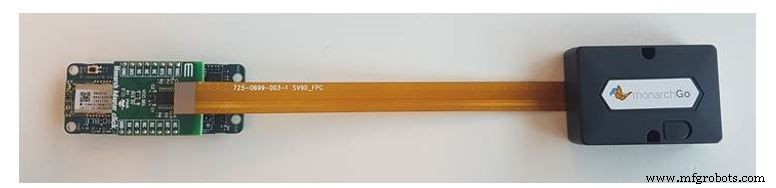
 Figure 5: LTE‑M or NB‑IoT development kit (Image: Microchip Technology)
Microchip’s IoT solutions are rooted in its extensive development ecosystem centered on MPLAB X IDE. Code generators like MPLAB X Code Configurator (MCC) accelerate code creation for PIC and AVR, while Harmony libraries support all 32‑bit MCU/MPU solutions.
>> This article was originally published on our sister site, EE Times Europe.
Embedded
- How Design Thinking Unlocks IoT Monetization for Manufacturers
- Microchip Launches Secure, Cloud‑Connected IoT Development Boards for Rapid Prototyping
- Renesas Launches RL78/G14 Prototyping Board and BLE Expansion for Rapid IoT Development
- Accelerating IoT Innovation with Smart Development Boards
- STMicroelectronics Launches AutoDevKit: Accelerating Automotive ECU Design
- AWS IoT Solutions Design Best Practices
- Biz4intellia's IoT Solutions Streamline Oil & Gas Operations for Greater Efficiency
- Leveraging IoT for Smart Water Management: Enhancing Efficiency and Sustainability
- Biz4intellia IoT Solutions: Boosting Business Efficiency and Productivity
- Optimizing Antenna Design for Compact IoT Devices