



How Sensor & Operational Data Drives Profitability for a Leading Truck Manufacturer
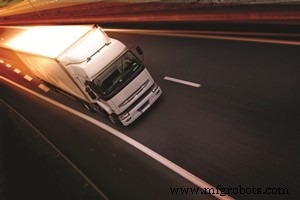
A prominent automotive group that designs trucks, buses, and construction equipment faced razor‑thin margins and fierce competition. To stay ahead, they turned to a data‑driven strategy that blends vehicle sensor feeds with operational records, delivering tailored offers, superior service, and a measurable lift in profitability. Rob Mellor, VP & GM EMEA at WhereScape, shares the company’s journey.
What changes in the truck industry prompted your data strategy?
Like the automotive sector of the 1990s, the truck market now operates on razor‑thin margins and intense rivalry. Profit is largely built on add‑on sales—warranties, financing, servicing and insurance—so differentiating offers is critical. By equipping trucks with sensors, the company can generate insights that underpin far more relevant, customer‑centric propositions.
How has truck sensor data become core to your business?
Sensor streams give us a 360° view of each vehicle: component health, precise routes, speed profiles, and driving style. Merging this data with traditional operational details (make, model, service history) lets us craft highly accurate vehicle profiles. With the right data‑management tools, we generate offers that statistically carry the highest likelihood of profitability.
For instance, when leasing contracts expire, we evaluate the true residual value of returned trucks using sensor analytics. A vehicle that has traversed the Australian outback differs markedly in remaining life from one that has only driven European highways. By pricing on life expectancy rather than mileage alone, we can boost margins on high‑value trucks by up to 5 %—a lift that translates into millions of euros annually.
Sensor analytics also flag components that will fail after a certain mileage. If a truck is operated under harsh conditions, we can predict when servicing is required and proactively schedule maintenance. This foresight enables us to offer fixed‑price service contracts that guarantee zero breakdowns.
Fleet buyers demand fuel efficiency data. With sensor feeds, we calculate average fuel consumption per truck, per journey, and even per driver. Armed with this insight, we recommend more economical routes or driver training, leading to substantial fuel cost savings for fleet owners.
Does using sensor data pose a big technological challenge to the organization?
Sensor data alone is inert; it must be contextualized with operational records. These two data types differ dramatically: sensor data is high‑volume, low‑complexity, while operational data is low‑volume, high‑complexity. Integrating them into a single Enterprise Data Warehouse (EDW) is only the first hurdle. The sheer size and complexity of sensor streams also outstrip the capabilities of traditional processing tools.
We required a faster, more agile pipeline to capture, process, and analyze this data, supporting our strategic goals. We also integrated unstructured data—weather, traffic, and strike information—to further enhance profitability insights.
How have you overcome these challenges?
With WhereScape, we adopted an agile analysis and data‑management approach. The platform automates planning and construction of data marts within our IBM Netezza EDW, delivering results ten times faster than legacy methods. This agility shortens time to market for our BI solutions and accelerates value extraction from sensor data.

WhereScape also unifies all our information‑management systems. We moved from isolated data marts with disparate modelling techniques to a fully integrated EDW governed by a single global modelling standard. The shift from an ad‑hoc technical approach to a model‑driven framework has dramatically improved data consistency and integrity across five sites.
Our new centralized environment delivers a 360° cross‑functional view of data, based on a single modelling methodology. The EDW is our first concrete step toward managing big data, enabling near real‑time responses, better traceability, and higher reusability as we mix volumes from diverse business units.
WhereScape remains central to our future, and I look forward to a long‑term partnership.
The author of this blog is Rob Mellor, VP & GM EMEA of WhereScape
Internet of Things Technology
- Visualizing Sensor Data with RTI Connext DDS Micro and Admin Console
- How NFC Sensors Work: Principles, Modes, and Everyday Applications
- How Industrial IoT Sensors Drive Modern Factory Efficiency
- Hyperconverged Secondary Storage: Driving Unified Data Management for Enterprise IoT
- Building Responsible and Trustworthy AI: A Guide to Explainability, Accountability, and Ethics
- Harnessing IoT Data for Manufacturing Excellence
- IIoT Trends & Challenges: Data Overload, Manufacturing Shifts, and the Skills Gap
- Harnessing OCR, AI, and RPA to Unlock Advanced Data Insights
- 5G: Preparing for Exponential Data Growth in Telecom
- Industrial AIoT: Merging AI and IoT to Drive Industry 4.0 Innovation