



Visualizing Sensor Data with RTI Connext DDS Micro and Admin Console
I have been with RTI for over 12 years, witnessing the evolution of the OMG Data Distribution Service (DDS) from its early prototypes to the robust solution we deliver today.
Throughout our journey, we have tackled applications that demand extreme memory efficiency. While modern embedded systems often operate with less than 8 MB of RAM, we have successfully met requirements with even lower footprints. This drove the creation of RTI Connext DDS Micro, a DDS implementation engineered for devices with under 128 kB of RAM. The result is a highly capable, lightweight solution that powers thousands of IoT deployments worldwide.
To meet these constraints, DDS Micro offers approximately 80 % of the functionality found in the full Connext DDS product. Core features such as reliability, keyed instances, liveliness, and durability remain intact, and the RTPS wire protocol is fully preserved. Consequently, DDS Micro applications can interoperate seamlessly with full‑size DDS clients, enabling mixed‑fleet deployments.
Reducing memory usage required certain trade‑offs. One notable omission is the optional RTPS discovery field that carries type information. While this capability is essential for many tools—including RTI’s Admin Console, which visualizes live data—DDS Micro does not publish type data during discovery.
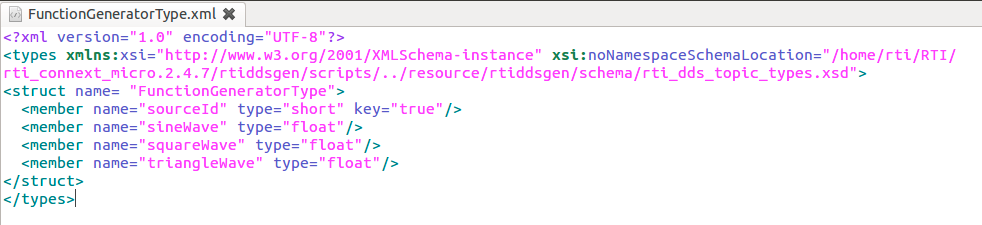
Our tools team addressed this gap by enhancing the Admin Console with XML‑based type loading. Administrators can now supply a concise XML file that defines one or more data types, allowing the console to subscribe to DDS Micro publishers without requiring discovery‑based type exchange.
For example, the XML file below describes a FunctionGeneratorType used by a simple sensor publisher that streams sine, square, and triangle waveforms:
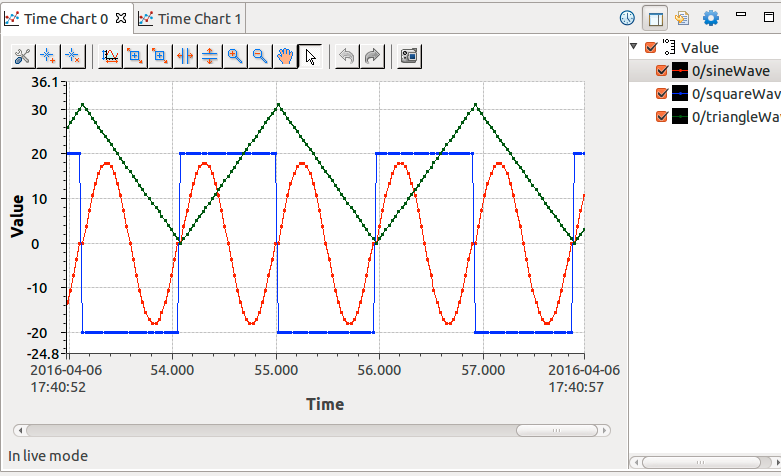
With the type information in place, the Admin Console can subscribe to the publisher and render real‑time visualizations, as shown in the screenshot:
These capabilities demonstrate how RTI’s DDS Micro and Admin Console empower developers to deploy reliable, low‑resource sensor networks that integrate effortlessly with existing DDS ecosystems. The Industrial Internet of Things gains a scalable, trustworthy foundation for future innovation.
For further details, explore the RTI Connext DDS Micro product page and the RTI Administration Console documentation.
Links:
Internet of Things Technology
- Replaying ROS2 LiDAR Data with RTI Recording Service and DDS
- How NFC Sensors Work: Principles, Modes, and Everyday Applications
- Arduino Sensors: Types, Applications, and Real‑World Projects
- Fingerprint Sensor Technology: Working Principles, Applications, and Arduino Integration
- Vibration Sensors: Principles, Types, and Industrial Applications
- How Industrial IoT Sensors Drive Modern Factory Efficiency
- Advancing Microelectronics to Meet AI's Evolving Demands
- Six Key Principles for Building High-Impact Sensor-Driven IoT Applications
- Data Lake vs. Big Data: Choosing the Right Approach for Industrial Applications
- Advanced Sensor Technologies: Boosting Machine Health & Asset Monitoring in Industrial Systems