



Six Key Principles for Building High-Impact Sensor-Driven IoT Applications

Phil Ressler of Sixgill, LLC
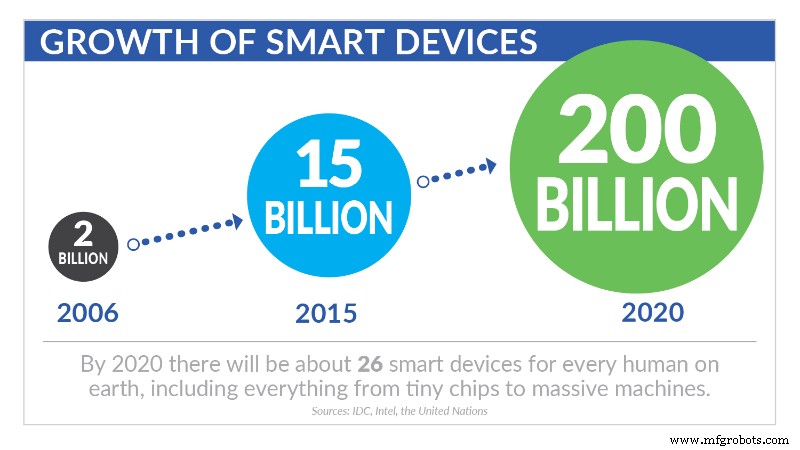
In today’s digital ecosystem, the proliferation of inexpensive sensors is generating an unprecedented volume of data. This influx is reshaping how organizations manage people, places, and assets, driving the next wave of IoT automation.
While the promise of sensor‑powered solutions is immense, many companies struggle to convert raw data into actionable insights. According to McKinsey, most organizations still under‑utilize the IoT data they collect.
Below are six essential principles that help unlock the full potential of sensor‑informed IoT applications.
Essential #1: Scalability
Collecting small streams of sensor data is straightforward, but ingesting, organizing, and acting on the massive volumes generated by modern assets is far more complex. For instance, a commercial jet can produce a petabyte of data each week, while a smart factory may generate a petabyte daily. To thrive, IoT solutions must scale elastically, handling spikes and long‑term growth without compromising performance.
In smart cities, diverse applications—from traffic control to crowd monitoring—require a robust backbone capable of processing billions of data points in real time.
Essential #2: Flexibility
IoT ecosystems must support cross‑enterprise data automation at any volume, velocity, and scale. A single, configurable data‑services backbone—built on an open architecture—enables seamless ingestion, aggregation, and processing from any sensor type while integrating with external systems.
Flexibility is critical across use cases such as smart construction or manufacturing, where unified asset orchestration provides real‑time visibility into worksite activities, enhancing safety, productivity, and compliance.
Essential #3: Data‑Agnostic Capabilities
Maximizing connected intelligence requires the ability to unify and manage data from diverse, disparate sources. Applications that limit themselves to specific data formats miss opportunities to correlate insights across domains.
In smart buildings, for example, a data‑agnostic platform can merge headcount, occupancy, lighting, and temperature metrics to optimize operations, improve occupant comfort, and reduce costs.
Essential #4: Edge Computing
Edge computing reduces latency, cuts costly cloud transfer, and ensures resilience during connectivity disruptions. By processing sensor data locally, organizations can filter noise, accelerate analytics, and support real‑time decision making.
Deploying machine learning at the edge unlocks new capabilities—such as real‑time video analytics or predictive maintenance—by transforming raw sensor feeds into actionable intelligence.
Essential #5: Extensibility
Platforms must be extensible to meet industry‑specific demands. User‑defined event triggers, complex rule engines, and fully documented APIs allow organizations to tailor solutions to their unique workflows.
Support for native JavaScript plugins, open I/O back‑ends, and seamless integration with enterprise systems and third‑party services ensures long‑term agility and scalability.
Essential #6: Unified Source of Truth
Instead of piecemeal, siloed data services, successful IoT initiatives rely on a common data foundation that feeds multiple applications. A single source of truth enhances auditability, accountability, and holistic analysis while simplifying development across domains.
By adopting a universal data automation service, organizations can accelerate the deployment of sensor‑driven solutions and unlock new business value.
The author of this blog is Phil Ressler, CEO, Sixgill, LLC
Internet of Things Technology
- Visualizing Sensor Data with RTI Connext DDS Micro and Admin Console
- How NFC Sensors Work: Principles, Modes, and Everyday Applications
- BASELABS Launches Dynamic Grid: Raw‑Data Sensor Fusion for Advanced Automotive Modeling
- How Data Visualisation Drives Efficiency for Machine Builders
- Six Proven Strategies for Smarter Maintenance Decisions
- Data Management: The Cornerstone of Successful AI
- Data Lake vs. Big Data: Choosing the Right Approach for Industrial Applications
- Top 6 CNC Router Machine Applications: Maximize Speed, Precision, and Consistency
- Choosing the Right Filling Sensor: Accuracy, Reliability & Profitability
- HT12D RF Decoder IC: Comprehensive Guide for Remote Control Applications