



BASELABS Launches Dynamic Grid: Raw‑Data Sensor Fusion for Advanced Automotive Modeling
BASELABS, a leading automotive sensor‑fusion software provider, has unveiled Dynamic Grid – a cutting‑edge algorithm that constructs a coherent, high‑resolution environment model directly from raw sensor data. By bypassing laborious training steps, Dynamic Grid empowers automotive developers to accelerate the creation of driver‑assist features such as parking aids and traffic‑jam pilots, delivering performance that surpasses conventional tracking and occupancy‑grid techniques.
Urban automated‑driving demands the most precise environmental representation. The industry is converging on high‑resolution sensors – radars, laser scanners, and cameras equipped with semantic segmentation – to capture the fine details required for such scenarios. Traditional fusion methods struggle to keep pace with this influx of data.
Dynamic Grid tackles these challenges head‑on by processing raw data streams from radars, LiDAR, and camera‑based segmentation in a unified, self‑contained algorithm. The result is a self‑consistent map that accurately detects and tracks both static and dynamic objects, while also estimating free space to delineate drivable zones and available parking spots. The solution runs in real time on standard automotive CPUs and is developed in compliance with ISO26262 safety standards.
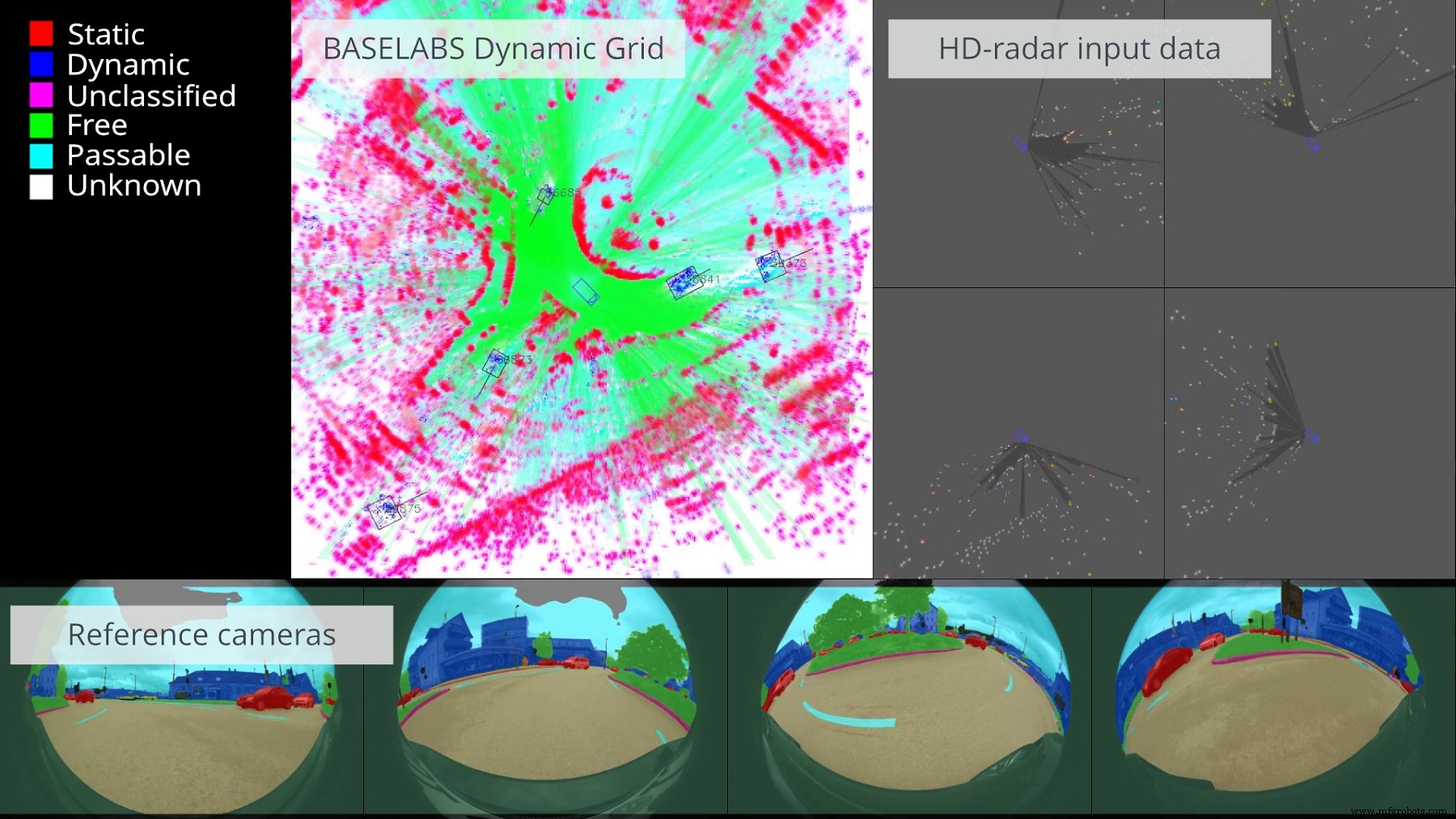
Dynamic Grid is ideally suited for automation levels 2 and above, including highly automated driving. Typical use cases include autonomous parking (trained or valet), automatic emergency braking with avoidance, and traffic‑jam pilot modes. The algorithm also integrates seamlessly into radar subsystems.
“Dynamic Grid offers a superior alternative to the conventional split between tracking and static occupancy grids,” says Norman Mattern, Head of Product Development at BASELABS. “By fusing data within a single, integrated framework, we eliminate the inconsistencies that arise when two disparate methods are combined. The algorithm excels in dense, multi‑directional traffic environments and can detect and track objects of any shape without extensive training.”
Founded in 2012, BASELABS provides scalable, efficient sensor‑fusion solutions for automotive OEMs and suppliers. The company remains independently owned by its four founders and Vector Informatik, ensuring strategic neutrality across the supply chain.
Sensor
- Data: The Invisible Raw Material Powering Industry 4.0
- How Sensor Fusion Enhances Reliability, Security, and Efficiency in Autonomous Systems
- Sony Unveils First Single‑Chip SPAD Lidar Sensor for Automotive Applications
- Six Key Principles for Building High-Impact Sensor-Driven IoT Applications
- Build a Winning Machine Shop: Proven Strategies for Success
- Revolutionary Ultra-Thin Sensor Enhances Smart Contact Lens Functionality
- Advanced TOMOPLEX Sensor Film for Real-Time Aerospace Monitoring
- Accurate WiFi RSSI Tracking for ISS Sensors
- Robust Long‑Range Wireless Sensor Networks for Remote Data Monitoring
- PIM Revolutionizes Data Sharing in the Automotive Industry