



Deploying IoT, AI, and ML to Secure Safe Drinking Water Across Mexico
Mexico’s 120 million residents rely on thousands of public drinking fountains that deliver clean, high‑quality water. Ensuring continuous access over such a vast territory demands a sophisticated, data‑driven infrastructure that guarantees both availability and safety.
This article explains how NDS Cognitive Labs leveraged IoT, artificial intelligence, and machine learning to build a predictive platform that monitors water flow, forecasts quality, and schedules maintenance—transforming raw sensor data into actionable insights.
By anticipating component wear, the system equips technicians with the exact parts and supplies needed for timely repairs, reducing downtime and extending asset life.
Measuring water status and qualityTo capture real‑time water status in major cities, the team installed low‑cost mechanical sensors connected to the SigFox LPWAN. Each module records volume, pressure, and flow, providing granular data on fountain, pipe, and tank performance.
A dedicated microcontroller stores local readings and buffers data to ensure reliability, even during network interruptions.
Each sensor logs consumption events every 10 minutes, producing high‑resolution usage patterns that feed into the predictive model.
After each interval, the module uploads a compressed payload via SigFox to a central hub, then begins the next sampling cycle.
SigFox handles packet validation, error correction, and forwards the cleaned data to NDS Cognitive Labs’ Azure IoT hub.
An API‑KEY authenticates the HTTP request header, and the payload follows this JSON structure:
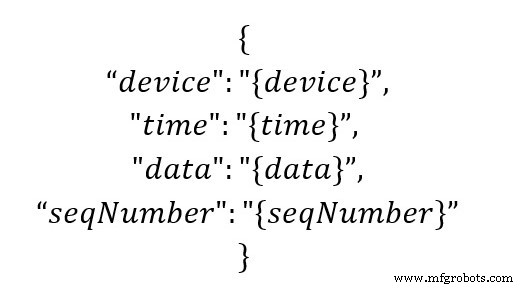
An Azure Function ingests the payload, normalizes the data, and writes it to a CosmosDB collection accessed through a MongoDB driver—forming the backbone of the analytics engine.
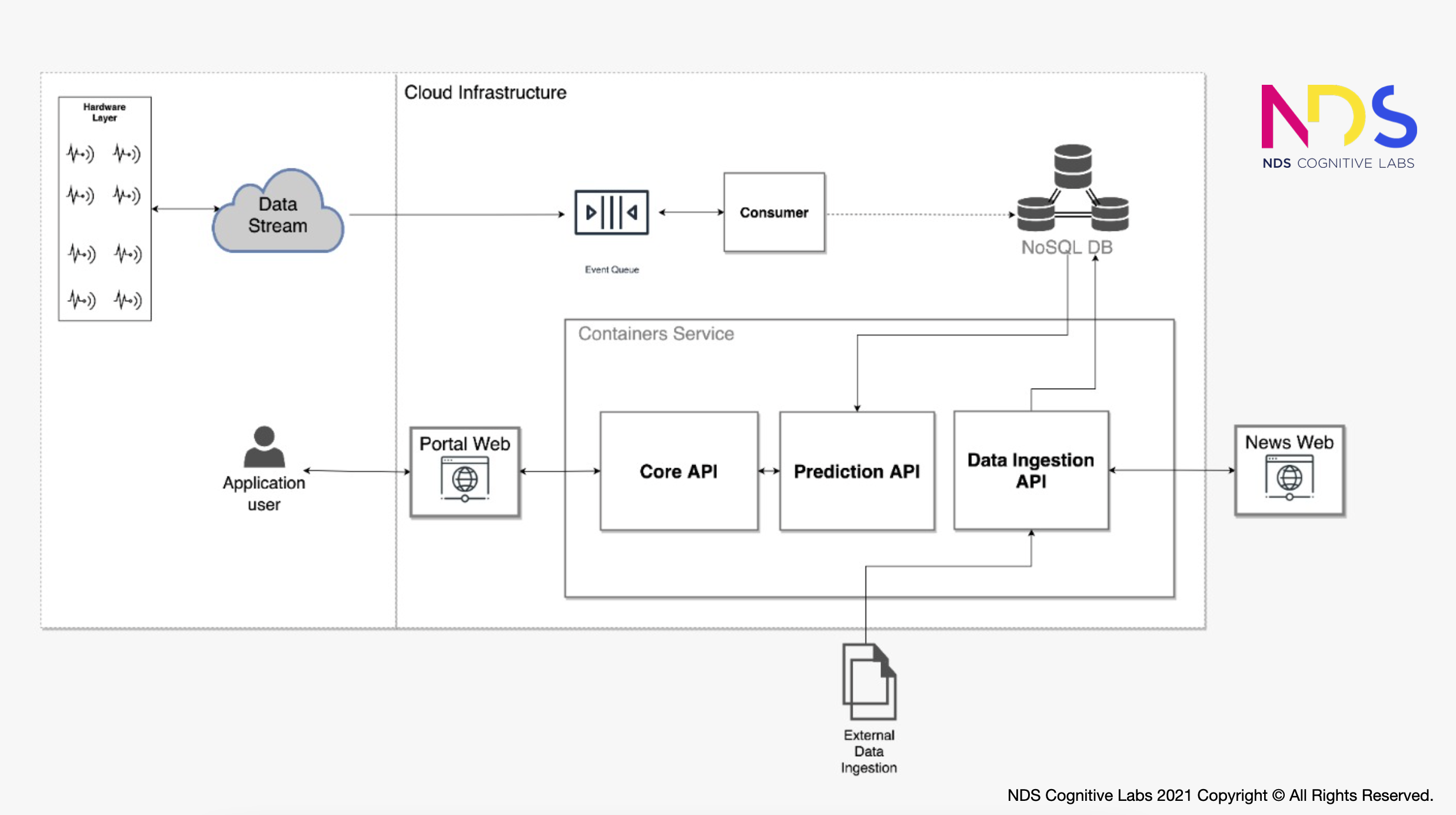
To predict water quality and maintenance needs, data engineers aggregated structured data from CONAGUA, municipal records, and independent laboratories, alongside unstructured reports, then extracted key metrics that describe local water conditions.
The core model is a linear regression that forecasts filter and sensor degradation based on pressure, volume, flow, filter age, and regional water quality—allowing proactive replacement schedules.
Based on the analysis, the system suggests optimal filter types—ranging from high‑capacity reverse osmosis units to standard cartridges—tailored to each site’s pressure, volume, and contamination profile.
It also flags when a fountain should be shut down, serviced, or upgraded, ensuring that only safe water reaches consumers.
For locations lacking direct sensors, the team employed Kriging interpolation, combining sampled data and external sources to produce unbiased estimates of water parameters with minimal variance.
The model incorporates 17 parameters mandated by national and international standards—including conductivity, pH, coliforms, dissolved solids, turbidity, heavy metals, and hardness.
Separate machine‑learning regressors, pre‑trained and serialized, predict each metric at unmeasured points, drawing on nearby observations and government datasets.
The integrated platform achieves over 91 % accuracy in detecting pipe, fountain, and tank issues, enabling faster, more precise maintenance actions that keep water supply reliable.
Data visualization and IAM protocolsA Flask‑based REST API powers a responsive AngularJS front‑end that delivers real‑time dashboards to operators and policymakers.
Layered maps display drinking water quality, socioeconomic indicators, water stress, laboratory locations, fountain assets, and wastewater metrics, all rendered in GeoJSON on Google Maps.
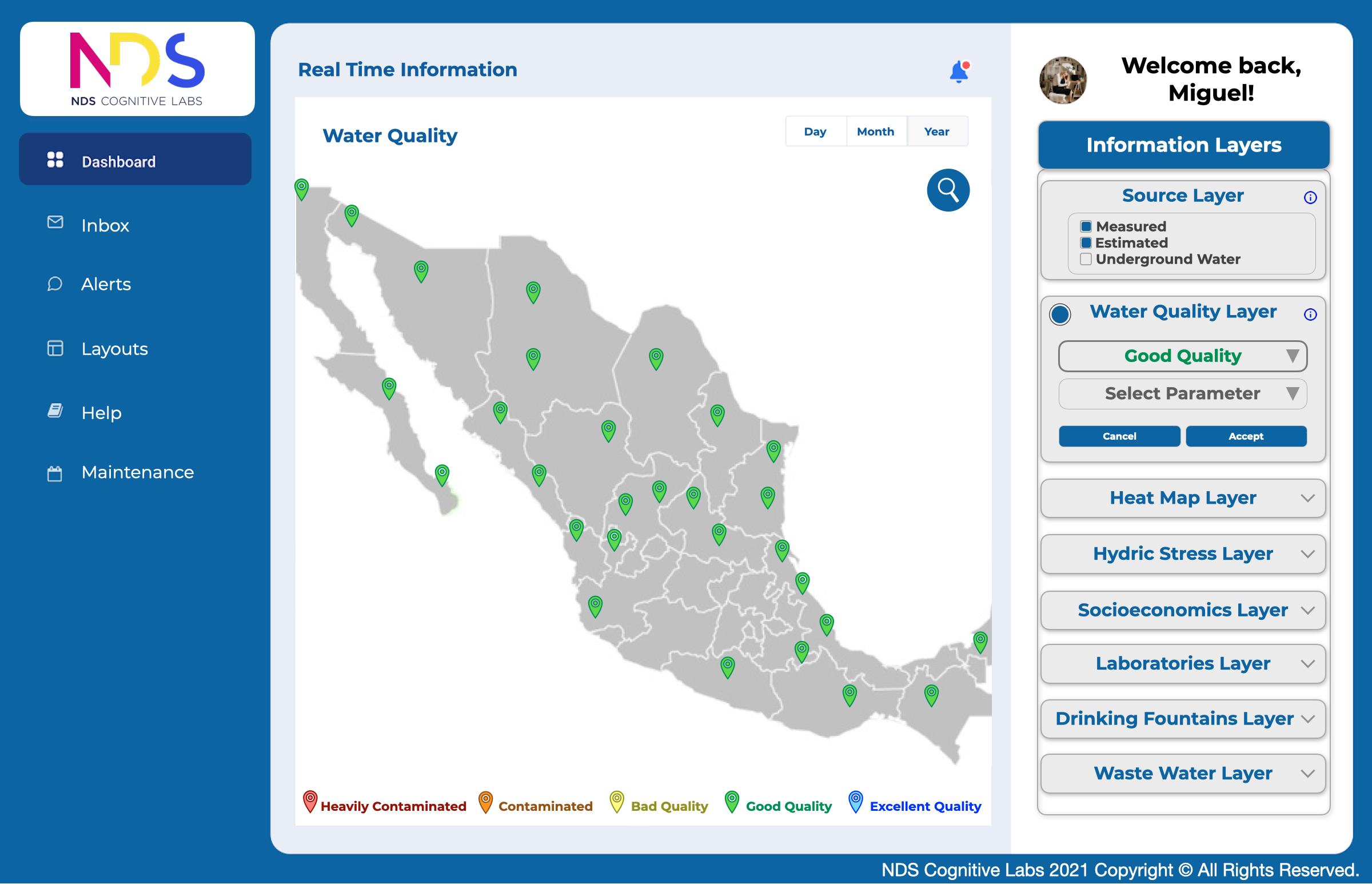
Interactive filters let users drill down by contamination level, sensor type, radius heat‑maps, and source, providing tailored views for each role.
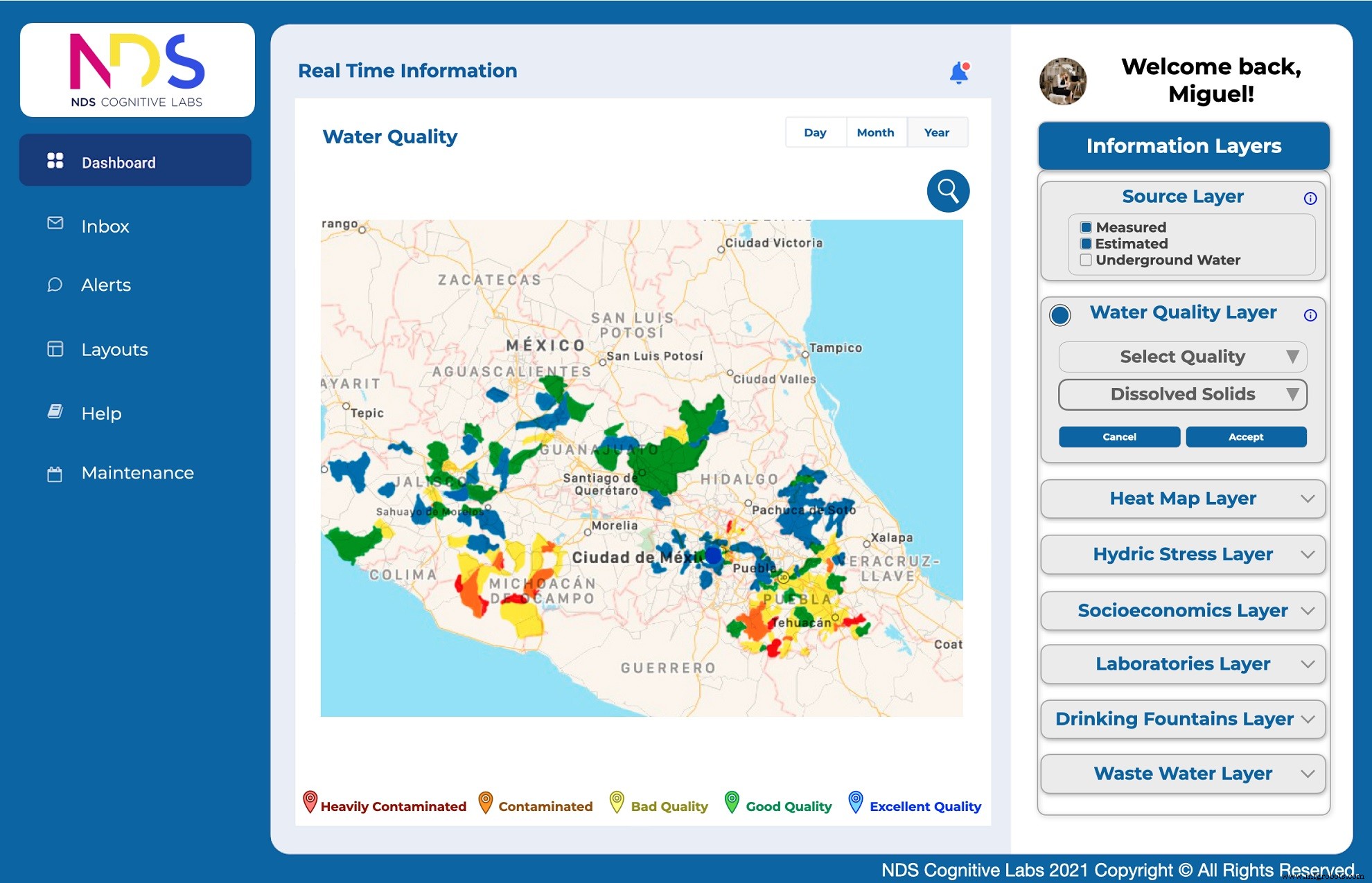
Auth0 handles identity and access management, assigning role‑based permissions that limit each user’s view to the data relevant to their responsibilities—protecting sensitive information while boosting operational efficiency.
ConclusionWith the full system in place, municipalities can now preemptively replace filters, cut maintenance costs, extend system uptime, and most importantly, guarantee safe, reliable drinking water for all citizens.
This initiative demonstrates how IoT, AI, and ML, when coupled with robust data pipelines, can transform a basic utility into a smart, health‑protecting infrastructure—an essential model for any nation committed to public welfare.
Sensor
- How 5G Will Transform Industrial IoT: Boosting Automation, Reliability, and Connectivity
- How IoT and 5G Are Transforming Modern Workplaces
- Maximizing Generator Lifespan: Proven Maintenance & Load‑Management Strategies
- Creating a Stakeholder‑Focused IoT Product Roadmap
- Scaling IoT Networks: Ensuring Resilience in a Rapidly Growing Landscape
- Modern Water Treatment Chemicals: Ensuring Safe Drinking Water for All
- Leveraging IoT for Smart Water Management: Enhancing Efficiency and Sustainability
- How IoT Detects Water Leaks & Protects Your Home: A Comprehensive Guide
- Are 3D Printing Pens Safe? A Comprehensive Safety Guide
- Safely Operating Sheet Metal Shearing Tools: Best Practices and Safety Tips