



Telcos Turning to Value‑Added ICT Services for Revenue Growth – Are They Ready?
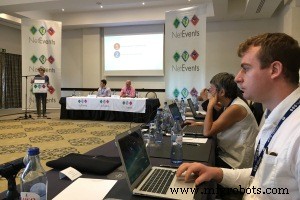
Catherine Hammond presents Analysys Mason’s latest research to analysts and media at #NetEvents18.
“Telcos can engage enterprise customers on applications and security,” one vendor suggested. “I could become a Princess,” a sceptical analyst quipped.
With core connectivity revenues declining, operators are increasingly relying on value‑added services (VAS) to strengthen their balance sheets. Jeremy Cowan reports that, at NetEvents’ Press & Analyst Spotlight in Albufeira (Sept 27‑28 2018), ICT delivery remains challenging and many telcos struggle to execute it effectively.
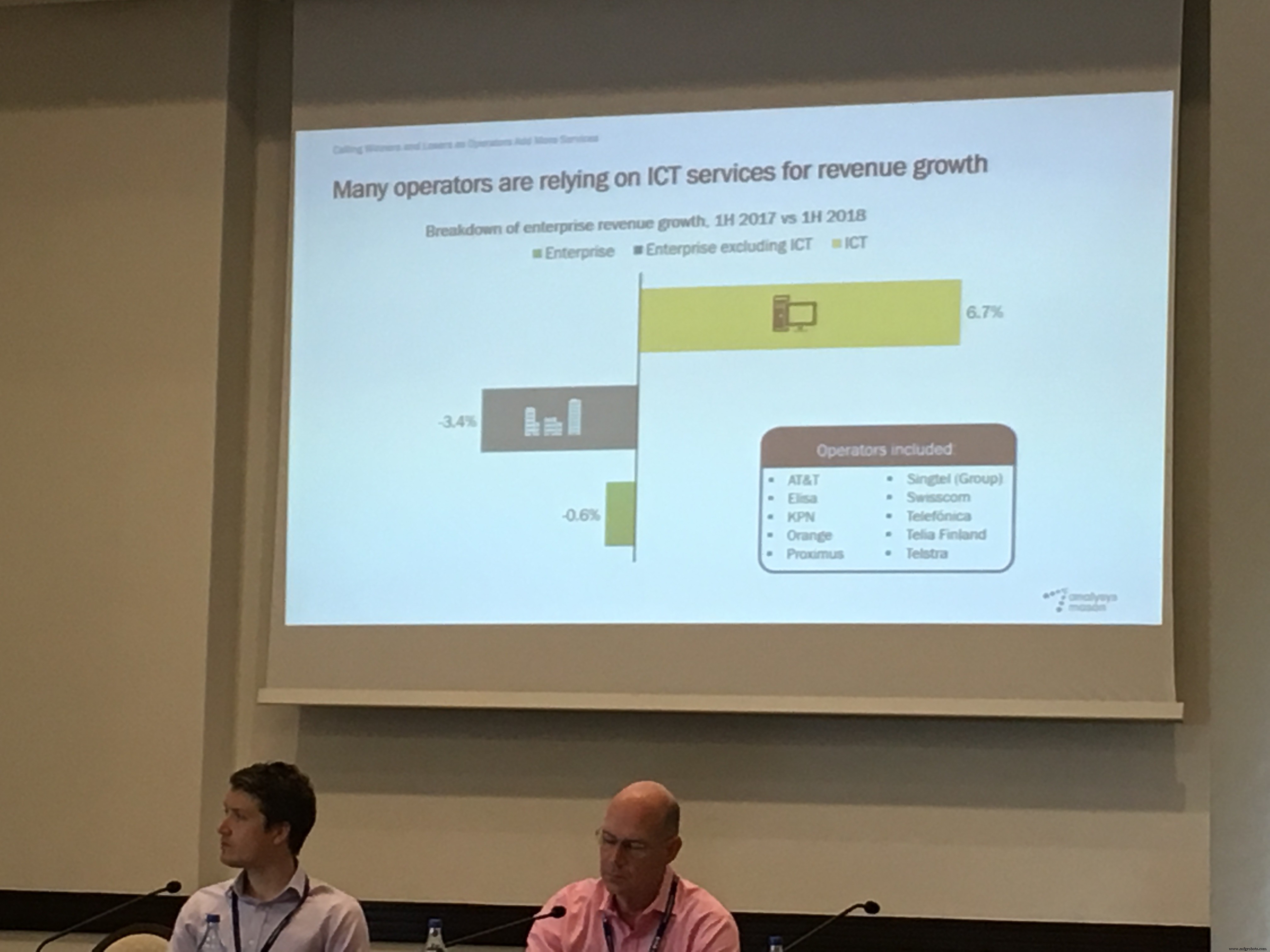
During a session with 35 analysts and media in Faro, Hammond highlighted the growing significance of ICT services. Analysys Mason estimates total operator revenue in 2017 at €93 billion, of which €8 billion stemmed from value‑added ICT services. While core connectivity earnings fell 3.4% in the first half of 2018 versus 2017, ICT revenues grew 6.7% in the same window.
It’s unsurprising that communication service providers are refocusing on this arena, though Hammond cautions that “only a handful are succeeding.”
Key offerings encompass managed hybrid and multi‑cloud solutions, private and public cloud management, co‑location & hosting, IaaS, PaaS, and surrounding professional services and SLAs.
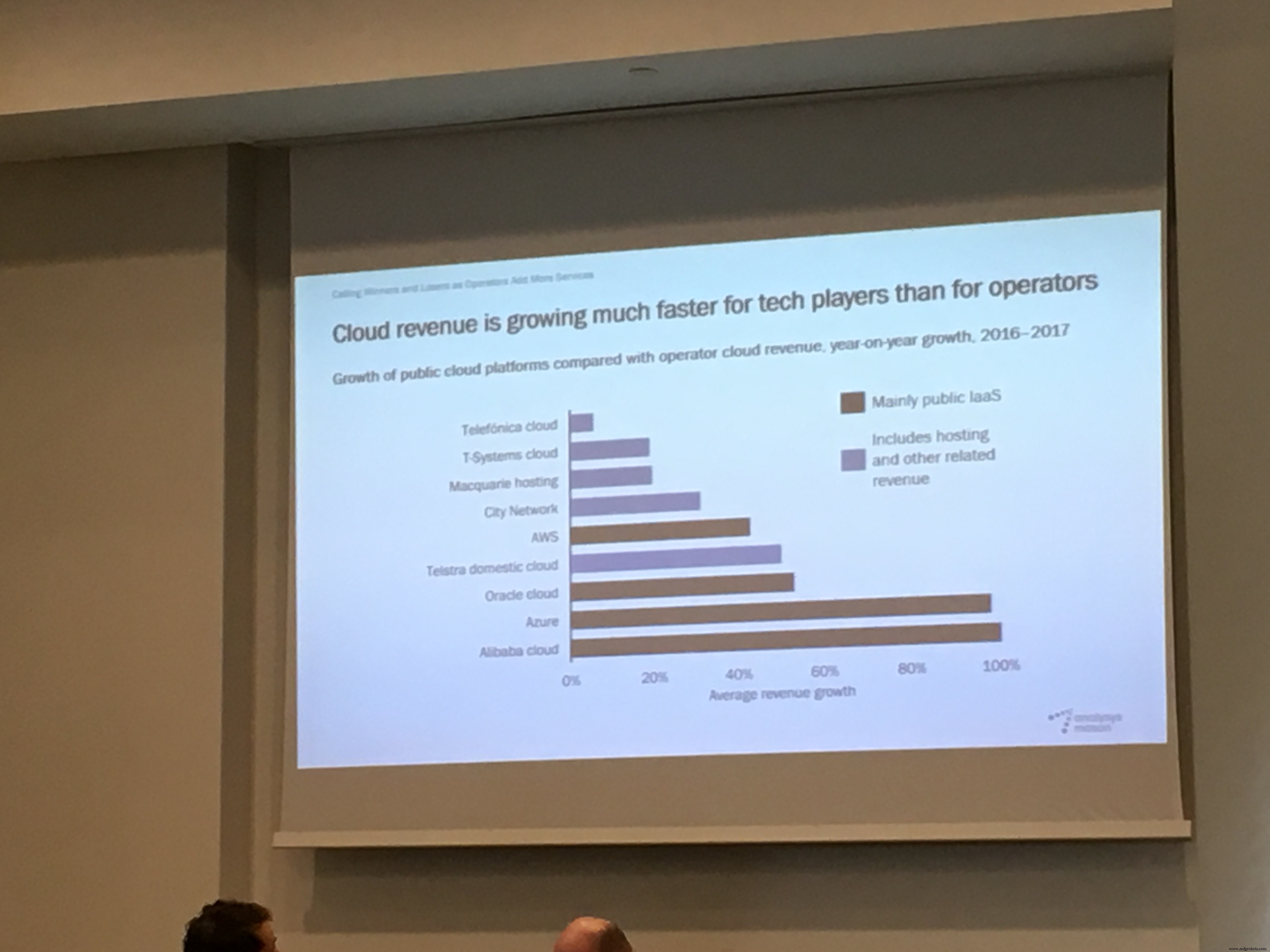
The attractiveness is clear when examining Analysys Mason’s slide, which shows telco cloud revenue growth ranging from 5% to 45% annually, varying by operator. In contrast, non‑telco providers of public IaaS experience 45% to 100% growth, highlighting a gap in pace.
Where is it going wrong?
While service providers theoretically can help enterprises manage IT complexity, a persistent skills gap hampers execution. Many qualified professionals avoid telcos, which are perceived as rigid, unrewarding, and heavily rule‑driven.
Atchison Frazer, marketing head at SD‑WAN vendor Versa, explains, “We invest significant time developing architectures that eliminate complexity. Licences typically span 3–5 years, with professional services entering in years two and three—especially for security, leveraging extensive threat intelligence.”
Can they do it at all?
“Should professional services be provided by service providers?” Hammond asks.
Philip Griffiths, EMEA Partnerships head at NetFoundry, adopts a constructive view: “If telcos don’t wish to become full‑blown system integrators, they must forge robust partnerships.”
Greg Ferro of Packet Pushers challenges the status quo: “Can internet‑based SD‑WAN replace the entrenched pain points of telcos?” The question, he suggests, is largely rhetorical.
Griffiths emphasizes, “Telcos must pivot to align with customer needs.”
Griffiths notes that merely functioning as a utility is insufficient for delivering comprehensive IT services.
He suggests acquisition of a system integrator or a tech start‑up as a viable strategy—an approach adopted by operators like Telefonica and Tata.
A Belgian analyst warns, “Customers under 25 are unlikely to purchase services from a traditional telco like Proximus.”

Griffiths counters that organizational transformation could unlock this potential.
Ferro counters, “Many firms are distancing themselves from telcos, building open platforms to compete for bandwidth.”
Don’t touch anything
Frazer chuckles, “Telcos needn’t touch hardware; they can simply sell licences, letting software handle everything.”
Griffiths adds, “Telcos must engage clients on application and security requirements.”
Ferro replies, “I could become a Princess,” with a smirk, underscoring the industry’s reluctance to evolve.
Frazer responds, “We don’t have time for debate!”
Author: Jeremy Cowan, Editorial Director of IoT Now, IoT Global Network, and VanillaPlus.
Internet of Things Technology
- Value‑Added Processes: The Next Frontier for Autonomous Robots
- Bluetooth Low Energy (LE) Range: What to Expect in Real‑World Use Cases
- How Machine Builders Can Boost Revenue by 20% with Digital Services
- How eSIMs are Transforming Mobile Operators: Growth Opportunities & Revenue Models
- How Heavy Industries Can Succeed with IIoT: Expert Tips for a Winning Strategy
- Driving Growth: Key Applications Powering the IoT Managed Services Market
- How Employee Scheduling Drives Business Growth
- Three Key Shipping Trends Shippers Should Watch in 2024
- Discover Growth Opportunities with a Strategic SWOT Analysis
- Top 5 Criteria for Selecting Reliable Overhead Gantry Crane Repair Services