



Harnessing 5G‑Accelerated IoT: Building a Flexible Data Integration Architecture
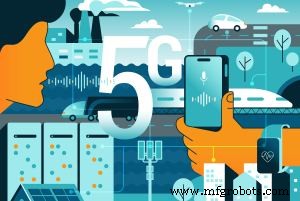
Companies are already harnessing real‑time insights from the Internet of Things (IoT). According to Patrick Callaghan, enterprise architect and strategic business advisor at DataStax, the rollout of 5G will cause data from billions of connected devices to surge dramatically. Organizations that design a flexible, high‑speed data integration architecture will secure a competitive edge.
Gartner estimates that by 2020, roughly 20 billion devices will be Internet‑connected, each generating unprecedented data volumes. As 5G deployments accelerate from 2020 to 2022, data creation will spike even further. The pressing question is: how will enterprises harness this deluge?
To build cutting‑edge applications, businesses must source data not only from IoT sensors but also from internal and external systems. The challenge lies in crafting an architecture that unifies these disparate streams, scales with the 5G data surge, and remains agile enough to accommodate emerging use cases.
Challenges of growing IoT use cases
Gartner projects that 5G mobile networks could support up to one million sensors per square kilometre. This density introduces dual demands on an organization’s data architecture: operational efficiency and customer service excellence.
Some data must trigger instant action at the edge—for instance, robotics and automation deployments. Other data streams enable real‑time analytics that prompt timely interventions when specific conditions arise. For example, a supply‑chain system could proactively alert a customer if an order faces potential delay. Simultaneously, these datasets are archived for deeper, long‑term analysis.
To manage this data deluge, many enterprises are shifting from on‑premise data centres to public cloud, hybrid, or multi‑cloud strategies, avoiding the operational burden of scaling their own infrastructure.
Challenge of integrating with traditional applications
Adopting a multi‑cloud approach underscores the necessity of integrating IoT data with legacy systems—ERP, supply‑chain software—and newer cloud or SaaS solutions. Integration is crucial to unlock the full value of IoT data.

Many applications persist on‑premise because migration costs—unwinding deep customizations and integration layers—are prohibitive.
Speed is equally critical. Automated factories demand near real‑time decision‑making; sluggish remote data sources can cripple responsiveness. With 5G’s low latency, services must handle increasingly complex scenarios.
Challenge of building hybrid applications that make use of IoT
If data cannot be moved or replicated swiftly and reliably, organizations struggle to build hybrid applications that combine IoT data with other sources. Although distributed environments may necessitate multiple data copies, maintaining instant consistency remains a core challenge.
Establishing a hybrid cloud database that replicates data in real time unlocks legacy data for new use cases, enabling interoperability across siloed applications and disparate cloud environments.
A distributed computing model—replicating datasets to independent locations—lets applications run closer to workload sources, improving performance and resilience.
Employing a multi‑model strategy allows the same data to be accessed in different ways—operational analytics, graph analytics, search—tailored to specific business needs. This versatility expands the range of feasible use cases.
In the short term, a hybrid cloud database equips enterprises for the massive data capacity demanded by IoT. In the long term, real‑time duplication facilitates seamless migration to cloud‑native applications without compromising customer experience or performance.
Although the full 5G rollout is still a few years away, 2019 offers a critical window to design and adopt technologies that future‑proof enterprise data architecture for a hyper‑connected world.
Organizations that proactively prepare for 5G‑driven data growth will gain a competitive advantage by scaling effortlessly to meet evolving demands. Scalability, availability, and distributed computing will be essential to successful application deployment.
Author: Patrick Callaghan, Enterprise Architect and Strategic Business Advisor at DataStax.
Internet of Things Technology
- Ensuring Data Compliance in the Internet of Things
- How Industrial IoT Sensors Drive Modern Factory Efficiency
- Smart Data: Navigating the Next Frontier of IoT and Big Data
- Top 3 Challenges in Preparing IoT Data for Industrial Success
- Democratizing the Internet of Things: Next‑Gen Satellite IoT Brings Universal, Affordable Connectivity
- Unlocking the Value of IoT Data: Secure, Insight‑Driven Strategies
- Three Powerful Ways Cloud Computing Enhances IoT Deployments
- Unlocking Real-Time Value: Why Your Business Must Embrace IoT
- Harnessing Cloud Power for IoT: Unlocking Seamless Connectivity & Data Insights
- 5G: Preparing for Exponential Data Growth in Telecom