



Future‑Proofing Industries: How IoT‑Enabled Drones Are Transforming Tomorrow's Operations
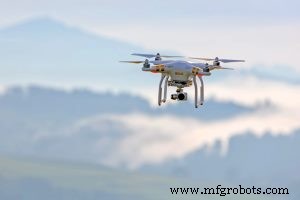
Global research and development budgets for drones are projected to reach $4 billion by 2020, according to Statista. This signals a surge in drone adoption across diverse industrial sectors.
Harnessing the IoT wave, drones have evolved from hobbyist gadgets to sophisticated IoT assets. Coupled with the rollout of 5G, they can now process commands in real time, delivering instant feedback that boosts performance and reliability. Drones drive efficiency, cut labor, and lower operating costs—making them indispensable across industries.
Applications in Agriculture
With the world’s population expected to hit 9.6 billion by 2050, sustainable farming is critical. Smart drones empower precision agriculture by monitoring crops, soil, and water status through high‑resolution sensors. Advanced deep‑learning algorithms detect pests, weeds, disease, and nutrient gaps early, enabling data‑driven recommendations that enhance yields and reduce waste.
Industrial Applications
Inspection and maintenance of industrial facilities—boilers, furnaces, mines, power grids, tunnels—pose access challenges and safety risks. Smart drones equipped with cameras and environmental sensors can collect data on‑site and stream it in real time to inspectors, accelerating maintenance while safeguarding personnel.
Wind‑turbine operators will soon rely on autonomous drones to inspect blades, perform minor repairs such as de‑icing, painting, and cleaning, and report anomalies—lowering costs and improving safety.
Revolutionizing Delivery and Emergency Response
Intelligent drones will reshape logistics, especially where traditional transport is impractical. A pilot in Rwanda has already delivered medical supplies to remote hospitals using drones, reducing delivery times in disaster zones.
During emergencies, drones can conduct rapid aerial surveys, relay live imagery, and collaborate to deploy temporary shelters using 3D‑printing technology. They also assist firefighting by pinpointing fire origins and locating casualties, while law‑enforcement agencies can use drones to monitor crowds and, if necessary, deploy non‑lethal deterrents.
Construction
Construction firms are investing heavily in drone technology. According to Goldman Sachs, spending on drones in construction reached $11 billion (€9.9 billion) by 2020. Drones give stakeholders a real‑time, 360° view of job sites, enabling efficient progress tracking, roof inspections, and utility mapping—reducing site visits and enhancing safety.
While battery life remains a challenge, ongoing advances in power management and flight endurance continue to expand the operational envelope of construction drones.
The author is freelance writer Jocelyn Brown.
Internet of Things Technology
- How Live TV Will Transform: The Computing‑Driven Future of Broadcast
- Robotics in the 21st Century: Distributed Systems, Telepresence, and Space Exploration
- Digital Twin Technology: Shaping the Future of Manufacturing
- The Future of Drones: Capabilities, Opportunities, and Risks
- The Future of Data Centers: Trends, Tech, and Sustainability
- Revolutionizing Supply Chains: Emerging Tech Set to Transform the Industry
- 5 Expert Tips for Effective Floor Marking Tape Use on Construction Sites
- 5 Cutting‑Edge 3D Printing Innovations Driving Sustainability
- IoT Revolutionizing Transportation: Proven Use Cases Driving Efficiency & Safety
- 5 Proven Robot Applications Boosting Efficiency in the Plastics Industry