



Revolutionary COVID-Detecting Facemask: How It Works and Its Impact
Who
The SARS-CoV-2 virus that causes COVID-19 is still a major threat to public health. Wearing a facemask is a step in protecting against infection; the new facemask also diagnoses the wearer with COVID-19.
What

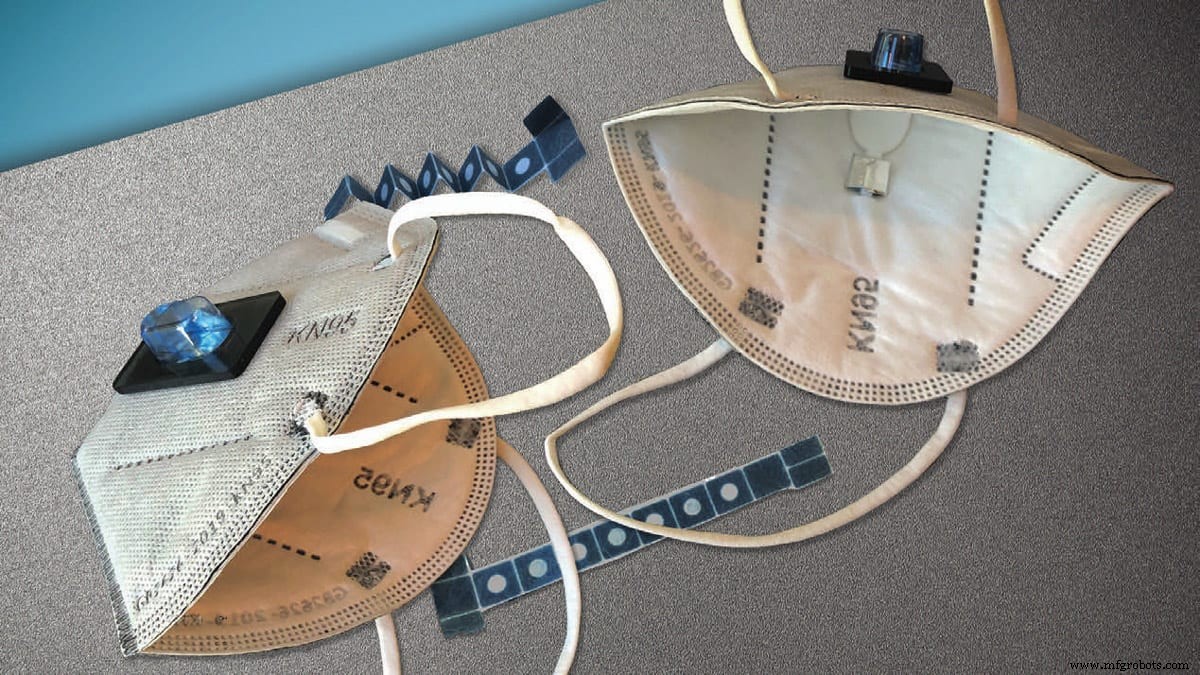
The button-activated mask is embedded with tiny, disposable sensors that can be fitted into other facemasks and could also be adapted to detect other viruses. It gives results within 90 minutes at levels of accuracy comparable to standard nucleic acid-based diagnostic tests like polymerase chain reactions (PCR). The sensors are based on freeze-dried cellular machinery previously developed for use in paper diagnostics for viruses such as Ebola and Zika. Different types of fabric were screened to find the one most compatible with this kind of sensor. The best material is a combination of polyester and other synthetic fibers. To make wearable sensors, the freeze-dried components were embedded into a small section of synthetic fabric. A small splash of liquid containing viral particles hydrates the freeze-dried components and activates the sensor. The sensors can be designed to produce different types of signals including a color change that can be seen with the naked eye or a fluorescent or luminescent signal that can be read with a handheld spectrometer or wirelessly transmitted to a mobile device.
Where
Massachusetts Institute of Technology (MIT) and Wyss Institute for Biologically Inspired Engineering at Harvard University, both in Cambridge, MA
Why
The facemask sensors can be activated by the wearer when they’re ready to perform the test and the results are only displayed on the inside of the mask for user privacy. This technology could be incorporated into labcoats for scientists working with hazardous materials or pathogens, scrubs for doctors and nurses, or uniforms of first responders and military personnel who could be exposed to dangerous pathogens or toxins such as nerve gas.
When
The researchers have filed for a patent on the technology and they are now hoping to work with a company to further develop the sensors and enable mass production of the facemask. The facemask is most likely the first application that could be made available since it is the closest to an actual product.
Contact Abby Abazorius of MIT at This email address is being protected from spambots. You need JavaScript enabled to view it.; 617-253-2709
Sensor
- Why Ultra‑Low, High‑Accuracy Pressure Sensors Are Critical for Modern Applications
- Optical Sensors in Electronics: How They Work, Types, and Applications
- Proximity Sensors: Comparing Ultrasonic, Photoelectric, Laser, and Inductive Technologies
- Measure Analog Sensors on Raspberry Pi Without Native ADC
- How Sensors Transform Manufacturing Efficiency and Insight
- Innovative Color‑Changing Photonic Crystals: The Future of Smart Sensor Technology
- Revolutionizing Food Safety: Fast, Accurate Value Visualization with Hyperspectral Imaging
- The Brain Behind Autonomous Cars: How AI Drives Modern Vehicles
- Efficient IoT Sensor Provisioning: Secure Connectivity & Credential Management
- How Sensors Power Modern Automobiles: Key Roles and Impact