



Proximity Sensors: Comparing Ultrasonic, Photoelectric, Laser, and Inductive Technologies
A Comprehensive Review of Four Key Proximity Sensor Technologies
Proximity sensors are essential in modern electronics, offering non‑contact detection and precise distance measurement. Choosing the right technology—ultrasonic, photoelectric, laser rangefinder, or inductive—requires a clear understanding of each method’s operating principles, strengths, and limitations.
In this article we focus on four widely used technologies that fit in portable or small embedded systems and cover moderate detection ranges—from a few inches to several dozen feet. While capacitive and Hall‑effect sensors excel at very close‑range applications, they are excluded here for brevity.
Designers must balance cost, range, size, refresh rate, and material effects when selecting a sensor. The table below summarizes these trade‑offs to aid your decision.
- Ultrasonic
- Photoelectric
- Laser rangefinder
- Inductive
Below, each technology is examined in depth, highlighting its ideal use cases and potential drawbacks.
Ultrasonic Technology
Ultrasonic sensors emit high‑frequency sound pulses and measure the time taken for the echo to return. The travel time directly translates to distance, allowing the sensor to both detect presence and calculate range.
Two typical configurations exist: separate transmitter and receiver modules placed close together for maximum accuracy, or a single transceiver that integrates both functions. The choice depends on application size and required precision.
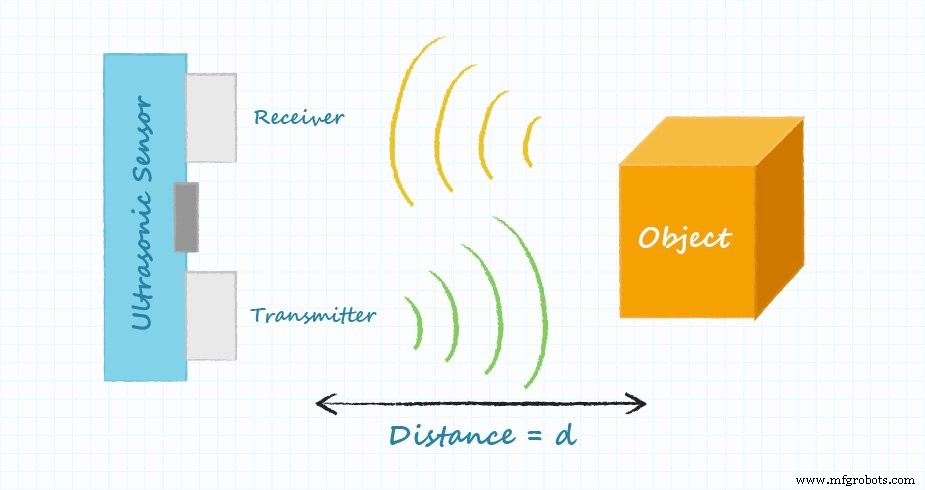
Figure 1. General implementation of ultrasonic technology
Ultrasonic sensors are inexpensive, highly reliable, and capable of delivering hundreds of pulses per second. Because they rely on sound rather than light, color, transparency, and ambient lighting do not affect performance. However, the speed of sound varies with temperature, so large temperature swings can introduce errors unless compensated with a temperature sensor.
Soft or absorbent materials may attenuate the sound, reducing effective range. These sensors are unsuitable for underwater or vacuum environments due to the lack of a medium for sound propagation.
Photoelectric Technology
Photoelectric sensors are ideal for presence detection in applications ranging from garage doors to retail counting systems. With no moving parts, they offer long lifespans and robust operation in harsh industrial settings, provided the lens remains clean.
Three common architectures exist:
- Through‑beam – a transmitter and receiver on opposite sides; any interruption of the beam indicates an object.
- Retroreflective – transmitter and receiver share a housing with a retroreflector that directs the beam back; suitable for precise detection over longer distances.
- Diffuse‑reflective – the beam is reflected off any nearby surface; useful for detecting small objects but cannot calculate distance.
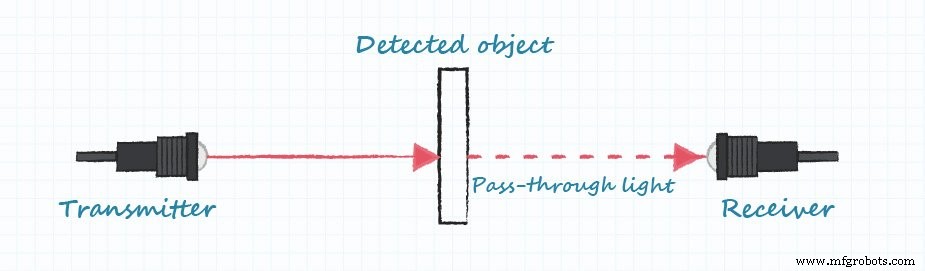
Figure 2. Through‑beam implementation
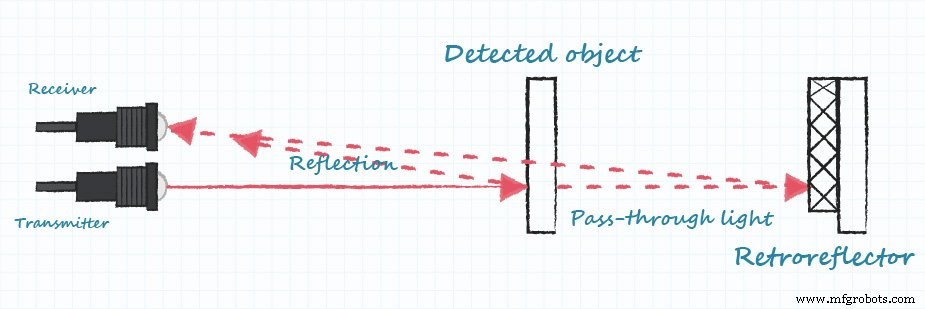
Figure 3. Retroreflective implementation
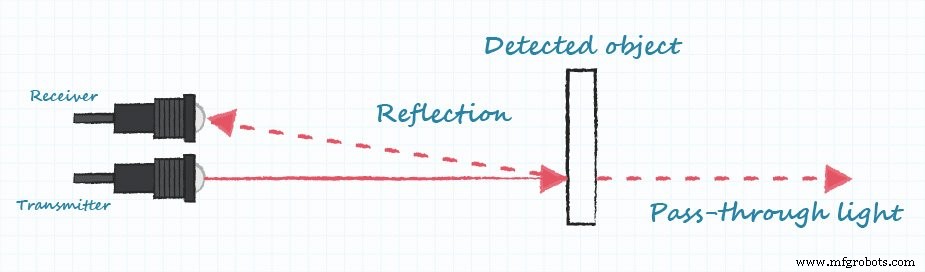
Figure 4. Diffuse‑reflective implementation
Through‑beam and retroreflective models offer rapid response and long range, whereas diffuse‑reflective excels at detecting small, irregularly shaped objects. Alignment is critical; misalignment can cause false readings, especially in complex assemblies.
Laser Rangefinder Technology
Laser rangefinders use electromagnetic waves to measure distance via the time‑of‑flight principle, offering exceptionally long ranges (hundreds to thousands of feet) and very fast response times. The primary challenge is the light’s speed; specialized techniques such as interferometry are often employed to maintain accuracy.
These sensors remain the most costly option, and their high power draw limits portability. Additionally, laser beams are susceptible to eye‑safety concerns and perform poorly against reflective surfaces like glass or water.
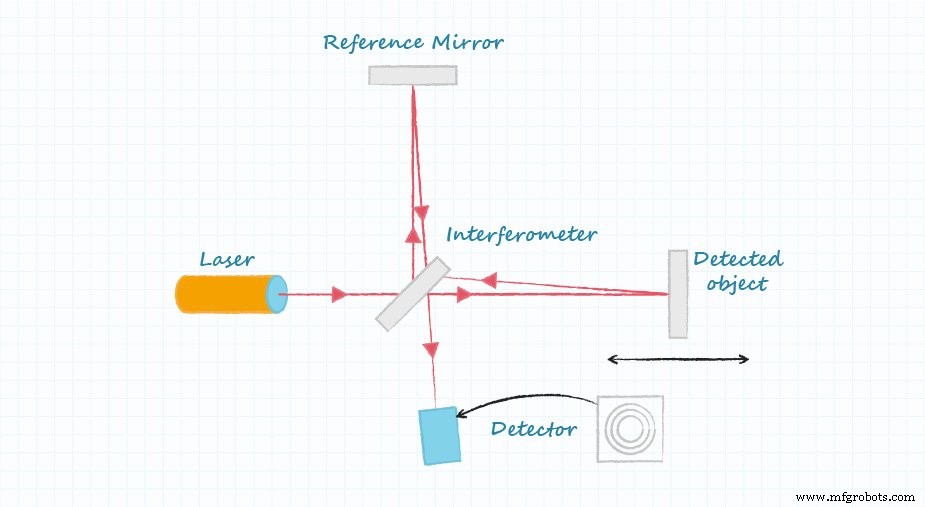
Figure 5. Typical laser rangefinder interferometry setup
Inductive Technology
Inductive sensors detect metallic objects by monitoring changes in their magnetic field. While older in concept, they are increasingly popular in modern embedded designs due to their reliability and speed.
These sensors are limited to metallic targets—ferrous metals such as iron and steel provide the strongest response, while non‑magnetic metals still trigger a signal albeit at reduced range. Applications include gear rotation counting, vehicle detection, and metal sorting.
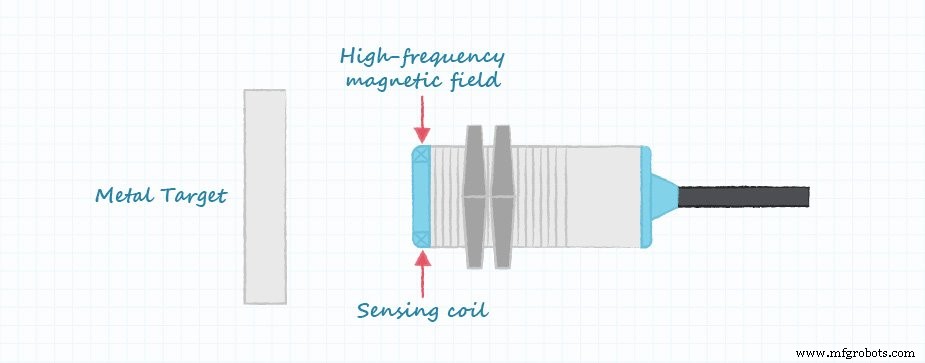
Figure 6. Inductive sensors are used to detect metal objects
Inductive sensors offer millimeter‑level resolution, rapid refresh rates, and compact form factors, but their effectiveness is strictly tied to the presence of conductive material and they can be affected by electromagnetic interference.
Conclusion
When selecting a proximity sensor, evaluate each technology against your application’s key requirements: cost, range, size, refresh rate, and material compatibility. While ultrasonic sensors often provide the best overall balance for many designs, laser rangefinders excel where extreme distance or precision is needed, photoelectric sensors shine in presence detection, and inductive sensors are indispensable for metal detection.
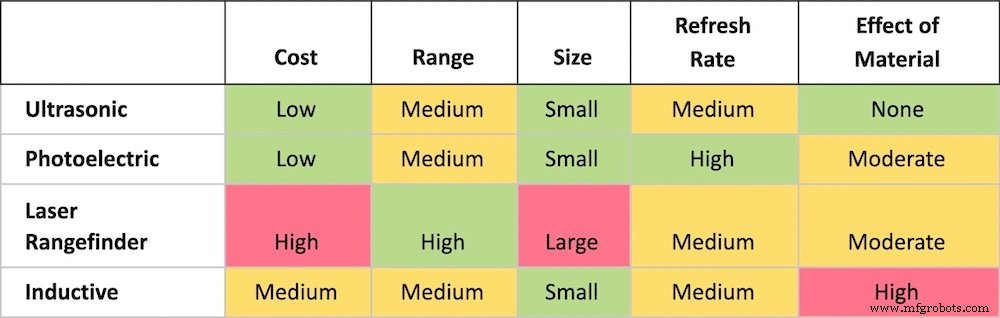
Table 1. Matrix comparison of the covered proximity sensors by cost, range, size, refresh rate, and effect of material.
Industry Articles are a form of content that allows industry partners to share useful news, messages, and technology with All About Circuits readers in a way editorial content is not well suited to. All Industry Articles are subject to strict editorial guidelines with the intention of offering readers useful news, technical expertise, or stories. The viewpoints and opinions expressed in Industry Articles are those of the partner and not necessarily those of All About Circuits or its writers.
Sensor
- Key Automotive Sensors: How Modern Cars Use Advanced Technology
- Understanding Level Sensors: Types, Functions, and Industry Applications
- Motion, Position, and Proximity Sensors: Key Differences and Practical Uses
- Why Ultra‑Low, High‑Accuracy Pressure Sensors Are Critical for Modern Applications
- Optical Sensors in Electronics: How They Work, Types, and Applications
- Silicon vs. Advanced Photodiode Materials: Performance, Applications, and Key Trade‑offs
- How Technology Choices Influence PCB Costs: A Comprehensive Guide
- Precision Machining Technologies: Advancing Accuracy & Efficiency
- Revolutionizing Food Safety: Fast, Accurate Value Visualization with Hyperspectral Imaging
- Revolutionary COVID-Detecting Facemask: How It Works and Its Impact