



Why Ultra‑Low, High‑Accuracy Pressure Sensors Are Critical for Modern Applications
Explore the advantages of board‑mounted pressure sensors and key selection criteria.
Modern systems—from life‑support equipment to HVAC controls—rely on ultra‑low pressure sensors that deliver pinpoint accuracy. Board‑mounted solutions combine compactness, reliability, and low power consumption, making them ideal for space‑constrained and mission‑critical applications.
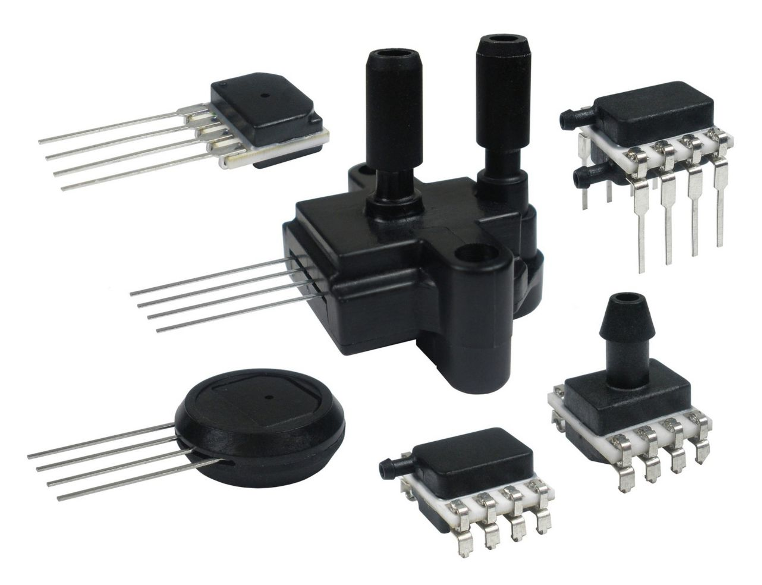
Figure 1. Ultra‑low, high‑accuracy pressure sensors are available as board‑mounted solutions that can measure absolute, gauge, and differential pressure. Image courtesy of Honeywell.
Benefits of Board‑Mounted Pressure Sensors
Board‑mounted pressure sensors (Figure 2) have become the go‑to choice for engineers who need low‑pressure, high‑accuracy readings. Their minimal footprint allows direct integration onto a PCB, eliminating the need for bulky external modules. The micro‑structured sensing element is highly responsive to pressure changes—whether absolute, differential, or gauge—ensuring reliable, ultra‑low pressure measurements. Moreover, the compact design translates to lower power draw, a critical advantage for portable or battery‑powered systems.
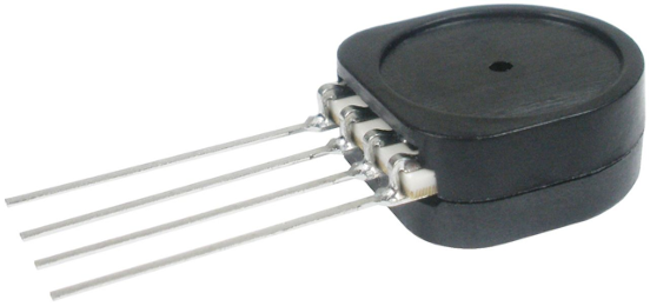
Figure 2. Board‑mounted pressure sensors are compact and seamlessly integrate into electronic assemblies. Image courtesy of Honeywell.
Medical Applications for High‑Accuracy, Ultra‑Low Pressure Sensors
In the medical domain, precision pressure monitoring is non‑negotiable. Key devices that depend on these sensors include:
- Hemodialysis machines – to regulate tank pressure and control blood flow.
- Ventilators – to monitor patient breathing, detect sudden changes, and identify filter blockages.
- Anesthesia machines – to ensure air and oxygen pressures remain within safe limits.
- Sleep apnea devices (CPAP, Auto‑PAP, Bilevel‑PAP) – to maintain therapeutic airflow pressure.
- Laboratory analyzers – to manage fluid volumes, detect vials misplacement, and avoid air contamination.
For example, in hemodialysis, the sensor fine‑tunes the mixing tank pressure, directly influencing the patient’s safety. In ventilators, real‑time pressure data can trigger alarms if a patient’s breathing pattern deviates from the norm. Sleep‑apnea machines rely on accurate pressure feedback to adjust therapy on the fly.

Figure 3. High‑accuracy, low‑pressure board‑mounted sensors are integral to ventilators and anesthesia systems. Image courtesy of Pixabay.
Other Applications
Beyond healthcare, ultra‑low, high‑accuracy sensors drive efficiency in building management. In VAV (variable air volume) systems, precise pressure monitoring enables balanced airflow and timely filter replacement. They also detect window status changes, triggering automated airflow adjustments. Additional use cases include flow calibrators, pneumatic control, gas chromatography, and barometric instrumentation.
Key Considerations When Selecting a Board‑Mount Pressure Sensor
Choosing the right board‑mounted sensor involves evaluating traditional parameters—operating pressure, temperature range, media type—while also weighing advanced attributes that impact reliability and total cost of ownership.
Pressure Ranges and Burst Pressures
Applications with uncertain peak pressures benefit from sensors that support a higher working pressure than the calibrated range. A generous burst pressure margin reduces the risk of accidental over‑pressure, simplifies system design, and cuts downtime.
Accuracy
Precision is governed by non‑linearity, hysteresis, and repeatability. Tight accuracy, often expressed as Full‑Scale Span Best‑Fit Straight Line (FSS‑BFSL), cuts calibration cycles, eases firmware development, and tightens system tolerances.
Total Error Band (TEB)
TEB encompasses all sources of error—offset, span, thermal drift, and hysteresis—over the compensated temperature range. A low TEB guarantees consistent performance across units, enabling interchangeable parts and eliminating the need for individual calibration.
Stability
Long‑term drift directly affects system uptime. Sensors with proven stability reduce maintenance cycles and are essential for safety‑critical applications.
Energy Efficiency
Low power consumption is vital for portable medical devices and embedded HVAC controllers. Many board‑mounted sensors offer sub‑10 mW operation and optional sleep modes to extend battery life.
Moisture Sensitivity Level 1
Meeting IIPC/JEDEC J‑STD‑020D.1 Level 1 ensures that solder reflow does not require prolonged bake cycles, safeguarding component integrity and streamlining production.
Example Product: Honeywell TruStability HSC
The Honeywell TruStability HSC Series exemplifies high‑accuracy, ultra‑low pressure sensors for board‑mounted applications. Available in ranges from ±1.6 mbar to ±10 bar (±160 Pa to ±1 MPa, ±0.5 inH₂O to ±150 psi), these sensors support burst pressure operation. They deliver ±0.25 % FSS BFSL accuracy over 0 °C to 50 °C (32 °F to 122 °F) and maintain a TEB of ±1 % to ±3 % FSS. Integrated temperature compensation and an onboard ASIC guarantee reliability.
Key features:
- Absolute, differential, and gauge measurement modes.
- Excellent stability and low power (<10 mW); optional sleep mode available.
- Moisture Sensitivity Level 1 compliant.
Sager Electronics is an authorized distributor of Honeywell Sensing and IoT solutions. Explore the TruStability lineup or view the Honeywell catalog on sager.com.
Industry Articles are a form of content that allows industry partners to share useful news, messages, and technology with All About Circuits readers in a way editorial content is not well suited to. All Industry Articles are subject to strict editorial guidelines with the intention of offering readers useful news, technical expertise, or stories. The viewpoints and opinions expressed in Industry Articles are those of the partner and not necessarily those of All About Circuits or its writers.
Sensor
- Why Mechanical Design Services Are Essential for Product Success
- Board-Mount Pressure Sensors: How They Work, Key Benefits, and Selection Tips
- Why Formal Maintenance Scheduling Is Essential for Efficient Operations
- Why Open Source Drives Innovation at the Edge – Essential eBook
- Innovative Color‑Changing Photonic Crystals: The Future of Smart Sensor Technology
- Efficient IoT Sensor Provisioning: Secure Connectivity & Credential Management
- Revolutionary COVID-Detecting Facemask: How It Works and Its Impact
- Latest Advancements in MEMS Sensors for Wearable Technology
- Accurate Hydraulic Fitting Measurement: Step‑by‑Step Guide
- Hydraulic Systems: Why Regular Maintenance Is Essential