


Industrial manufacturing
Composite material


GNPGraystar’s Chemical Grade Yttria-Stabilized Zirconia is a non-toxic and tasteless white powder. It has good chemical stability and controlled specific surface area. In ceramics, Y203 partially stabilized zirconia has superior load bearing capabilites and offers the highest strength and toughness.
GNPGraystar’s Chemical Grade Yttria-Stabilized Zirconia is a non-toxic and tasteless white powder. It has good chemical stability and controlled specific surface area. In ceramics, Y203 partially stabilized zirconia has superior load bearing capabilites and offers the highest strength and toughness.
WCu composites consist of a porous tungsten matrix infiltrated with approximately 10 - 40 percent by weight of copper. Tungsten-Copper is very resistant to arc erosion, exhibits good electrical conductivity, a high level of thermal conductivity and low thermal expansion.PropertiesGeneralPropertyTemp
WCu composites consist of a porous tungsten matrix infiltrated with approximately 10 - 40 percent by weight of copper. Tungsten-Copper is very resistant to arc erosion, exhibits good electrical conductivity, a high level of thermal conductivity and low thermal expansion.PropertiesGeneralPropertyTemp
WCu composites consist of a porous tungsten matrix infiltrated with approximately 10 - 40 percent by weight of copper. Tungsten-Copper is very resistant to arc erosion, exhibits good electrical conductivity, a high level of thermal conductivity and low thermal expansion.PropertiesGeneralPropertyTemp
В180 is a prepreg based on epoxy carbon fiber reinforced resin for producing details with operating temperatures up to 150°C. Out-of-autoclave prepreg technology has the most advantages of autoclave. The autoclave is not required for processing the prepreg B180. Curing takes place in a vacuum bag, w
Reinforced with 68% Carbon FibersPropertiesGeneralPropertyTemperatureValueDensity23.0 °C1.6 g/cm³MechanicalPropertyTemperatureValueElastic modulus23.0 °C250 GPaElongation23.0 °C1.7 %Poisson's ratio23.0 °C0.25 [-]Shear strength23.0 °C40 MPaTensile strength23.0 °C4900 MPaTechnological propertiesP
Reinforced with 68% Carbon FibersPropertiesGeneralPropertyTemperatureValueDensity23.0 °C1.6 g/cm³MechanicalPropertyTemperatureValueElastic modulus23.0 °C240 GPaElongation23.0 °C1.7 %Poisson's ratio23.0 °C0.25 [-]Shear strength23.0 °C40 MPaTensile strength23.0 °C3400 MPaTechnological propertiesP
WC reinforced Sterling SilverPropertiesGeneralPropertyValueDensity10.1 g/cm³Porosity3 %MechanicalPropertyValueCommentHardness, Vickers187 - 189 [-]HV 0.2ElectricalPropertyValueElectrical resistivity4.01e-08 Ω·mTechnological propertiesPropertyApplication areasElectrical contactsOtherDiameter 10 mm by
GNPGraystar’s Chemical Grade Yttria-Stabilized Zirconia is a non-toxic and tasteless white powder. It has good chemical stability and controlled specific surface area. In ceramics, Y203 partially stabilized zirconia has superior load bearing capabilites and offers the highest strength and toughness.
GNPGraystar’s Chemical Grade Yttria-Stabilized Zirconia is a non-toxic and tasteless white powder. It has good chemical stability and controlled specific surface area. In ceramics, Y203 partially stabilized zirconia has superior load bearing capabilites and offers the highest strength and toughness.
Т26 is a single part low viscosity epoxy infusion carbon fiber reinforced resin developed for high-loaded structures. T26 offers simple and flexible processing due to low viscosity at relatively low impregnation temperatures (110°С). T26 was developed specially for RTM and vacuum infusion molding, t
Here we bring the excellent physical properties of silicon carbide into complex shapes. The material base and the broad range of refinement processes allow us to produce tough industrial components with high heat resistance, high thermal conductivity and hardness. The different types of SICAPRINT Si
Here we bring the excellent physical properties of silicon carbide into complex shapes. The material base and the broad range of refinement processes allow us to produce tough industrial components with high heat resistance, high thermal conductivity and hardness. The different types of SICAPRINT Si
Here we bring the excellent physical properties of silicon carbide into complex shapes. The material base and the broad range of refinement processes allow us to produce tough industrial components with high heat resistance, high thermal conductivity and hardness. The different types of SICAPRINT Si
В180 is a prepreg based on epoxy carbon fiber reinforced resin for producing details with operating temperatures up to 150°C. Out-of-autoclave prepreg technology has the most advantages of autoclave. The autoclave is not required for processing the prepreg B180. Curing takes place in a vacuum bag, w
Т26 is a single part low viscosity epoxy infusion carbon fabric plasticized resin developed for high-loaded structures. T26 offers simple and flexible processing due to low viscosity at relatively low impregnation temperatures (110°С). T26 was developed specially for RTM and vacuum infusion molding,
GNPGraystar’s Chemical Grade Yttria-Stabilized Zirconia is a non-toxic and tasteless white powder. It has good chemical stability and controlled specific surface area. In ceramics, Y203 partially stabilized zirconia has superior load bearing capabilites and offers the highest strength and toughness.
GNPGraystar’s Fused Magnesia-Stabilized Zirconia is produced by electrofusion of high purity zirconia and magnesia, with custom sizingPropertiesGeneralPropertyValueCommentDensity5.6 g/cm³min.Stabilization50 %70 %Chemical propertiesPropertyValueCommentAluminium0.4max. Al₂O₃Iron0.1max. Fe₂O₃Magnesium3
GNPGraystar’s Fused Magnesia-Stabilized Zirconia is produced by electrofusion of high purity zirconia and magnesia, with custom sizingPropertiesGeneralPropertyValueCommentDensity5.7 g/cm³min.Stabilization70 %85 %Chemical propertiesPropertyValueCommentAluminium0.1max. Al₂O₃Iron0.1max. Fe₂O₃Magnesium3
Composite material
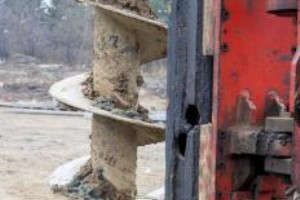
Auger Drilling Explained: Techniques, Applications, and Benefits
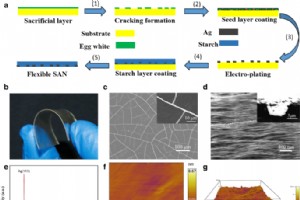
High-Performance Recyclable Starch‑Ag Networks for Transparent Conductive Electrodes in Flexible Joint Sensors
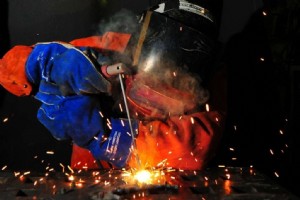
Laser vs MIG Welding: Expert Comparison for Optimal Manufacturing
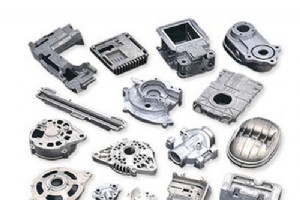
Insider Secrets to Mastering Die Casting: Processes, Materials, and Tips
