



Plastic Packaging Film Production: A Comprehensive Overview of Processes and Materials
Plastic bags—often referred to as plastic packaging—have become ubiquitous in modern life, offering lightweight, cost‑effective solutions for storing food, consumer goods, and industrial products worldwide. While their convenience is undeniable, the environmental implications of their widespread use are increasingly under scrutiny. Below, Sunrise Colors provides an expert‑led, step‑by‑step look at the manufacturing journey of plastic packaging films, from raw material to finished bag, and highlights the nuances that differentiate key polymer types.
1. The Four‑Step Production Cycle for Safe, High‑Quality Packaging
To meet rigorous quality and safety standards—especially for food‑contact applications—plastic packaging firms follow a proven four‑step sequence that prioritizes hygienic practices and precise input control.
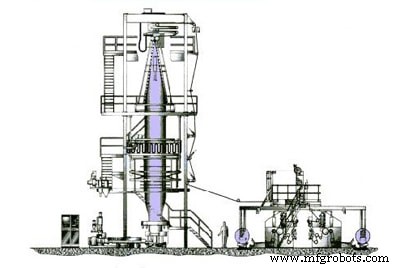
1.1. Material Preparation: Mixing and Conditioning
During this initial phase, technicians blend virgin plastic granules—or a mix of recycled content—with essential additives, forming a “plastic‑in‑use” material. The resulting mix, or masterbatch, ensures that each film layer possesses the desired mechanical, optical, and barrier properties.
1.2. Film Formation: The Blow‑Moulding Stage
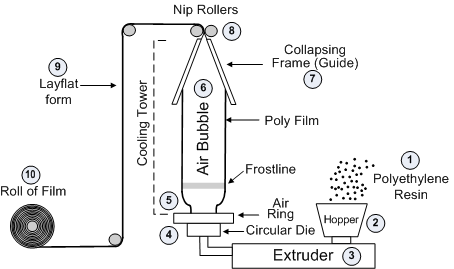
After the pre‑mixing, the molten material is directed into an extruder or a straw‑type system, where it is heated and transformed into a bubble—known as a “hot‑melt” or thermal‑break—with a precisely controlled thickness and width. Operators calibrate the membrane to achieve the required specifications for the target application.
1.3. Post‑Extrusion: Cooling and Rolling
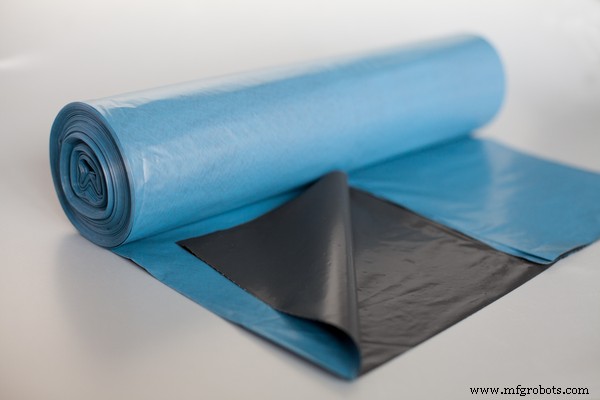
Once the bubble has cooled, it is passed through a series of rollers that shape it into a flat, stable sheet. The film is then wound onto a paper or plastic core, yielding a double‑layered roll. For single‑layer products, a secondary stripping step creates two cores simultaneously.
1.4. Final Cutting and Sealing
The completed roll is fed into an automated cutter. Advanced sensors measure each segment’s length to ensure uniformity, while an integrated heat‑press system seals the bag’s bottom edges. The result is a ready‑to‑use plastic bag that meets safety and performance criteria.
2. Material‑Specific Production Nuances
Although the core extrusion‑blow cycle remains consistent across polymers, each material—LDPE, HDPE, PP—has unique characteristics that influence process adjustments and end‑use suitability. Below is a concise comparison of these common plastics.
2.1. LDPE (Low‑Density Polyethylene)
- Properties: High flexibility, excellent transparency, superior barrier against moisture and chemicals, suitable for food contact.
- Typical Uses: Flexible bags for liquid storage, spice sachets, and pouches for fresh produce.
- Process Note: Melting point 105–115 °C; easy to print but challenging to punch due to its pliability. Anti‑static treatments are recommended for electronic or explosive environments.
- Production: Mirrors the standard extrusion‑blow sequence, with slight adjustments to maintain film integrity during cooling.
2.2. HDPE (High‑Density Polyethylene)
- Properties: Moderately clear, glossy surface, rigid compared to LDPE, higher mechanical strength.
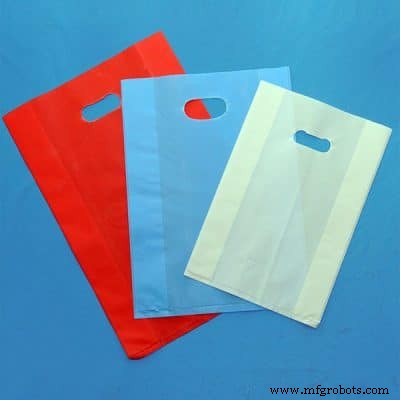
- Typical Uses: Handle bags, grocery bags, and rigid containers.
- Process Note: Melting point 130–150 °C. Requires a central stabilizer bar in the mold head to keep the bubble upright during extrusion and to facilitate rapid cooling of the high‑temperature melt.
- Production: Similar to LDPE but incorporates the stabilizer bar and a slightly modified cooling regime.
2.3. PP (Polypropylene)
- Properties: Colorless, odorless, non‑toxic, excellent heat resistance (160–171 °C), easy to tear when punctured.
- Typical Uses: High‑value product packaging, tear‑away bags, and botanical containers.
- Process Note: The high melting temperature necessitates a top‑down blowing method; the bubble is formed from above to prevent tearing. Water‑jet cooling ensures rapid temperature drop, stabilizing the film before rolling.
- Production: Shares the extrusion‑blow‑press and cutting steps with other polymers but requires specialized blowing techniques and cooling to preserve film integrity.
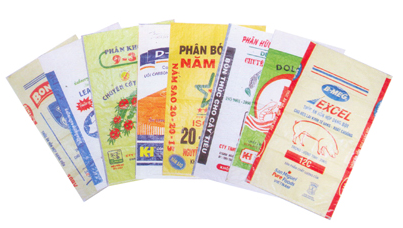
Regardless of polymer type, the fundamental production stages—mixing, extrusion‑blowing, cooling, and cutting—remain constant. However, the unique physical properties of each material dictate specific process adjustments, ensuring that the final product meets the functional demands of its intended application.
Dye
- Top 3 High‑Strength Materials for Plastic Fasteners
- Choosing the Right Color Masterbatch for Plastic Production
- How Masterbatches Enhance Plastic Production: Filler, Color, and Specialty Resins
- 2020 Surge in Packaging Materials Procurement: Key Insights & Growth Metrics
- FINEX Process: Advanced Liquid Iron Production Using Iron Ore Fines & Non-Coking Coal
- Comprehensive Guide to Manufacturing Shaped Refractories
- CLU Process for Stainless Steel: Efficient Carbon Removal & Alloying
- Extrusion Explained: Types and Applications in Metal Fabrication
- Choosing the Right IC Packaging: A Guide to Types and Selection Criteria
- Choosing the Right Investment Casting Materials: Types, Benefits, and Applications