



Scott Bader’s Urethane Acrylate Resins Propel 2020 Corvette Stingray’s Advanced Carbon Fiber Bumper Beam
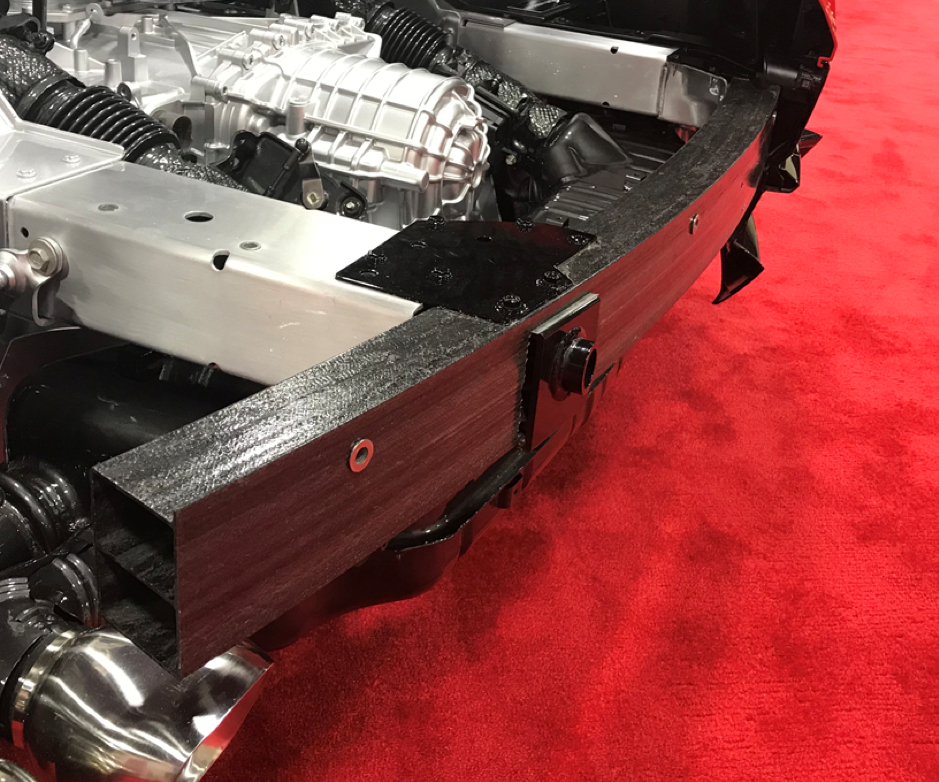
Scott Bader’s Crestapol resins were used to produce a curved, multi-hollow pultruded carbon fiber bumper beam for the 2020 Chevrolet Corvette Stingray. Source | Scott Bader
Scott Bader (Northamptonshire, U.K.) and Shape Corp. (Grand Haven, Mich., U.S.) have worked in partnership to produce the automotive industry’s first curved, multi-hollow pultruded carbon fiber bumper beam for the newly unveiled 2020 Chevrolet Corvette Stingray.
The pultruded bumper beam is manufactured using Scott Bader’s Crestapol urethane acrylate resins. Crestapol resins were chosen for their strength, toughness and lightweight properties as well as their ease of use and good bonding with carbon fibers.
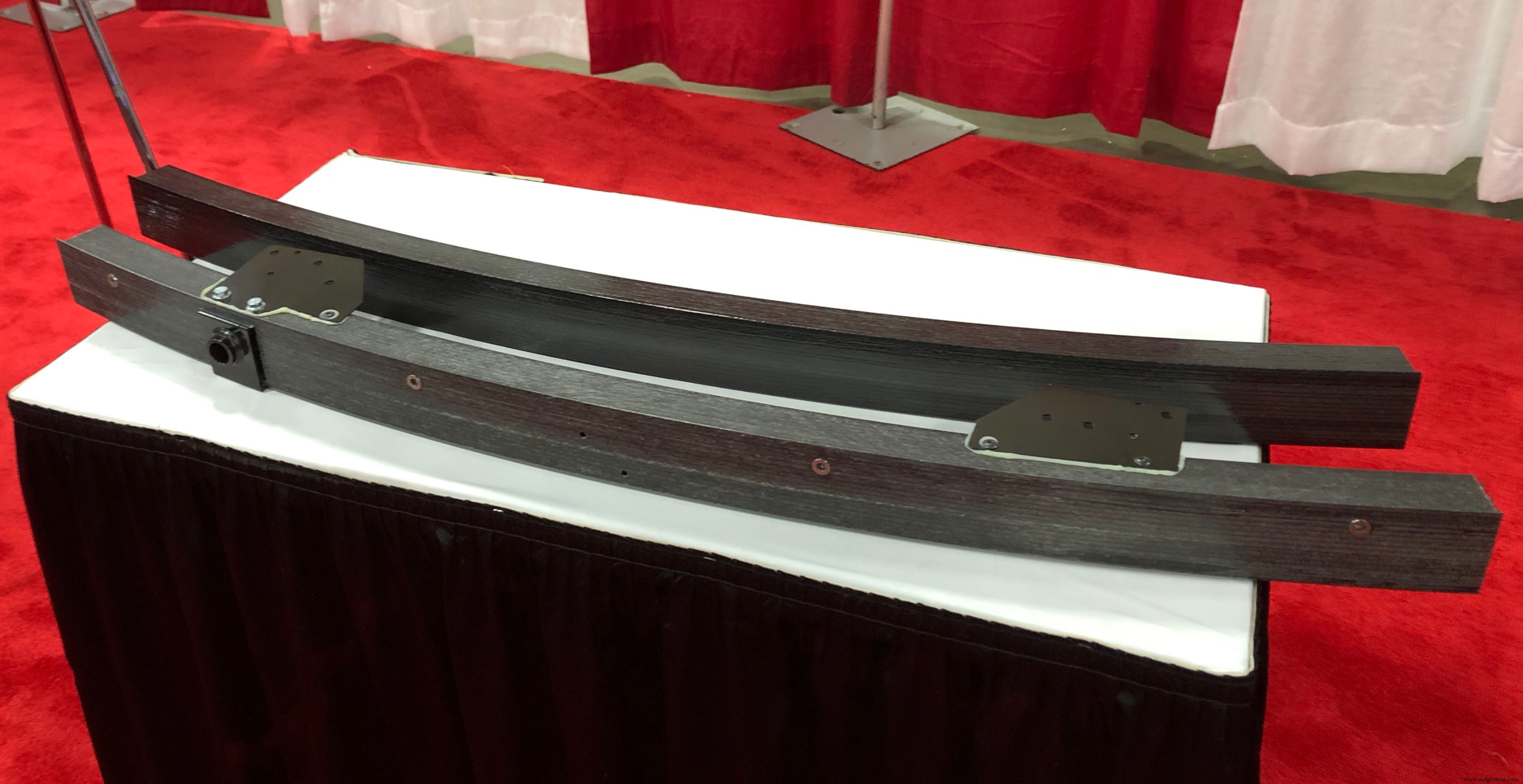
The new Corvette pultruded carbon fiber bumper beam on display at SPE ACCE 2019. CW photo | Scott Francis
According to Scott Bader, the new bumper is the world’s first pultruded part within an automotive application. The company’s technical team has been working in collaboration with Shape Corp. engineers on the project since July of 2016.
“The attribute that we like the most about the Crestapol resin is the ability to withstand the temperatures of the E-coat paint process,” says Toby Jacobson, plastic materials & process manager, advanced product development at Shape Corp. “This part is assembled in body, so the part gets dipped and exposed to elevated temperatures. The Crestapol resin provided a solution against other alternatives without compromising performance or process speeds. In addition, this part has impact requirements, so resin selection played an important part in meeting all of the challenging requirements.”
CW photo | Scott Francis
In addition to the Crestapol resins used to manufacture the bumper beam, Scott Bader’s Crestabond adhesives are used to bond the bumper beam to the e-coated steel structure at the rear of the car. Several structural adhesives were tested to find the best combination of strength and toughness to meet the crash, impact and durability requirements necessary to achieve Chevrolet’s standards. Crestabond M7-05 was selected for its ability to bond under the high-temperature test protocol.
fiber
- Corvette C8 Z06 Unveiled: Carbon Fiber Wheels & Performance Highlights
- Enhancing Petrochemical Plant Durability with Corrosion-Resistant FRP Resins
- Sicomin Epoxy Systems Propel Candela's All-Electric Foiling Boat
- SPE ACCE 2019 Announces Third Keynote: Corvette Body Structure Lead Edward D. Moss
- Vectorply Carbon Fiber Featured in Corvette Stingray Bumper Beam
- FRP Pultrusion Technology Powers New Mobile Habitat for Antarctica’s Scott Base
- Scott Bader Introduces Advanced Resins, Gelcoats, and Adhesives for Structural Applications
- BreakThru Technology Cuts Free Formaldehyde in Phenolic Resins to Below 0.1%
- Chevrolet Launches the 2023 Corvette Z06: 670hp Powerhouse
- Cast Urethane Explained: Delivering Reliable, High‑Quality Plastic Parts