



FRP Pultrusion Technology Powers New Mobile Habitat for Antarctica’s Scott Base
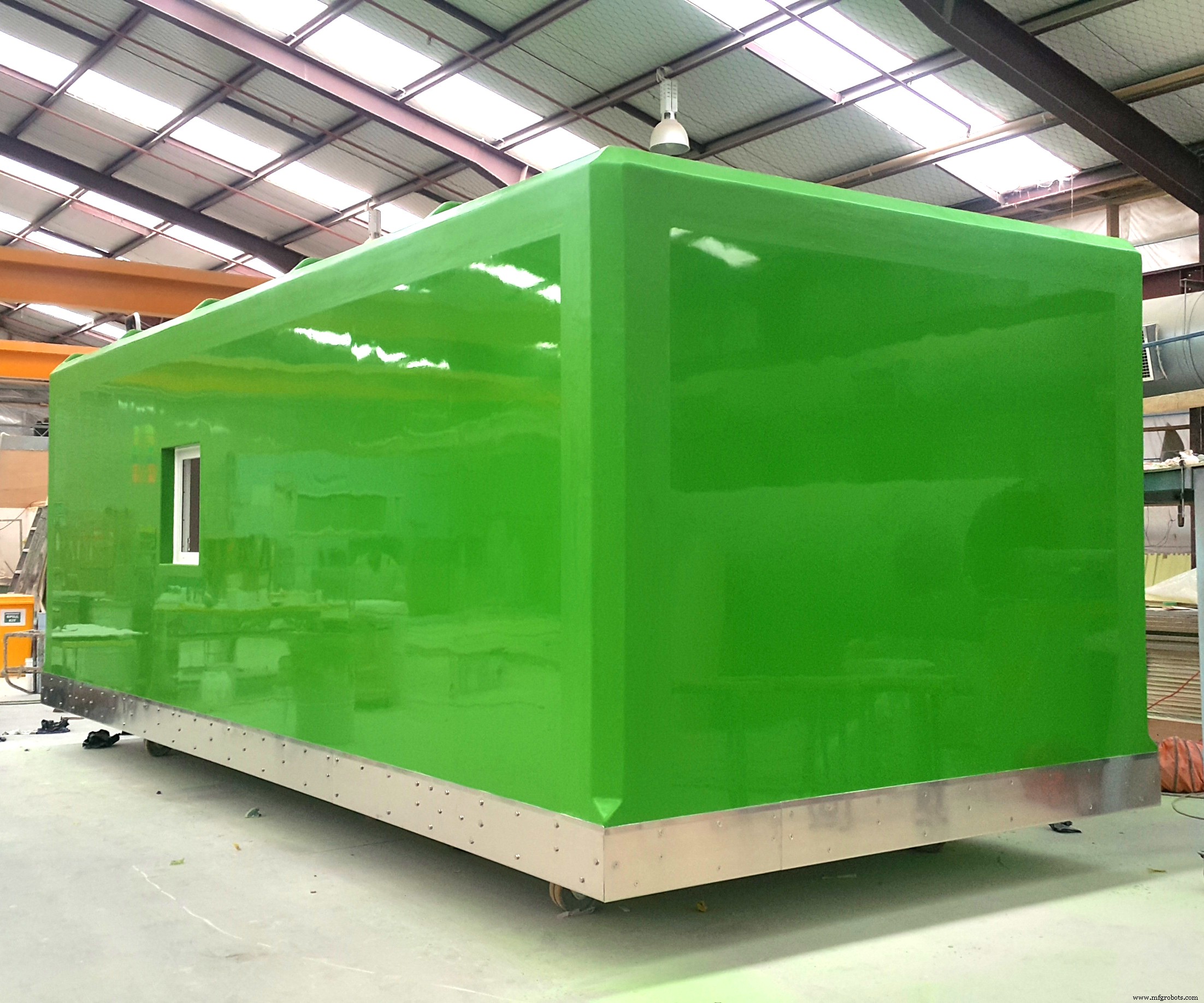
Source | Fibreglass Developments Ltd.
Fibreglass Developments Ltd. (Feilding, New Zealand) has manufactured a composite living module for Scott Base, New Zealand’s Antarctic research station. The company was contracted to build the first mobile habitat in a new, more durable construction design that is being trialed by research institute Antarctica New Zealand. The self-contained living unit is designed to withstand the extreme environment, which can experience conditions of 200 kilometers per hour winds and 60°C temperatures. Strength, rigidity and insulation were all taken into consideration for the design.
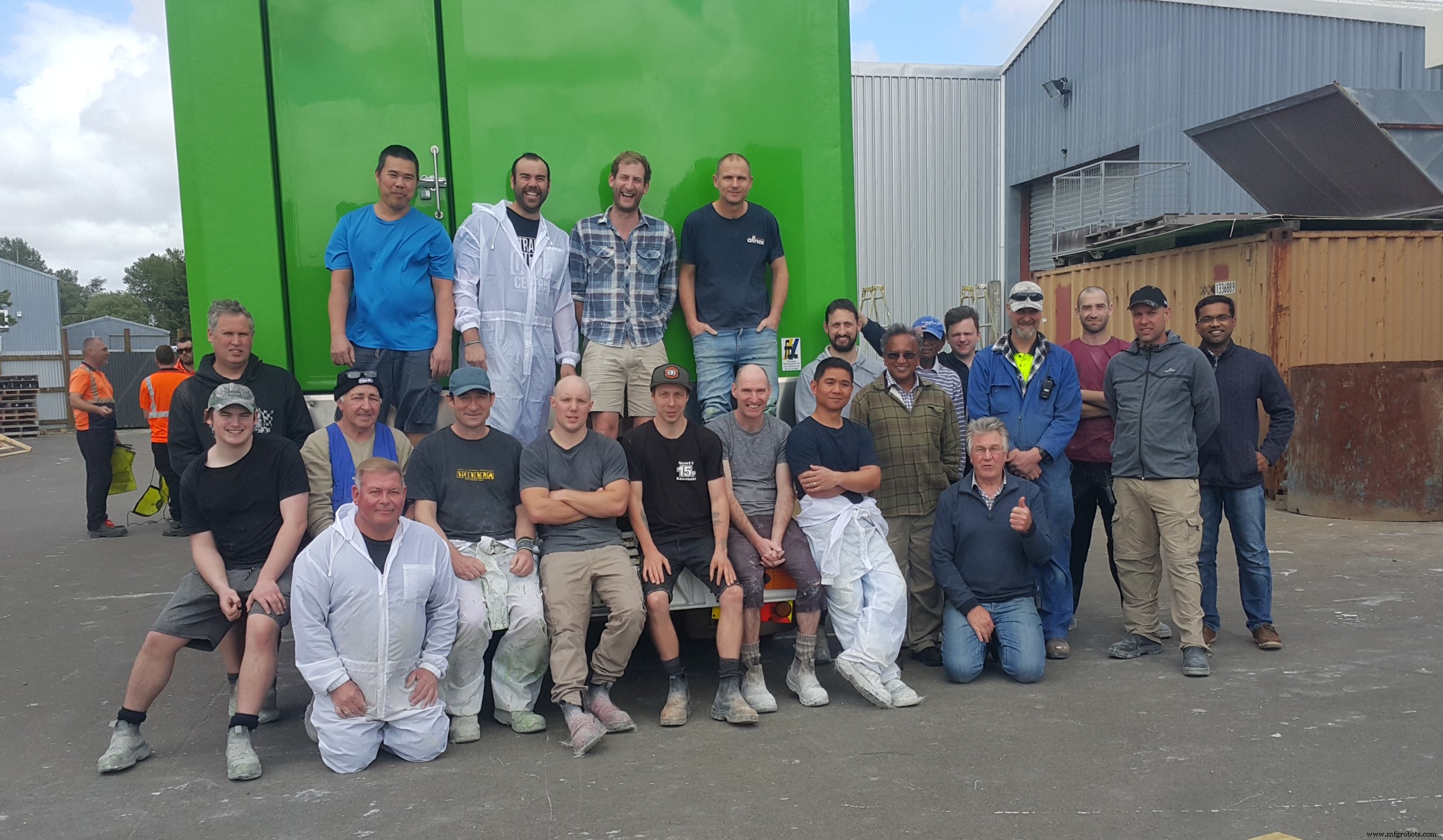
The team at Fibreglass Development prepare to send the “Big Green Box” on its journey. Source | Fibreglass Development Ltd.
According to Fibreglass Developments general manager Steve Bond, the design of the module, which is affectionately nicknamed the “Big Green Box,” was based on the company’s experience designing and building freezer bodies for trucks, and so is well-suited for travel across the icy landscape.
Measuring 8.2 meters by 3.2 meters by 2.7 meters, the habitat consists of fire-retardant, fiberglass-reinforced polyurethane walls and pultruded beams. For strength and rigidity, 150-millimeter-deep pultrusion is used throughout the construction. To provide stiffness, I-beams run across the diameter of each panel. Channels surround each panel, and were also doubled up to form the two main structural beams through the floor that attach to a 2.4-meter-wide mobile sled on-site. The beams carry the load from the outside walls to the sled and would also support the sled should it drop into a hollow when moving.
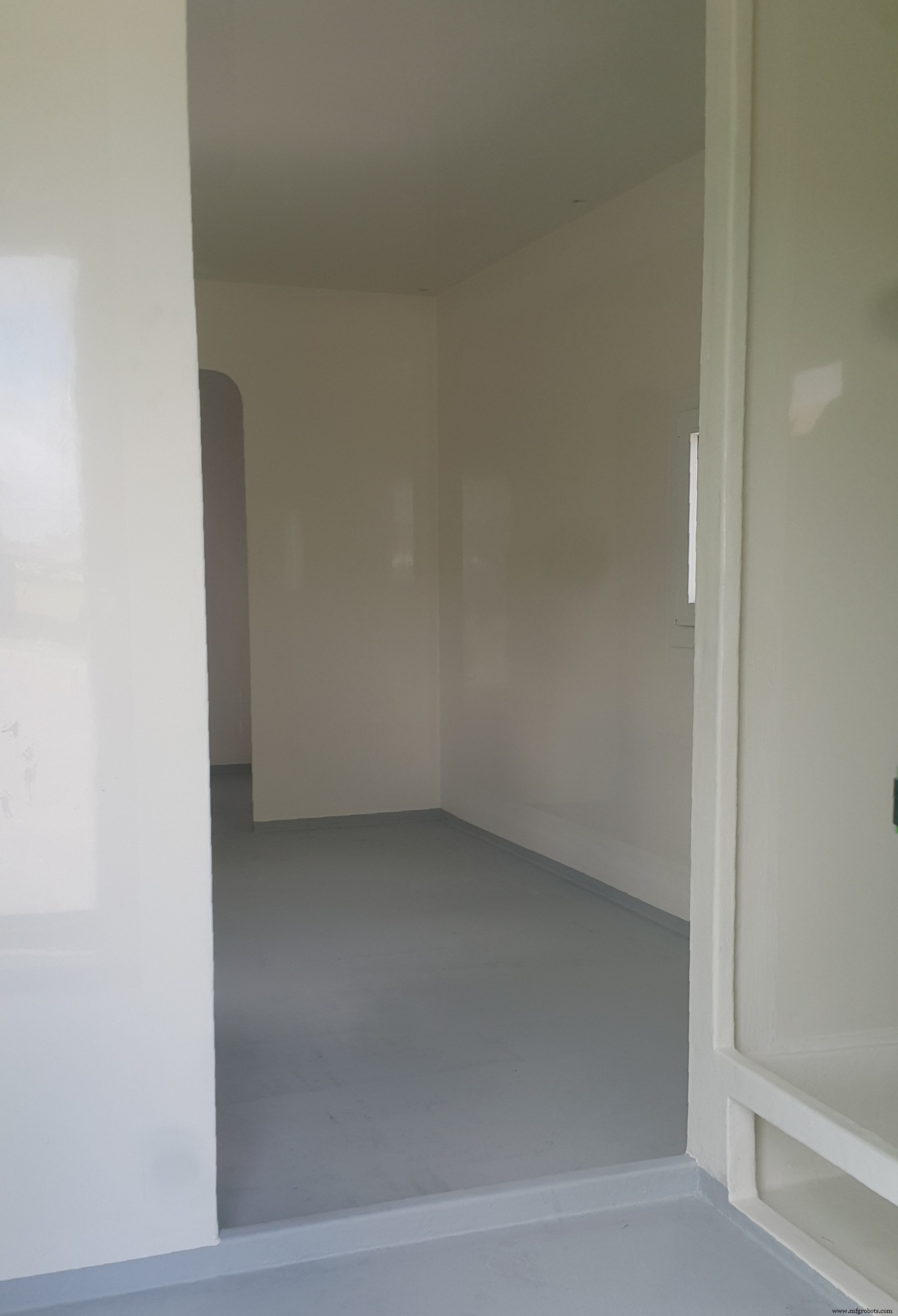
A peek inside the mobile Antarctic living unit. Source | Fibreglass Developments Ltd.
In between the beams and forming the bulk of the wall is PIR polyurethane, which provides insulation from both cold and sound. The exterior and interior face skins are a combination of chopped strand mat (CSM), biaxial and double bias fiberglass cloth laminated with fire retardant resins. The separate panels are bonded together with a combination of Plexus structural adhesive and hand lay of similar laminate to the linings.
Currently, many of the other buildings at Scott Base have been built using Polypanel, Ali skinned EPS. With the extreme temperature changes, these can be prone to movement, loosening riveted jointing systems until eventual failure. To prevent this, Fibreglass Developments’ Big Green Box is covered in a monolithic skin with no exposed joints.
fiber
- Maxim’s MAX86150: Integrated PPG & ECG Module for Mobile Health Monitoring
- Can FRP Fail? Understanding the Limits of Fiber‑Reinforced Plastic
- Using FRP to Build Energy‑Efficient Sunshades
- Fiber‑Reinforced Plastic (FRP) in Construction: Strength, Durability, and Cost Savings
- Installing Structural FRP: A Quick, Cost‑Effective Guide
- Why Waterparks Rely on FRP: Benefits, Applications, and Value
- Why FRP (Fiberglass Reinforced Plastic) Is Truly Waterproof and a Superior Choice for Industrial Structures
- How FRP Is Made – From History to Modern Production
- Enhancing Petrochemical Plant Durability with Corrosion-Resistant FRP Resins
- FRP Profiles Deliver Cost‑Effective, Stunning Support for Innovative Residential Architecture