



FRP Profiles Deliver Cost‑Effective, Stunning Support for Innovative Residential Architecture
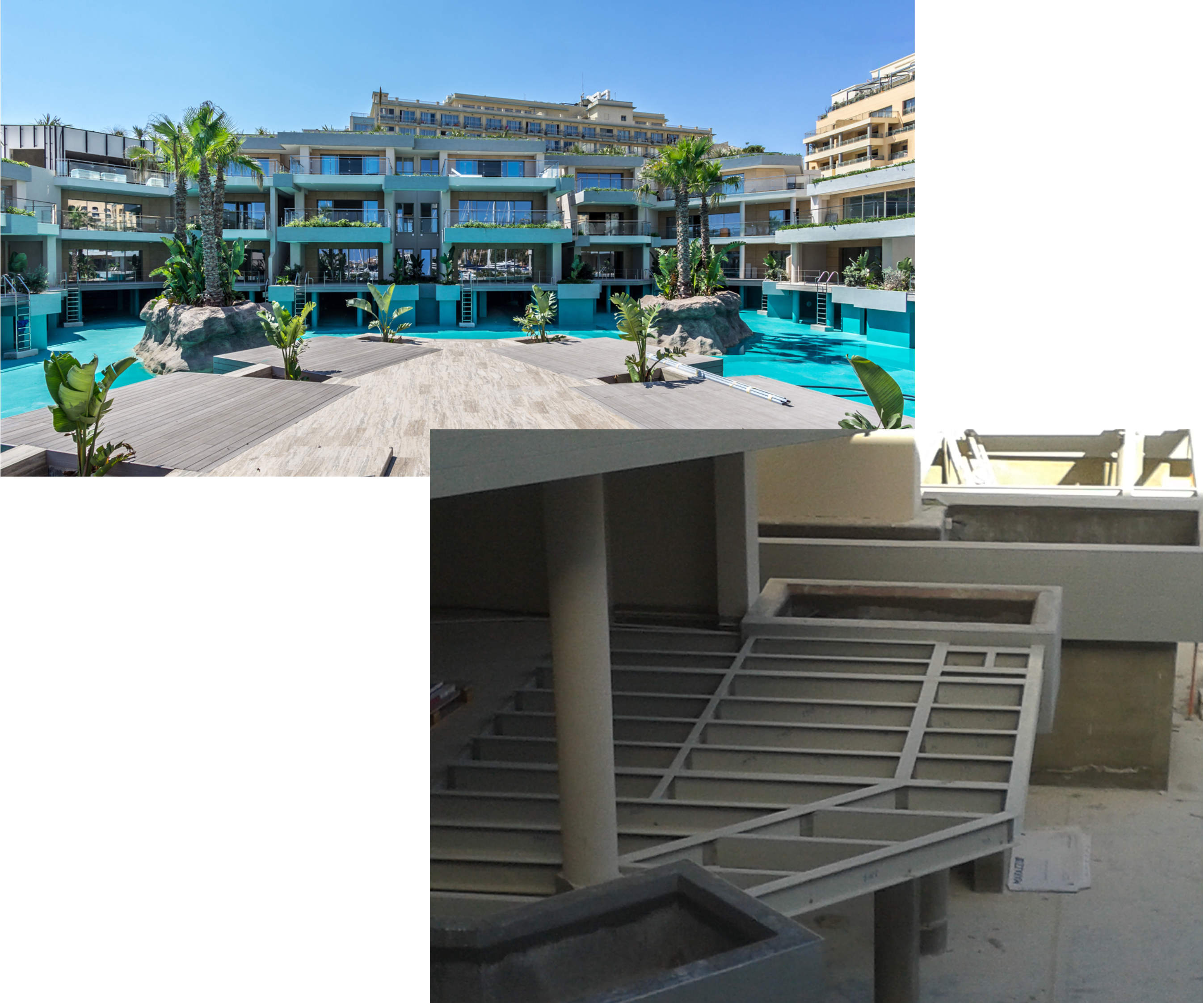
Fiberglass-reinforced plastic (FRP) profiles were used to support large terraced balconies that extend over and encircle a large, seawater pool in Laguna Porto Maso, a residential complex in the seaside town of Saint Julian’s, Malta.
The client wanted to achieve a modern architectural design while using innovative materials alongside those traditional for Maltese construction. This design demanded high mechanical performance and chemical resistance in a saltwater environment, highly corrosive to metals. These combined demands, in addition to the possibility of reducing structural maintenance costs, led the client to choose FRP profiles to create the terraces’ load-bearing structures.
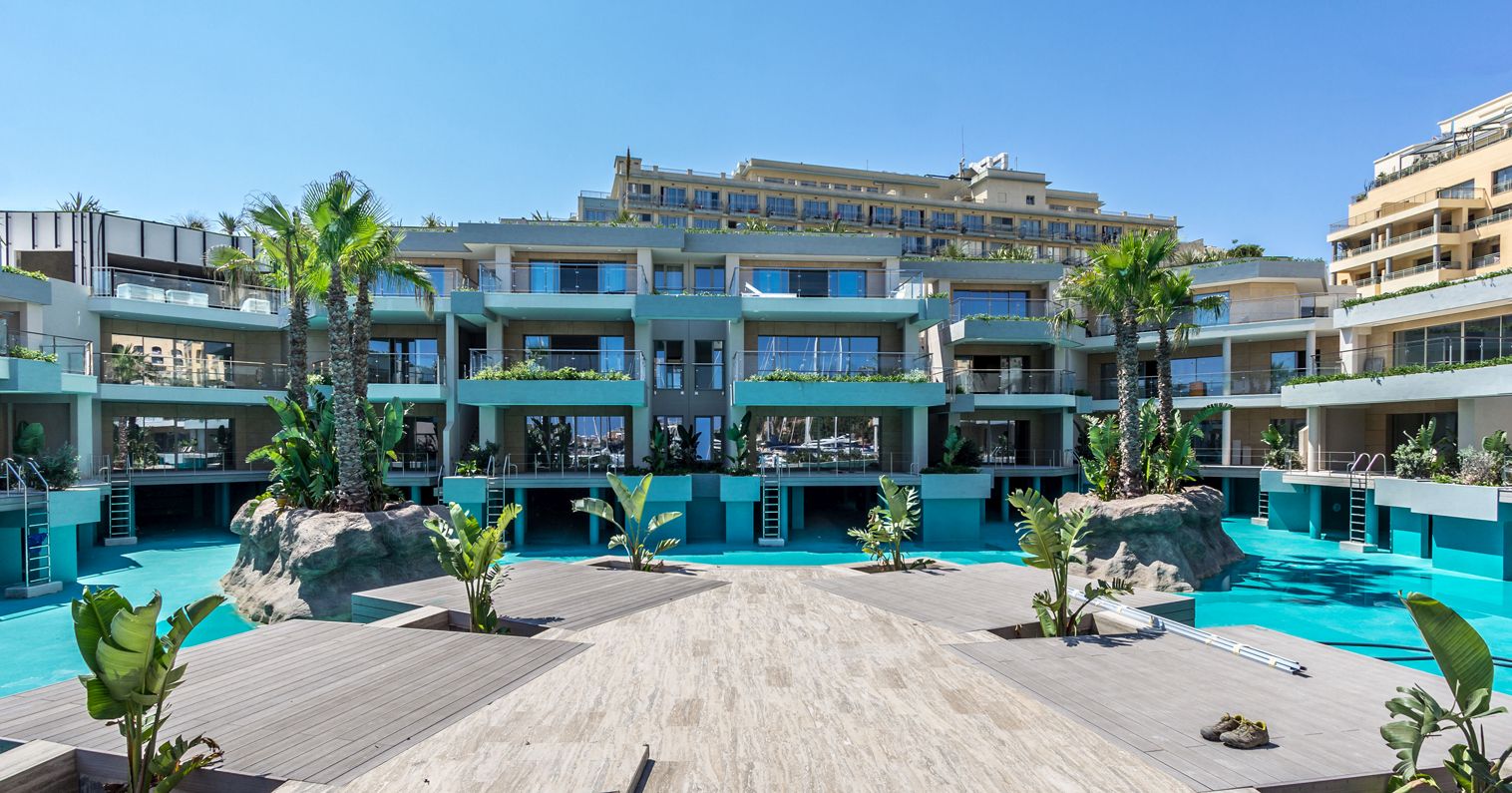
Fifteen terraces, each with a different size and shape, were designed by the in-house technical department of FRP parts manufacturer M.M. S.r.l. (Udine, Italy). Since 1977, the company has designed and produced components in two 2,000-square meter factories for more than 3,000 customers worldwide. For the Laguna Port Maso terraces, the company used its C200, I200 and H200 glass fiber-reinforced polyester resin beams, joined by stainless steel angle brackets and plates.
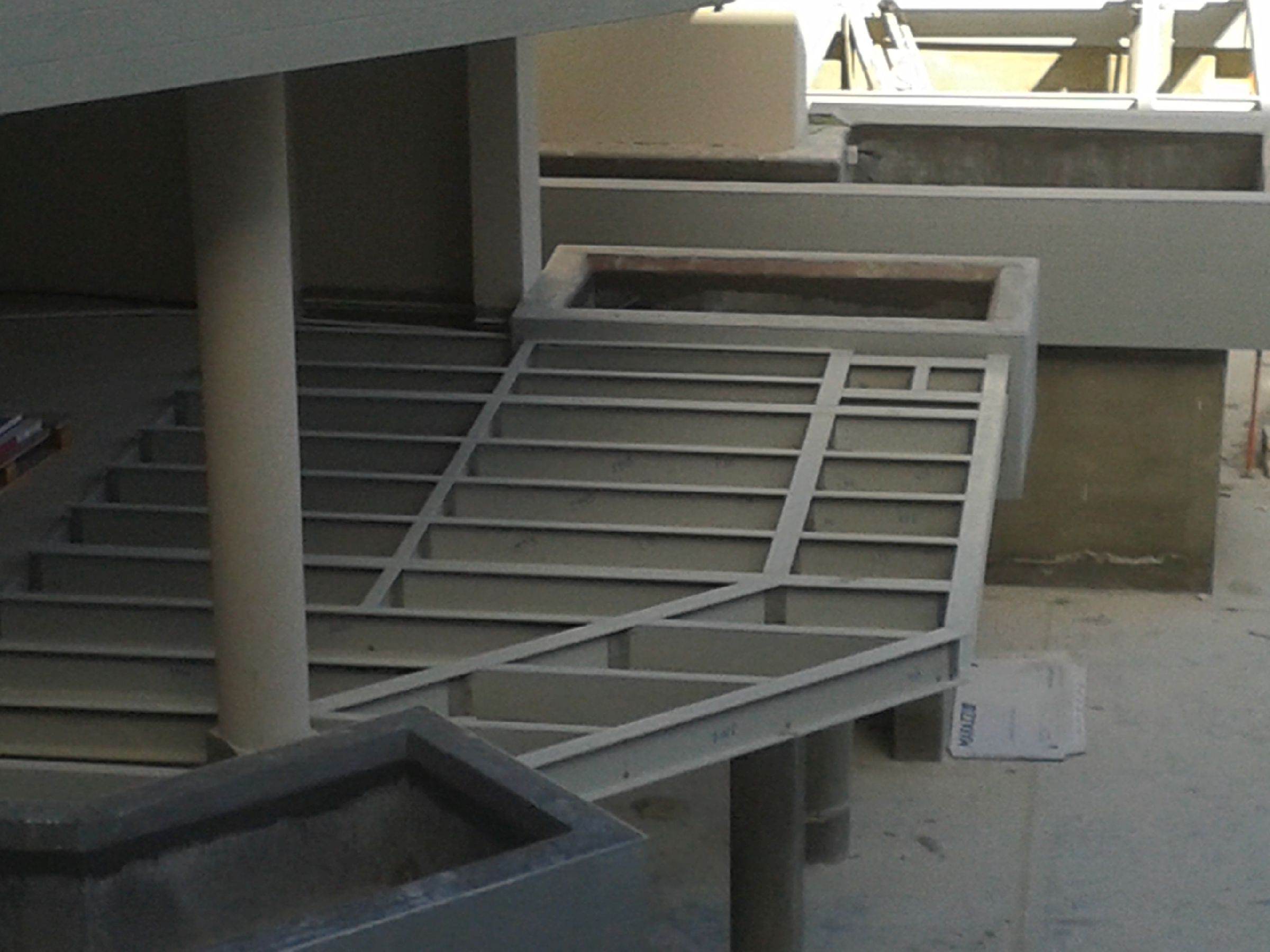
The FRP beams of each terrace are typically supported by only two or three concrete pillars. Due to thickness constraints imposed by the finished concrete slab depth, it was necessary to design a solution involving coplanar primary and secondary frames. For example, primary load-bearing beams were placed on the concrete slab at one end and on the pillars at the overhang. Then another was secured orthogonally at the end of these primary beams to support secondary frames. The number and direction of the beams varied per each terrace’s irregular shape. For terraces lacking sufficient concrete slab and pillar supports, longer beams and stainless steel connection plates were required to keep the structure as thin and streamlined as possible. During the design phase, thermal load was also taken into consideration.
The lightness of the profiles, the flexibility provided by the material’s workability and the simplicity of the bolted joints allowed easy prefabrication of the structure-and-hardware kits and fast completion of construction on-site, less than two days for each terrace. From both an architectural and engineering point of view, the excellent end-result demonstrates the advantages FRP provides versus more commonly-used traditional materials. “This is just another step towards the future of construction,” says M.M. s.r.l. CEO Emanuel Morandini, “evidenced by the increased use of FRP we are seeing in the civil engineering and architecture sector.”
Resin
- Designing a Flexible Perceptron Neural Network in Python
- Nexam Chemical & NCC Launch Advanced High‑Temperature Composite Production
- Enhancing Petrochemical Plant Durability with Corrosion-Resistant FRP Resins
- German Aviation Research Launches 3-Year Project for Continuous Thermoplastic Composite Profile Production
- CompoTech Introduces Standard Lightweight Carbon Fiber Epoxy Beams as a Steel Alternative
- Revolutionary 3D‑Printed FRP Footbridge Sets New Standard for Circular Composite Construction
- 3M VHB Tape: Ultimate Bonding for Challenging Composites & Low‑Energy Plastics
- Revolutionary Fiber‑Reinforced Thermoplastic Wheelblades Power All‑Electric SUVs
- TCS Unveils Advanced Epoxy Prepreg for Aerospace Interiors
- Hexion Launches Advanced Two‑Component Epoxy System to Streamline Aerospace Composite Manufacturing