



Lucas Museum of Narrative Art Adopts Advanced GFRP Base Isolation for Structural Resilience
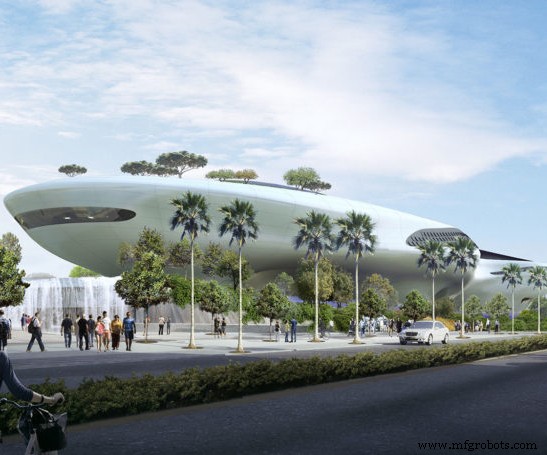
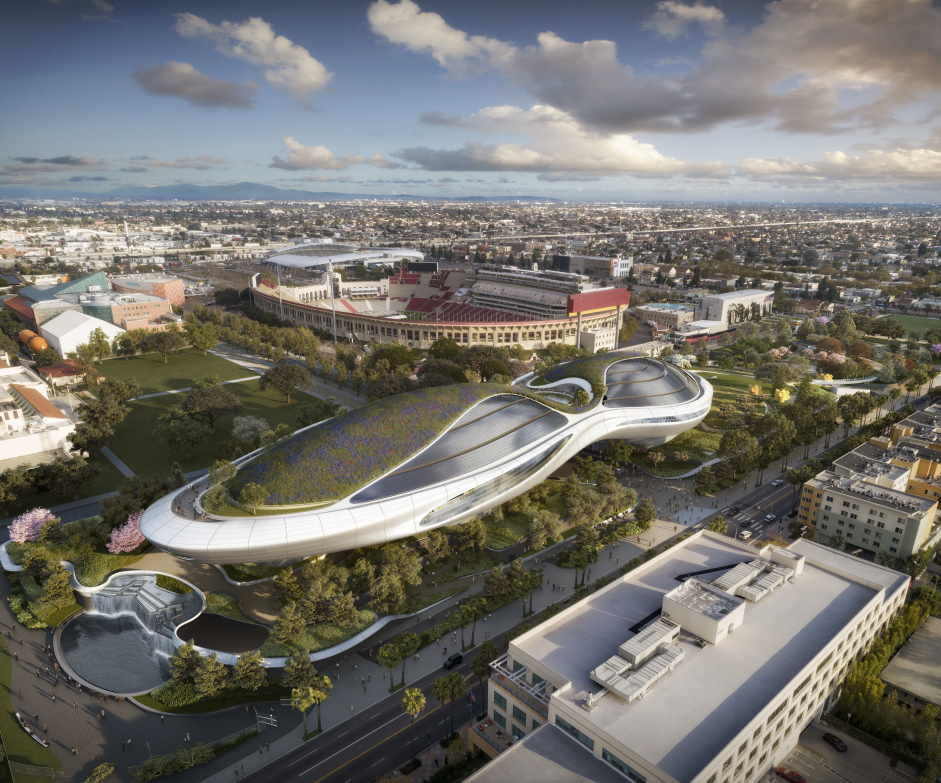
The Architect’s Newspaper reported on May 13 that the Lucas Museum of Narrative Art (Los Angeles, Calif., U.S.), under construction since 2018, will be set on a base isolation system made entirely of glass fiber-reinforced plastic (GFRP), which suits both the institute’s curvilinear facade, and protects it in the event of an earthquake.
The project began in 2014 when the firm, MAD Architects (Beijing, China), won an international design competition that tasked participants with translating the Lucas brand into a landmark piece of architecture. Named after its chief benefactor, filmmaker George Lucas, the 290,000-square-foot building is likened to a spaceship, as it contains no right angles. Maintaining a permanent collection and rotating exhibits dedicated to narrative art, the institute also houses theaters, classrooms and a research library. From its center, the structure spans 185 feet.
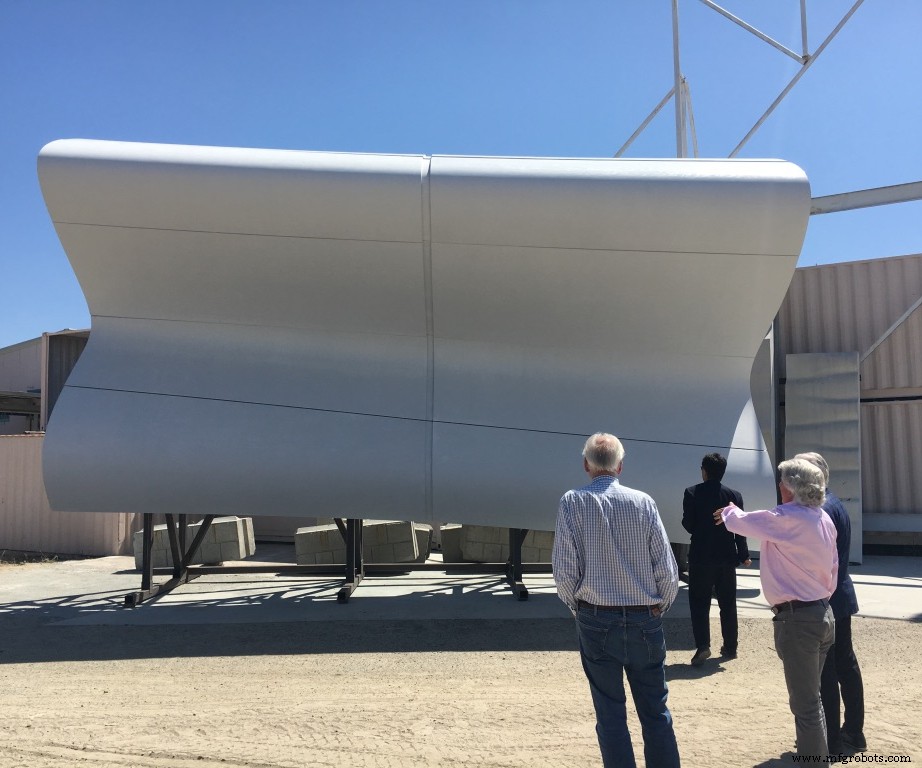
The building rests on a base isolation system that will gently rock the structure in the event of an earthquake. However, for that system to work, the design team had to be mindful of the weight of the outer paneling, or rainscreen. As a result, the design team — including the architect-of-record Stantec and facade consultant Walter P. Moore — opted for GFRP, a composite material a fraction of the weight of glass fiber-reinforced concrete (GFRC) which is popular among architects designing curvilinear structures. The smooth exterior surface the composite material yields also allows panels to interlock easily.
To begin construction of the museum, the modeling information was sent to Kreysler & Associates’ (American Canyon, Calif., U.S.) production facility, where each of the 1,500 GFRP panels is being fabricated. There, molds are machined from tooling board and robotics are used to scan finished panels to verify their dimensions and cut the panels to shape before honing them to a smooth finish. The panels will then be shipped to the construction site at Exposition Park in Los Angeles, where, beginning June 2020, they will be installed in a secondary structure of variegated trusses branching off the primary structure, which is predominantly made up of straight beams. The museum is scheduled for completion in 2021.
Click here for the orginal report in Architect’s Newspaper, which includes additional images and drawings.
fiber
- Top 5 Carbon Fiber Applications Revolutionizing Modern Sports
- Beyond the Factory: 8 Innovative Ways Carbon Fiber Shapes Everyday Life
- 5 Innovative Applications of Carbon Fiber Sheets
- Epoxy Resin Is Revolutionizing Contemporary Art
- Teijin Aramid & Carbon Fibers Power New Stedelijk Museum Amsterdam Facade – World’s First Large-Scale Composite Structure
- Conveyor Systems Explained: Types, Applications, and Benefits (PDF Included)
- How to Wire Solar Panels in Series & Batteries in Parallel: 12/24/48V System Guide
- 24V Solar System Wiring: Parallel Panels & Series Batteries Guide
- BMW Adopts Siemens Automation to Boost Production Efficiency
- Real-Time Health Monitoring with Smartphone and Computer Cameras