



NCC Unveils Low‑Cost Composite Structure for Hydrogen Fuel Cell Retrofits on Commercial Buses
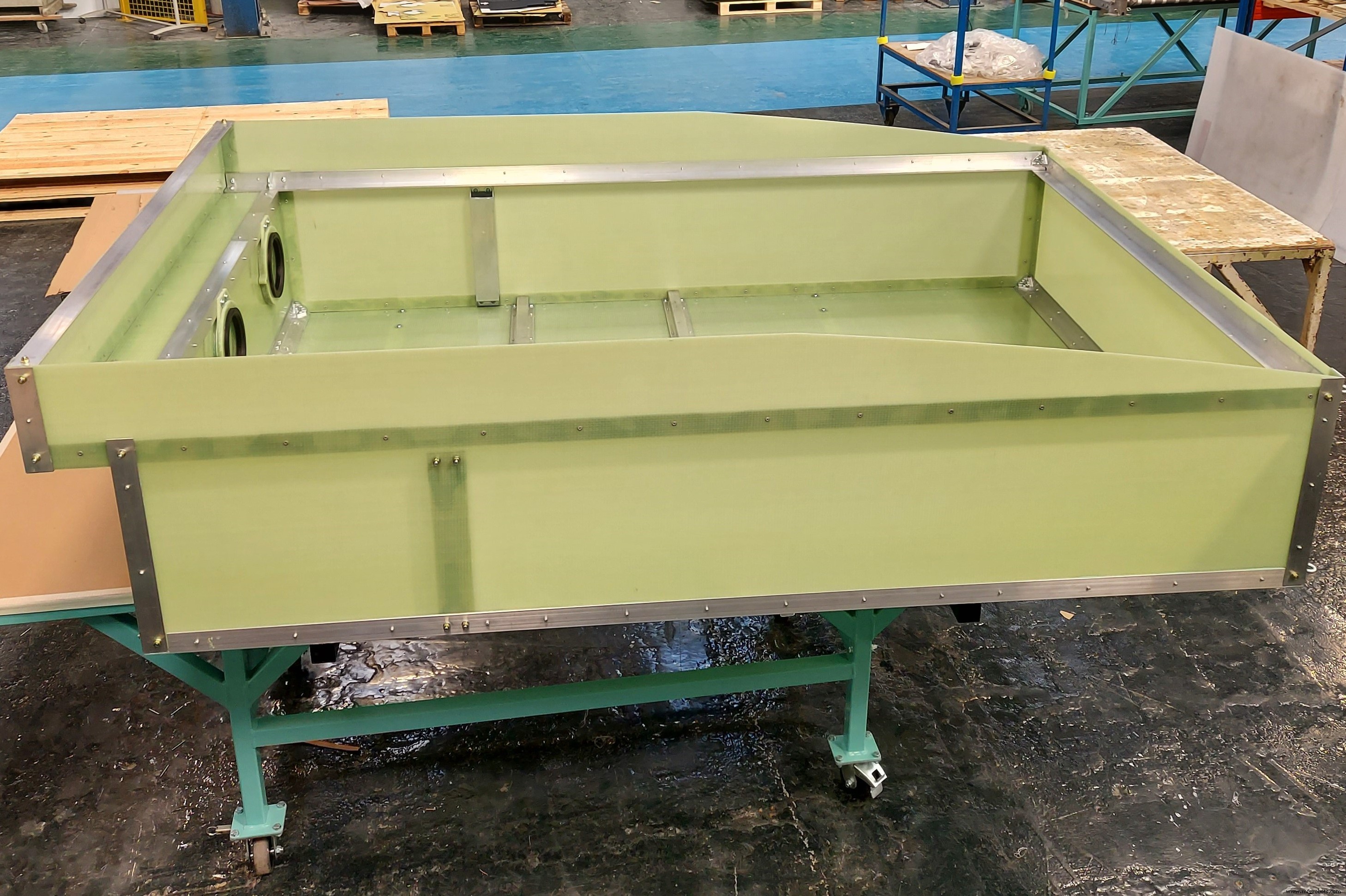
The National Composites Centre (NCC, Bristol, U.K.), in collaboration with Arcola Energy (London, U.K.) and advanced composites manufacturer, Permali (Gloucester, U.K.), have developed a low-cost composite storage structure for hydrogen fuel cylinders that can be retrofitted to existing commercial buses, enabling the switch to a clean energy source and reducing the emissions of large vehicles in the U.K.
Funded by the Office for Zero Emission Vehicles (OZEV) through the Niche Vehicle Network, the project team reportedly proved that a storage structure manufactured using composite materials was viable, meeting cost and weight targets to make the component commercially viable, as well as creating a design that meets road requirements and can be implemented rapidly.
Currently made from steel and aluminum, the team says it halved the weight of the structure by developing a composite alternative, from 200 kilograms to 100 kilograms. It also is said to have increased the energy storage density by approximately 28%, from around 740 watt-hours per kilogram to 950 watt-hours per kilogram. Arcola Energy will now be introducing the structural system to its bus applications.
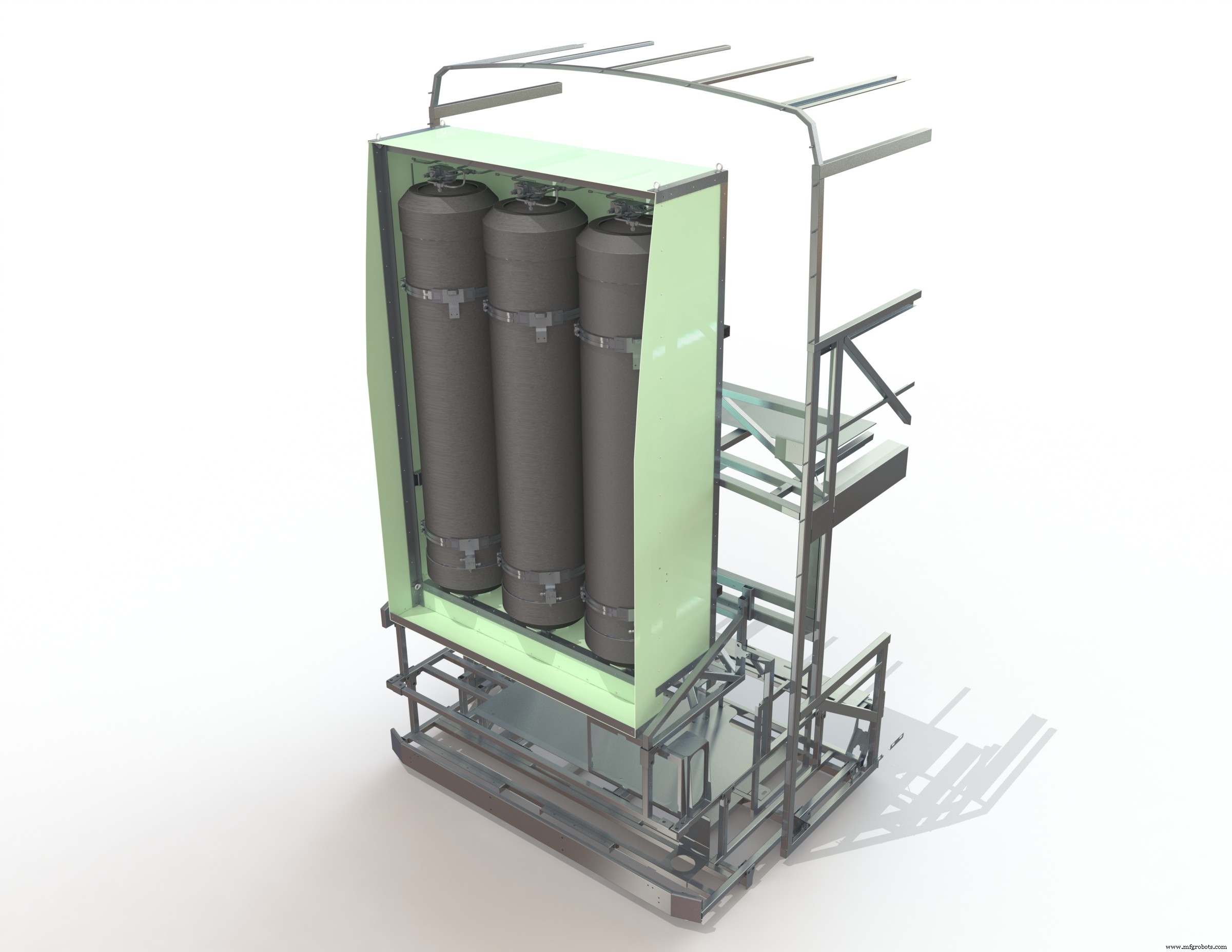
Further, using Permali’s CE5 glass fiber material, the team of composites specialists developed a flat-pack modular solution, taking advantage of existing materials and capabilities within the supply chain to make a component that can be adopted by industry more affordably. The project also conducted an initial feasibility study for retrofitting the storage solution to other large vehicles, in this case a refuse truck.
The research indicated that with further development, more could be done to improve the weight and performance of the structure, reducing the overall weight of the vehicle, therefore lowering the center of gravity and increasing fuel efficiency.
“By using materials and processes already available in the supply chain, we’ve developed a solution that can be rapidly retrofitted to existing commercial buses, with the potential for it to be deployed on other large vehicles,” says Alex Doyle, technology program lead at the NCC. “This means that a major obstacle has been overcome, and the move to a clean energy source can happen sooner rather than later.”
fiber
- Hybrid Metal‑Composite A‑Pillar with Steel Insert: A New Standard in Structural Reinforcement
- SGL Carbon & Hyundai Motor Group Strengthen Fuel Cell Partnership for NEXO Production
- Purdue Innovates Low‑Cost Lignin‑Based Resin Binder for Eco‑Friendly Composite Boards
- Continental Structural Plastics Introduces Lightweight, Fire‑Resistant Composite Enclosures for EV Batteries
- Potez Aéronautique Delivers Advanced Carbon Fiber Doors for Eviation's Alice Electric Aircraft
- LMS Designs Advanced Composite Fuel Gauge for Stratolaunch’s Hypersonic Talon‑A Vehicle
- Eco-Friendly Composite Wheelchair Seat Boosts Mobility for Disabled in Developing Nations
- Henkel Launches REACH‑Compliant Two‑Part Epoxy for Aircraft Interior Applications
- Permali Launches Advanced Fire-Resistant Composite Systems for Naval Vessels
- Key Fuel System Components Driving New Flyer's Innovative Bus Technology