



NC State Engineers Pioneer Durable CFRP Skin for Next-Gen Stealth Aircraft
This information was pulled from the original article written by The American Society of Mechanical Engineers’ (ASME) Cassie Kelly.
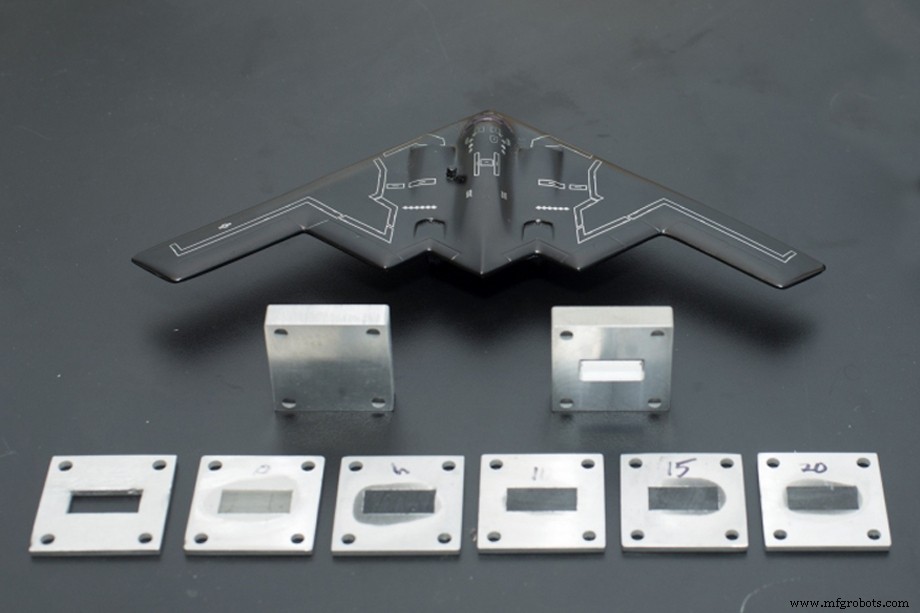
Chengying “Cheryl” Xu, associate professor of mechanical and aerospace engineering at North Carolina State University, and her team have developed a carbon fiber-reinforced polymer (CFRP) composite skin for stealth fighter jets. The ultimate goal is to develop more reliable, durable and efficient jets with a radar-absorbent material (RAM) coating that is capable of deflecting a majority of radar frequencies, withstand high temperatures and maintain its integrity, despite heat, salt, moisture and friction.
Xu believes the CFRP skin could solve these issues. The hybrid structure has two phases: conduction and insulation. The polymer-derived silicon carbonitride (SiCN) ceramic is reinforced with yttria-stabilized zirconia fibers to aid in the conduction of incoming electromagnetic energy. Xu says it can withstand extremely high temperatures upward of 1,800ºC. The composite is also reinforced with carbon nanotubes (CNTs), which are lightweight and high strength, making the material especially durable.
“We have to ensure the life of the pilot,” says Xu. “If the vehicle is shot down, it’s a tragedy.”
Tests of the spray-on RAM material have shown a bare minimum reflection, absorbing more than 90% of incoming waves compared to the 70-80% absorption of existing RAMs on stealth fighter jets. This makes it nearly invisible from detection, while also being highly resistant to oxidation and corrosion. However, testing is still underway, to determine whether the spray-coat can be sprayed on all surfaces of the aircraft without impeding performance.
With secured funding from the Air Force Office of Scientific Research, Xu and her team will now pursue testing and scalability for the material. Further, while possible applications range from submarines, fighter carriers, ballistic missiles and more, Xu says the next challenge will be finding industry partners to get them to that point, including Boeing (Chicago, Ill., U.S.), Lockheed Martin (Bethesda, Md., U.S.), Raytheon (Waltham, Mass., U.S.) and Northrop Grumman (Falls Church, Va., U.S.).
fiber
- Toyota Announces First North American EV Battery Plant in North Carolina
- A&P Technology Secures $8.9M Air Force Contract to Design Advanced Composite Aircraft Structures
- SGL Carbon Secures Contract to Manufacture Composite Battery Enclosures for Major North American Automaker
- Hexcel's Carbon Fiber Prepreg Chosen by Flight Design for Ultralight Aircraft
- Potez Aéronautique Delivers Advanced Carbon Fiber Doors for Eviation's Alice Electric Aircraft
- BMW i Launches First Electrified Wingsuit for Human Flight
- Toray Launches Metal‑Grade Heat‑Dissipating CFRP for Flexible Thermal Management
- Henkel Launches REACH‑Compliant Two‑Part Epoxy for Aircraft Interior Applications
- Epic Aircraft Secures FAA Type Certification for E1000 GX, Boosting Performance and Safety
- Permali Launches Advanced Fire-Resistant Composite Systems for Naval Vessels