



Carbon Fiber & Additive Manufacturing Elevate Performance of Miro Buroni’s Pleko Spike Shoes
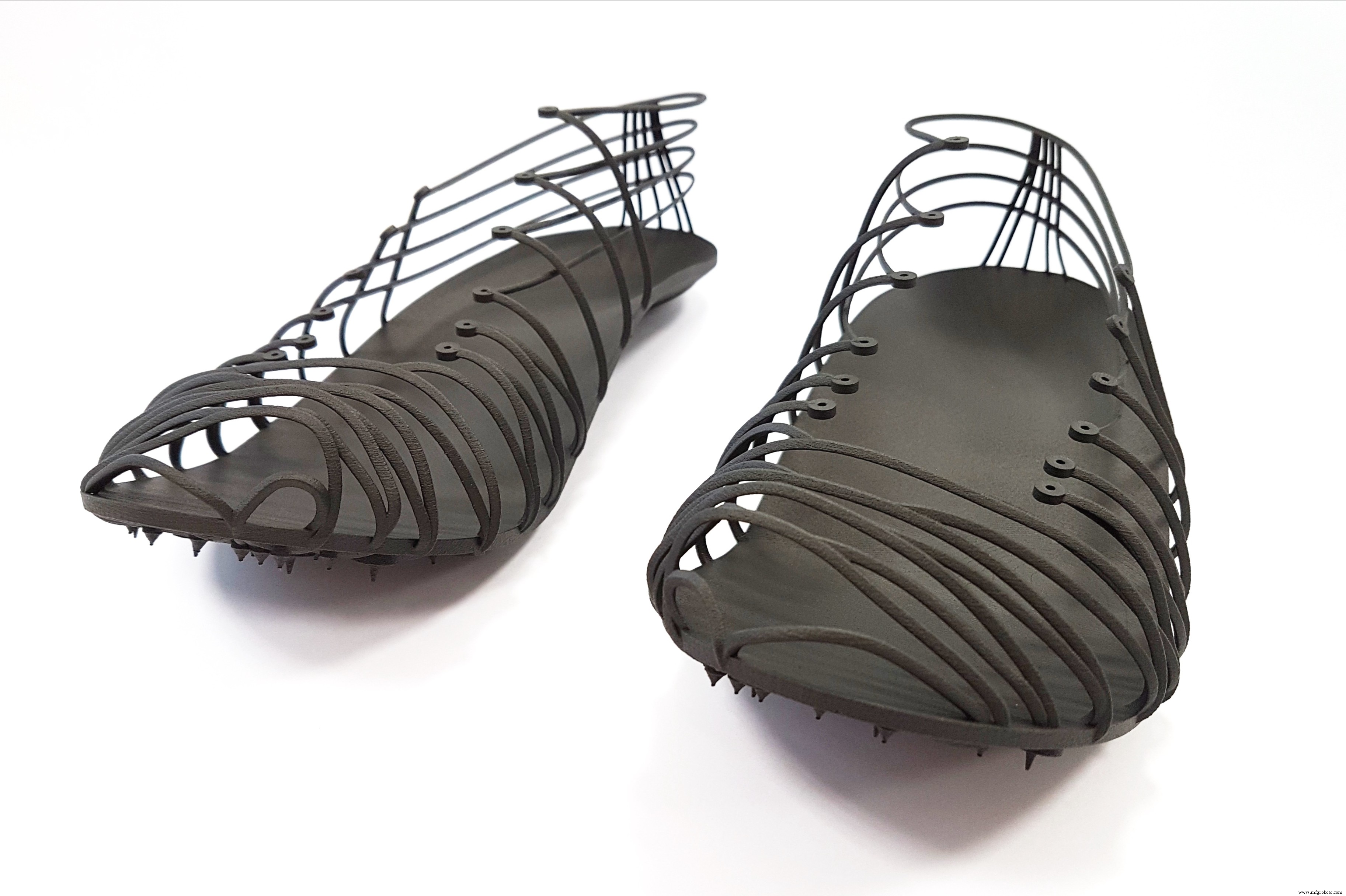
Venetian middle-distance runner Miro Buroni has created and developed Pleko, a customized athletic track shoe (or spike shoe) with the support of Italian sportswear and footwear manufacturing Diadora (Veneto, Italy) for historical analysis and CRP Technology (Modena, Italy) for the manufacture of the outsole, midsole and ribbing using its Windform SP carbon fiber-filled composite material and powder bed fusion (PBF) selective laser sintering process.
A 3D scan of an athlete’s foot, following by biomechanical analysis of the act of running and footing through the 3D foot scan, enabled the companies to model the shoe on an individual’s needs in terms of foot structure and athletic performance. “Moreover, scanning and biomechanical analysis allowed us to understand the best placement of the ‘traction system’ under the outsole, the ‘pins’” Miro Buroni says.
The additive manufacturing process was chosen to build Pleko’s supporting structure, as well as CRP Technology’s Windform SP Top-Line range of composite materials, which provided Buroni with strong mechanical characteristics, such as resistance to deformation and flexibility, the “right features for the athletics track shoes.”
“Windform SP,” Buroni says, “guarantees excellent resistance even in very thin thicknesses; this feature allowed me to create spike shoes with a perfect foot envelopment that facilitates an increase in comfort and enhanced performance.”
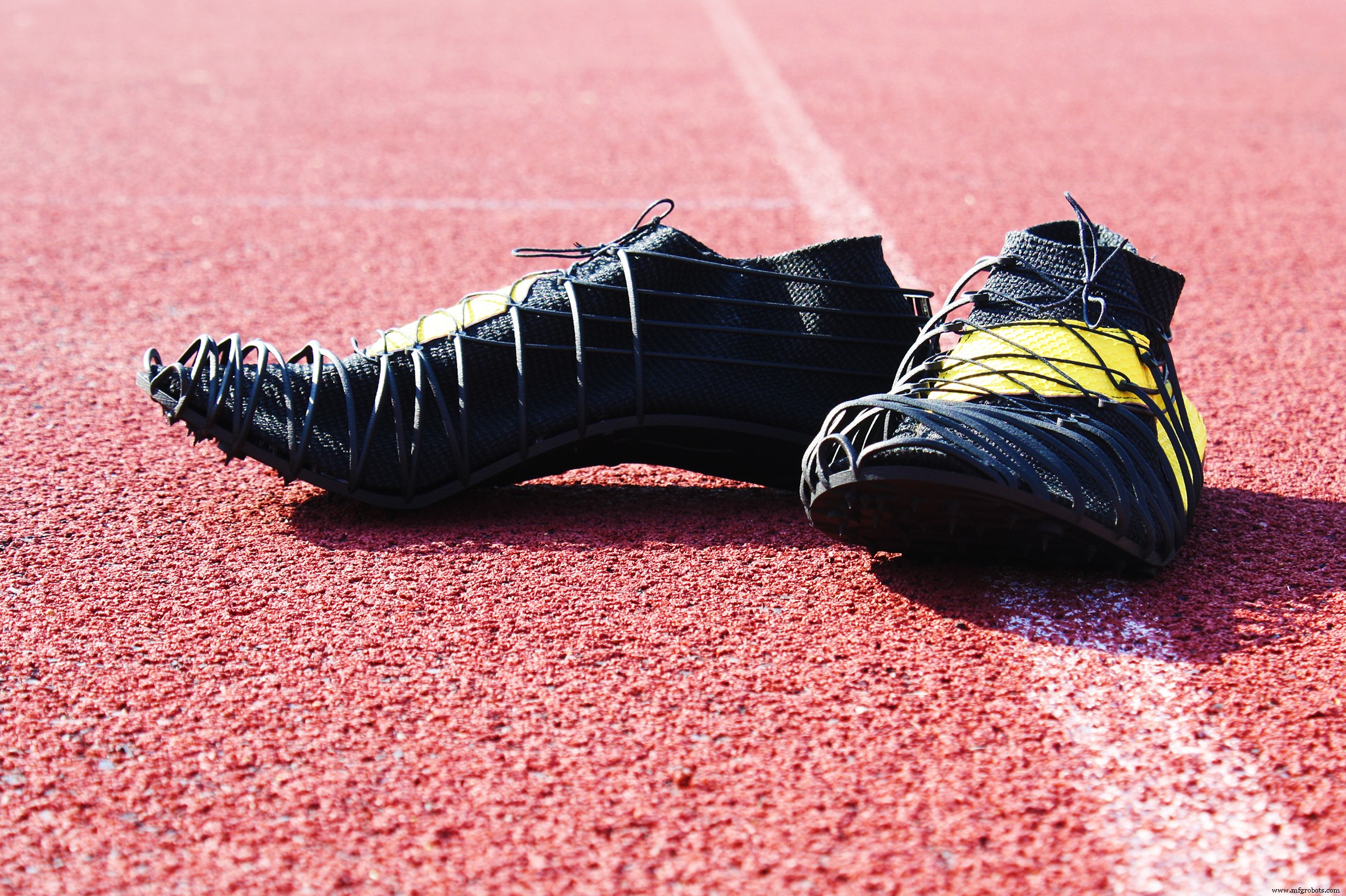
CFRP manufactured Pleko’s outsole, midsole, ribs and pins as a single unit. The ribs, notes Buroni, originate from under the outsole, in correspondence with the lines of maximum effort during the track race. They are responsible for carrying the kinetic energy releases from the biomechanical movement during the track race, and preventing its dispersion. Because of them, the Windform SP structure is also able to embrace the athlete’s foot “like a cage” to facilitate improvements in the running technique.
“Thanks to the pins under the outsole, the ‘cage’ in Windform SP allows the athlete to develop as much strength as possible, without losing energy. I positioned the deepest pins in the points of superior pressure of the feet against the ground. I also put smaller studs in other parts of the outsole: these studs are on a equal basis essential for the stability of the track shoes,” says Buroni.
Overally, Buroni says he is satisfied with the results achieved. “The design and manufacturing technologies, combined with the Windform SP and its mechanical characteristics, made the Pleko track shoes highly innovative, taking the whole project to the highest level of customization and specialization,” he concludes.
fiber
- Comparing Popular Manufacturing Methods for Carbon Fiber Parts
- The Art and Science of Carbon Fiber Production: From PAN to High-Performance Yarn
- Epoxy Resin’s Essential Role in High‑Performance Carbon Fiber Manufacturing
- Carbon Fiber: The Ultimate Choice for Lightweight, Durable, and Hypoallergenic Jewelry
- Aluminum vs. Carbon Fiber: Choosing the Right Material for Your Manufacturing Success
- Carbon Fiber Explained: Strength, Production, and Industry Applications
- Why Carbon Fiber Leads the Composite Materials Market
- Carbon Fiber Manufacturing: From Precursors to Premium Composites
- Is Carbon Fiber Conductive? Understanding Its Electrical and Thermal Properties
- TAFNEX PP-CF UD: Flexible, High-Performance Carbon Fiber/Polypropylene Tape for Advanced Manufacturing