



Revolutionizing String Music: The Rise of Carbon Fiber Violins & Bows
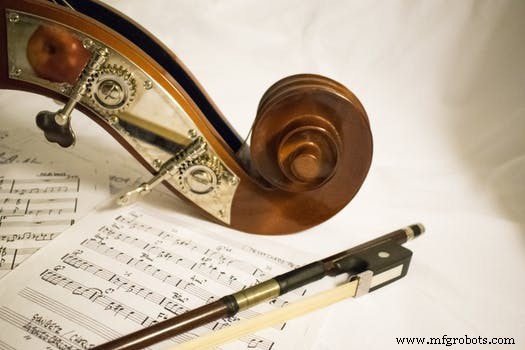
The violin, born in its current form in 1550, has accompanied humanity through battlefields, saloons, and concert halls. Today, a cutting‑edge material is elevating this timeless instrument to new heights: carbon fiber.
Carbon‑fiber violins and bows have surged in popularity over the past decade, offering musicians a combination of power, balance, and durability that wood simply cannot match.
Carbon Fiber Violins
For those accustomed to traditional wooden violins, the first time you play a carbon‑fiber model you’ll notice a distinct, crystal‑clear resonance. The material’s high tensile strength allows for a broader dynamic range, while its low weight makes the instrument feel lighter on the arm—benefiting both seasoned performers and beginners.
Carbon‑fiber violins are engineered from the finest composite fibers, resulting in instruments that are not only visually striking but also structurally robust. Their moisture‑resistant construction means they can even be played in damp environments—an advantage that has led some musicians to experiment with aquatic performances.
Whether you seek an authentic Stradivarius‑style feel or a modern reinterpretation, carbon‑fiber manufacturers can replicate the classic varnish, arching, and tonal qualities of a Strad while delivering enhanced playability.
Carbon Fiber vs. Wooden Bows
While a well‑crafted wooden bow produces beautiful tone, a carbon‑fiber bow takes it further. Its ultra‑light profile, coupled with a highly uniform density, enables players to produce a fuller sound with less effort. Professional violinist and educator Zlata Brouwer notes that the lightness allows for faster, louder passages without fatigue.
Carbon‑fiber bows also score higher on the Lucchimeter gauge—a metric that evaluates a bow’s tonal balance and material integrity—than their wooden counterparts. In addition, these bows are far more durable, resisting warping and cracking that can plague seasoned hardwoods.
Although carbon fiber itself is a premium material, the manufacturing process is streamlined and cost‑effective, removing the need to source rare, aged timbers.
Beyond the String
Carbon fiber’s versatility extends to jewelry, wallets, bags, and tech accessories. Each product benefits from the material’s lightweight strength, sustainability, and modern aesthetic.
Today’s Soundscape
Carbon‑fiber violins represent the present and future of classical music—maintaining the authentic voice of the violin while unlocking new sonic possibilities. If you’re ready to explore the next generation of string instruments, contact us to discover the best carbon‑fiber violins and bows on the market.
fiber
- Top 3 Benefits of Carbon Fiber Watches for Luxury Timepieces
- Unidirectional Carbon Fiber: The Strength, Lightness, and Cost‑Savings Advantage for Modern Manufacturing
- Carbon Fiber: 3 Key Properties That Drive Innovation
- 5 Unexpected Carbon Fiber Innovations Reshaping Modern Life
- Revolutionizing String Music: The Rise of Carbon Fiber Violins & Bows
- Carbon Fiber Weaves: Types, Properties & Industrial Applications
- Carbon Fiber Explained: Strength, Production, and Industry Applications
- Is Carbon Fiber Recyclable? A Guide to Sustainable Recycling & Repair
- How Carbon Fiber Footwear Enhances Speed, Energy, and Performance
- Is Carbon Fiber Conductive? Understanding Its Electrical and Thermal Properties