



Tantalum and Its Alloys: Key Applications Across Technology and Industry
What Are the Uses of Tantalum and Its Alloys?
Tantalum ranks as the third most refractory metal, melting at 2980 °C, surpassed only by tungsten and rhenium. Its exceptional attributes—low vapor pressure, excellent cold workability, outstanding chemical stability, resistance to liquid‑metal corrosion, and a high‑dielectric‑constant surface oxide—make it indispensable in modern industry and everyday life.
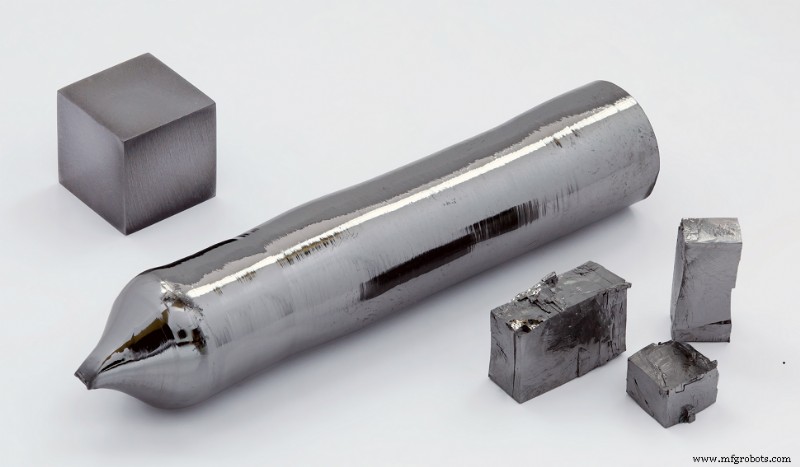
1. Capacitors
About 50–70 % of the world’s tantalum supply goes into capacitor production. The metal’s ability to form a dense, stable oxide film with high dielectric strength allows precise anodizing, while sintered tantalum powder blocks provide a large surface area in a compact volume. The result is a capacitor with high capacitance, minimal leakage, low equivalent series resistance, and an exceptionally long service life. Tantalum capacitors are ubiquitous in communications, computing, automotive electronics, household appliances, instrumentation, aerospace, defense, and scientific equipment.
2. Chemical‑Industry Equipment
In acid‑production plants, tantalum vessels replace stainless steel, extending service life by an order of magnitude. Tantalum oxide finds use in advanced optical glass and as a catalyst in various chemical processes.
3. Cemented Carbide Applications
Adding tantalum carbide to titanium‑carbide‑based cemented carbides boosts room‑temperature strength and, more importantly, enhances flexural strength at 1200 °C. The alloy also improves weldability and reduces cracking during sharpening, making it ideal for high‑performance milling inserts that must withstand temperature fluctuations and impact forces.
4. Replacement for Platinum
Tantalum can perform many roles traditionally reserved for platinum in chemical, electronic, and electrical industries, substantially lowering costs while maintaining performance.
5. Electronics – High‑Power Devices
Its low emissivity and high thermal conductivity make tantalum an excellent material for electron‑emission tubes and high‑power tube components.
6. Aerospace & Military
Alloys such as tantalum‑tungsten, tantalum‑tungsten‑hafnium, and tantalum‑hafnium provide heat‑resistant, high‑strength materials for rockets, missiles, jet engines, and control‑system components.
7. Metallurgical Applications
High‑melting‑point tantalum and its alloys serve as heat shields, heaters, and heat sinks in high‑temperature vacuum furnaces, thanks to their ease of processing and excellent thermal properties.
8. Medical and Healthcare
Biocompatible tantalum strips are used in orthopaedic implants, where they support bone integration and muscle growth, offering a durable alternative to traditional materials.
9. Nuclear Energy
Tantalum borides, silicides, and nitrides, along with their alloys, function as heat‑release elements and liquid‑metal sheath materials in nuclear reactors.
Conclusion
We hope this overview deepens your understanding of tantalum’s versatile uses. For further insight into tantalum and other refractory metals, explore the resources at Advanced Refractory Metals (ARM).
Headquartered in Lake Forest, California, ARM is a leading manufacturer and global supplier of high‑quality refractory metals—including tungsten, molybdenum, tantalum, rhenium, titanium, and zirconium—at competitive prices.
REVIEWS
{{viewsNumber}}
Thought On "{{blogTitle}}"
{{item.name}}
{{item.created_at}}
{{item.content}}
LEAVE A REPLY (Cancel reply)
Your email address will not be published. Required fields are marked*
{{item.children[0].name}}
{{item.children[0].created_at}}
{{item.children[0].content}}
{{item.name}}
{{item.created_at}}
{{item.content}}
LEAVE A REPLY
Your email address will not be published. Required fields are marked*
Metal
- UGI® 4542 H900 – High‑Strength, Corrosion‑Resistant Martensitic Stainless Steel
- ASTM A1011 HSLAS Grade 410 Class 2 Steel: Key Properties & Performance
- JIS G3472 Grade STAM470G Low-Carbon Steel: Specifications & Mechanical Properties
- EN 573-3 Grade 3.1355 T8510 – Premium Aircraft‑Grade Aluminum Alloy
- AA 6068: Comprehensive Mechanical & Thermal Properties
- JIS G3317 Grade SZAC440 Cold-Rolled Low Carbon Steel – Performance Specifications
- EN 573-3 Grade 3.3316 H44 Aluminium – Detailed Properties
- AW-6056 T39: Age-Hardenable 6000-Series Aluminium Alloy – EN 573-3 Grade
- EN 573-3 AW‑5087 F Aluminum Grade: Key Properties & Standards
- WL 3.3354 (Grade 3.3354 H28) – High‑Performance Magnesium Alloy