



Comprehensive Guide to Flange Types, Standards, and Materials in Piping Systems
- Types of Flanges
- Slip‑On Flanges
- Weld‑Neck Flanges
- Socket‑Weld Flanges
- Blind Flanges
- Spectacle Blind Flanges
- Lap‑Joint Flanges
- Reducing Flanges
- Threaded Flanges
- Square Flanges
- Long‑Neck Weld Flanges
- Expander Flanges
- Spade and Ring Spacer Flanges
- Weldo / Nipo Flanges
- Orifice Flanges
- Loose Flanges
- High‑Hub Blind Flanges
- Screwed Flanges
- Plate Flanges
-
- Flange Facing Type & Finish
- Flat Face
- Raised Face Flanges
- Ring‑Joint (RTJ) Flanges
- Groove & Tongue Flanges
- Male & Female Flanges
- International Standards for Flanges
- ASME B16.5
- ANSI B16.47
- BS 10
- DIN
- EN 1092‑1
- BS 4504
- JIS
- Materials Used to Manufacture Flanges
- Flange Facing Type & Finish
What Are Flanges?
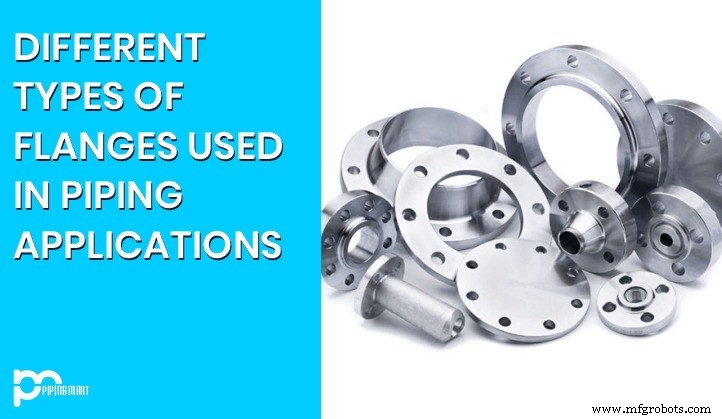
Flanges are engineered fittings that join pipes, valves, pumps, and other equipment, creating a reliable, sealed connection. Typically bolted together with gaskets, they allow for quick disassembly, maintenance, and inspection. Flanges come in many varieties—Slip‑On, Weld‑Neck, Blind, Socket‑Weld, and more—each chosen for specific pressure, temperature, and flow requirements.
Types of Flanges
Slip‑On Flanges
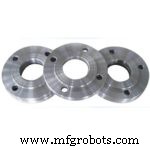 Slip‑On flanges are a ring that slides over the pipe end. The flange face is positioned beyond the pipe’s diameter, allowing fillet welding directly onto the pipe. They are ideal for low‑pressure systems and are commonly used in chemical, oil & gas, and water treatment plants.
Weld‑Neck Flanges
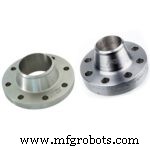 These flanges feature a tapered hub that reduces stress concentration and accommodates high‑pressure, high‑temperature, or cryogenic applications. Weld‑Neck flanges can handle pressures up to 5,000 psi and are standard in petrochemical and power‑generation pipelines.
Socket‑Weld Flanges
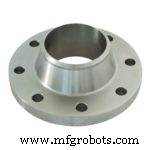 Socket‑Weld flanges are welded on the outside of the pipe, providing a single‑weld joint. They are often used for small‑diameter lines where fatigue life is critical. Proper pipe thickness and a clearance gap are essential to prevent corrosion and ensure a robust weld.
Blind Flanges
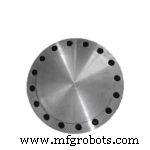 Blind flanges close off pipe ends, valves, or vessel openings. They are the most heavily loaded flange type, especially in large sizes, and are crucial for pressure testing, maintenance isolation, or when a nozzle is not required.
Spectacle Blind Flanges
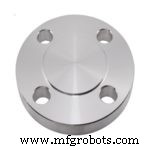 Designed like a pair of glasses, these flanges consist of a solid plate and a ring that can be rotated to open or close flow. They are used in applications where rapid isolation is needed, such as test rigs or temporary piping configurations.
Lap‑Joint Flanges
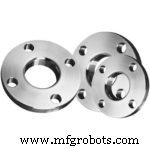 Lap‑Joint flanges attach to a stub‑end pipe, preventing direct contact between dissimilar metals. They are suited for low‑pressure, non‑critical services and provide a simple, cost‑effective connection method.
Reducing Flanges
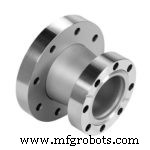 Reducing flanges transition between two pipe sizes while maintaining a single flange face. They are available in various pressure classes and are ideal for connecting a larger pipe to a smaller one without adding a separate reducer.
Threaded Flanges
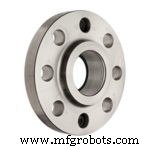 Threaded flanges feature internal threads that mate with threaded pipe. They are preferred in explosive or hazardous environments where welding is undesirable, and they can be installed without heat input.
Square Flanges
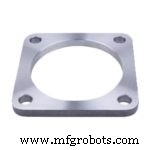 Square flanges, defined by JIS B2291/JIS F7806, are common in hydraulic and instrumentation systems. They come in male, female, and full sets, offering reliable alignment and robust bolting.
Long‑Neck Weld Flanges
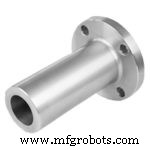 These flanges feature an extended tapered hub, providing superior support for high‑pressure or fluctuating‑temperature lines. They are often used in oil‑and‑gas facilities to secure large‑diameter pipelines.
Expander Flanges
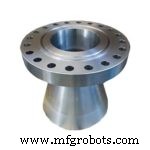 An expander flange widens the flange face to accommodate a larger pipe diameter, reducing the need for a separate reducer. They are space‑saving, cost‑effective, and meet ANSI / ASME B16.5 specifications.
Spade and Ring Spacer Flanges
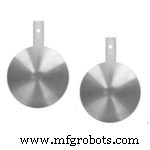 These two‑piece flanges are used where maintenance access is infrequent or where large diameters demand reduced weight. They provide an alternative to spectacle blinds for high‑pressure service.
Weldo / Nipo Flanges
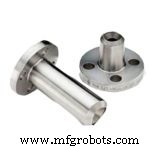 The Weldo and Nipo are hybrid flanges combining a 90° branch weld with a standard flange. They are ideal for branch lines where a quick, welded connection is required on one side and a flange on the other.
Orifice Flanges
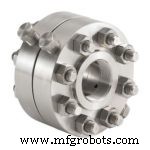 Orifice flanges provide mounting points for flow meters. They come in raised‑face or flat‑face, slip‑on or weld‑neck, and support ring‑type or corner‑tap gaskets in accordance with AGA, ASME, and ISA standards.
Loose Flanges
 A loose flange is a half‑coupling that is welded to the pipe, leaving the other half to be bolted to a fitting or valve. They are commonly used with elbows, valves, or other components where a temporary, non‑hermetic connection is needed.
High‑Hub Blind Flanges
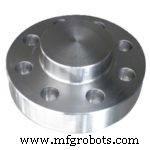 These blind flanges feature an extended hub that improves bolt‑load distribution. They are used to close off pipe ends or nozzle openings while providing easy access for testing and maintenance.
Screwed Flanges
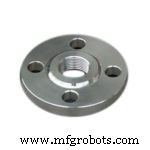 Screwed (threaded) flanges are matched to male threads on the pipe. They eliminate the need for welding and are widely used in water, air, and chemical systems where rapid assembly is required.
Plate Flanges
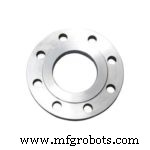 Plate flanges, or flat‑face flanges, provide a flat gasket surface and are typically used where casting or welding of the mating flange is involved. They are common in cast‑iron and specialty equipment applications.
Flange Facing Types & Finish
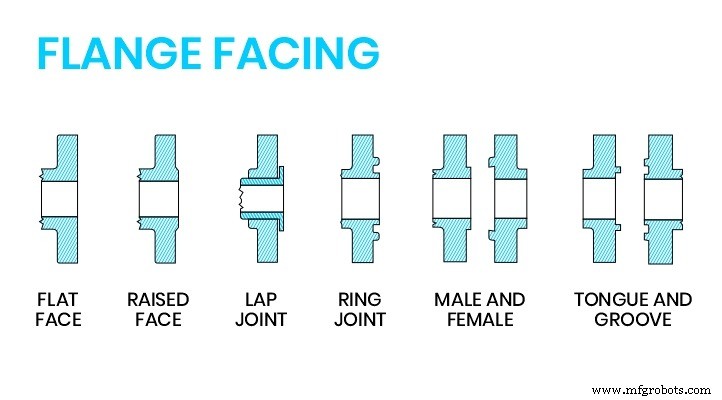
Flat Face
Flat‑face flanges offer a smooth gasket surface for full‑contact sealing. They are recommended when mating with cast‑iron or brittle materials and must use full‑face gaskets to avoid leakage.
Raised Face Flanges
Raised‑face flanges feature a ridge that concentrates pressure on the gasket, providing superior sealing in high‑pressure systems. The ridge height varies with pressure class, typically 1/16” for ANSI 300‑400 and 1/4” for ANSI 400 and above.
Ring‑Joint (RTJ) Flanges
RTJ flanges incorporate a groove that mates with a metal ring gasket, creating a metal‑to‑metal seal. They are suitable for extreme temperatures (over 427 °C) and high pressures.
Groove & Tongue Flanges
These flanges use a tongue on one side and a groove on the other, providing self‑alignment and reducing assembly torque. They are common on valve bonnet and pump covering connections.
Male & Female Flanges
Male and female flanges feature protruding and recessed faces, respectively. They improve alignment and allow for precise gasket placement, often used in high‑pressure, high‑temperature piping.
International Standards for Flanges
ASME B16.5
ASME B16.5 covers NPS 1/2–24 (metric/imperial) flanges for pressure classes 150–2,500. It specifies dimensions, tolerances, and designations for both weld‑neck and blind flanges, and is the industry benchmark for most piping systems.
ANSI B16.47
ANSI B16.47 specifies large‑diameter flanges (NPS 26–60) for pressure classes 75–900. It includes blind, weld‑neck, and series A/B variations, commonly used in oil‑and‑gas and petrochemical plants.
BS 10
BS 10 is a historic British standard that still applies to light‑duty, low‑pressure flanges. It includes neck, cast, and simple flanges in a range of alloys, from carbon to stainless steel.
DIN
DIN flanges follow German metric specifications and are widely used across Europe. They cover a broad range of sizes (15 mm–200 mm) and pressure classes, making them versatile for many industrial applications.
EN 1092‑1
EN 1092‑1 defines circular flanges from DN 10 to DN 4000 in PN 2.5–400. It is the European equivalent of ASME B16.5, covering carbon, stainless, and alloy steels.
BS 4504
BS 4504 is a British metric standard for low‑pressure cylinders, valves, and fittings. It overlaps with EN 1092‑1 and is still used in the UK and Commonwealth countries.
JIS
JIS standards govern Japanese industrial flanges. They cover a wide range of sizes and materials, ensuring compatibility with local manufacturing and supply chains.
Materials Used to Manufacture Flanges
Flanges are fabricated from a variety of metals to meet specific service conditions:
- Carbon Steel – ASTM A105, A350LF1/2, A181
- Alloy Steel – ASTM A182 series (F1/F2/F5/F7/F9/F11/F12/F22)
- Stainless Steel – ASTM A182F6/F304/F304L/F316/F316L/F321/F347/F348
- Duplex Steel – S31803, S32205
- Super Duplex – S32750, S32760
- Titanium – Grade 1/2/3/4/5/7
- High‑Nickel Alloys – Monel, Inconel 600/601/625/718, Hastelloy C4/C22/B2/B3
- Nickel – 200/201
- Cupro‑Nickel – 70/30, 90/10, 95/5
- Hastelloy C276, Inconel 625
Metal
- Key Automotive Sensors: How Modern Cars Use Advanced Technology
- Key Factors for Selecting the Right Flange
- The Complete Guide to Pipe Fittings: Types, Functions, and Applications
- Carbon Steel Flanges: Types, Applications, and Advantages
- Understanding Casting Patterns: Types, Materials, and Their Impact on Quality
- Comprehensive Guide to Milling Cutters: Types & Applications
- Industrial Ladders: Types, Applications & Safety Standards
- Exploring the Varieties of CNC Milling Operations
- Choosing the Right Hammer: Types for Woodworking, Metalworking, and Beyond
- Choosing the Right Access Platform: Types, Uses, and Safety Benefits