



Carbon Steel Flanges: Types, Applications, and Advantages
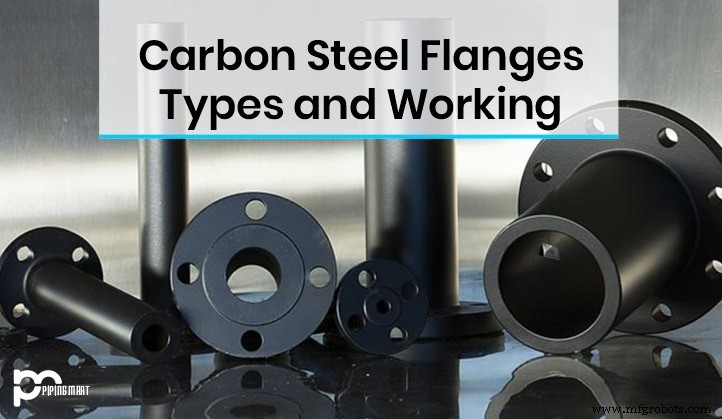
A flange is a projecting rim or lip that provides a secure attachment point for connecting pipes, valves, pumps, and other equipment. Carbon steel flanges are widely used in the oil & gas, petrochemical, and power generation industries because they offer a balance of strength, durability, and cost‑effectiveness.
Types of Carbon Steel Flanges
Welding Neck Flange
These flanges feature a long conical collar that provides a large surface area for welding. The collar’s gradual taper reduces stress concentrations and maintains a smooth flow of fluids, making them ideal for high‑pressure and high‑temperature applications. Their robust construction withstands heavy loads and minimizes vibration.
Slip‑On (Sliding) Flange
Slip‑on flanges are inserted directly onto the pipe end and welded on the outside. Their simpler geometry allows for quicker installation and is suitable for lower‑pressure systems where tight tolerances are not critical. While they are less strong than welding neck flanges, they remain a cost‑effective choice for many service conditions.
Blind Flange
Blind flanges seal the open end of a pipe, providing a closed, pressure‑resistant surface. They are commonly used in test rigs, maintenance operations, and as temporary closures. Because they are welded on the inside, they can handle extreme pressure and temperature cycles.
Threaded Flange
Threaded flanges attach using a threaded coupling, eliminating the need for welding. They are convenient for quick‑connect applications and are often employed in smaller pipelines or where temperature variations are moderate. However, they are unsuitable for high‑temperature or high‑pressure ducts.
Why Choose Carbon Steel?
Carbon steel, an alloy of iron and carbon, offers high tensile strength and good toughness. With typical alloying elements limited to manganese (≤1.65 %), silicon (≤0.60 %), and copper (≤0.60 %), it maintains excellent weldability and corrosion resistance. Higher carbon content increases strength but reduces ductility and weldability; therefore, medium‑carbon grades are preferred for most flange applications.
Key Functions of Carbon Steel Flanges
1. Strength & Durability – Provide a robust connection capable of withstanding high pressure and temperature. 2. Reliability – Low risk of oxidation and corrosion when properly maintained. 3. Versatility – Suitable for a wide range of piping systems, including gas, liquid, and steam. 4. Cost‑Effectiveness – Offers a favorable price point without compromising performance.
Forged carbon steel flanges are generally lighter and less prone to oxidation compared to cast alternatives. Their construction allows for tighter tolerances and improved fatigue resistance, making them ideal for critical applications where reliability is paramount.
Manufacturers in India produce high‑quality low‑carbon steel flanges through refining, forging, grinding, and precise riveting or screw connections. These flanges are widely adopted in industrial plants, power stations, and chemical processing facilities.
References:
What is steel flanges – steelavailable.com
Metal
- Flat Face vs. Raised Face Flanges: Key Differences and Best Practices
- Understanding DN and PN Designations on Flanges: A Comprehensive Guide
- Comprehensive Guide to Flange Types, Standards, and Materials in Piping Systems
- Graphite Explained: Definition, Types, and Applications
- Carburizing Explained: Definition, Types, and the Process Behind Hardening Steel
- Steel Types & Their Composition: A Comprehensive Guide
- Understanding Structural Steel Shapes & Beam Types
- Stainless Steel Grades: Types, Properties & Common Uses
- Steel Types 101: Your Trusted Buying Guide
- Differential Types Explained: Functions & Benefits for Vehicles