



Forging Carbon Steel: How Heat and Pressure Transform Strength and Toughness
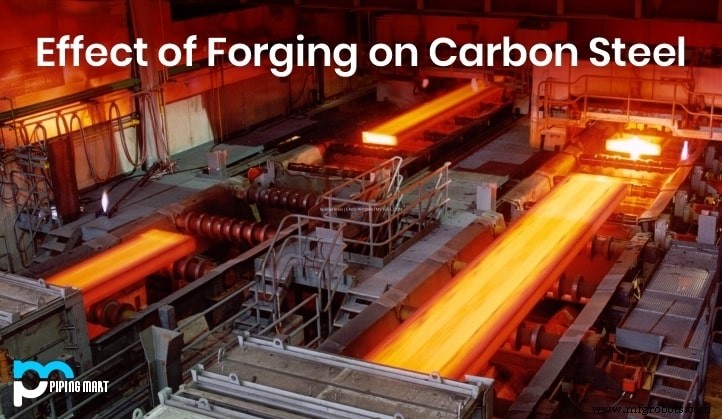
Forging is the preferred method for producing high‑performance components when compared with extrusion, machining, or assembly. While a wide range of alloys can be forged, each material class presents its own challenges and opportunities. This article focuses on plain‑carbon and low‑alloy carbon steels, the workhorses of many industries.
Introduction
Carbon steel is an alloy that contains mainly iron and a small percentage of carbon, with trace amounts of copper and other elements that enhance specific properties. It offers an excellent balance of cost and performance, making it a staple in structural, automotive, and machinery applications. By controlling its microstructure—ferrite and pearlite at low temperatures, austenite at high temperatures—engineers can tailor properties such as strength, ductility, and toughness.
Forging Temperatures
Unlike machining, forging dramatically alters a steel's mechanical properties. The process improves ductility, reduces porosity, and promotes homogenization, all of which contribute to higher strength and toughness. However, the final characteristics depend on the forging temperature, the steel’s composition, and the tooling design.
Cold forging (≈ 215 °C– 325 °C / 415 °F– 590 °F) is performed near room temperature. The metal is shaped by plastic deformation, but excessive local heating can cause work hardening and reduced weldability. Keeping temperature changes below 200 °F (≈ 110 °C) helps preserve ductility.
Warm forging (≈ 800 °C– 980 °C / 1472 °F– 1796 °F) strikes a balance between strength retention and ease of deformation. It reduces energy consumption compared with hot forging and allows higher press loads due to the material’s increased flow stress.
Hot forging (above 1,300 °C / 2,372 °F) operates well above the solidus, ensuring excellent ductility and minimal cracking. The high temperature also reduces forging forces, but it requires careful control of heating and cooling to avoid excessive grain growth.
Impact on Carbon Steel
During forging, surface conditions are critical. In hot and warm operations, tooling is lubricated with high‑temperature greases—graphite being the most common—to reduce friction and prevent galling. In cold forging, a thin layer of oil is applied to the workpiece to aid in the flow and protect the surface.
Forged carbon steel delivers superior performance in service: higher impact resistance, better fatigue life, and enhanced dimensional accuracy compared with its machined counterparts. For manufacturers, understanding the interplay between temperature, pressure, and material composition is key to producing components that meet stringent quality and reliability standards.
Metal
- Carbon Steel vs Stainless Steel: Choosing the Right Material for Your Project
- Carbon Steel vs Stainless Steel: Key Differences & Choosing the Right Material
- Optimizing Steel Quality: The Critical Role of Deoxidation
- Carbon Steel vs Stainless Steel: Choosing the Right Alloy for Your Project
- What Is Tempered Steel? Expert Insights on Strengthening Steel for Tools and Structures
- Is Carbon Steel Better Than Mild Steel? Clarifying the Differences
- Medium Carbon Steel Explained: Properties, Uses, and Advantages
- ASTM A595 Grade A Carbon Steel – Premium Low‑Carbon Alloy
- ASTM A595 Grade B Carbon Steel: Comprehensive Property Overview
- Optimizing Cost & Performance: Welding Carbon Steel to Stainless Steel