



Expert Guide to Seamless Stainless Steel Tube Manufacturing
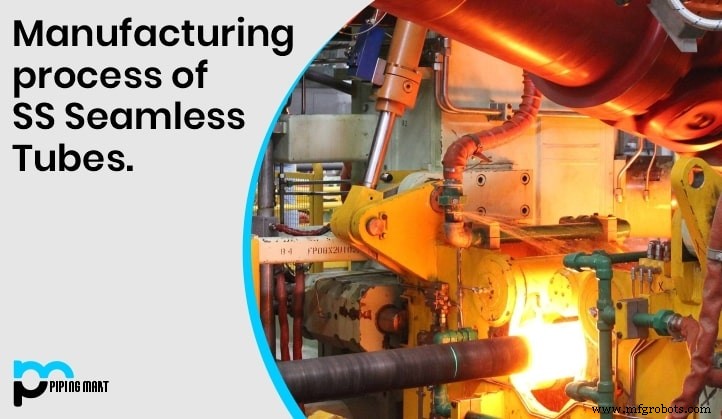
Seamless stainless‑steel tubes are the backbone of high‑performance systems that transport air, steam, and liquids under extreme conditions. Our factories produce tubes ranging from 1‑inch diameter to ultra‑fine sizes, with continuous lengths that can exceed one mile.
Manufacturing Process
1. Hot Extrusion
All production begins with hot extrusion, which delivers the most consistent outer diameter (OD) and precise inner diameter (ID). The process also creates the smooth wall finish required for long‑life applications.
2. Cold Pilgering
Using pilger mills, the extruded tube is cold‑rolled to reduce OD, wall thickness, and achieve section reductions of up to 90 %. Lubricants are applied during this stage to minimise friction and are later degreased before annealing.
3. Coiling
After pilgering, the tube is drawn into a coil on specialised machinery. Cold drawing increases length while further refining OD, ID, and wall thickness, preparing the tube for final dimensions.
4. Drawing Operations
- Floating‑Plug Drawing – A floating plug inside a conical die controls ID and wall thickness. This method yields a clean, robust finish suitable for light‑wall tubes.
- Sink Drawing – The tube is drawn through a conical die without a plug. It delivers a thicker wall, ideal for high‑pressure service, though the ID surface is slightly rougher.
5. Lubrication & Degreasing
Lubricants applied during drawing are removed in a single‑stage degreasing vessel with solvent, ensuring the tube is free of contaminants for downstream processing and end‑use applications.
6. Vacuum Annealing
Cold‑rolled coils undergo vacuum annealing to relieve internal stresses, restore ductility, and preserve the crystalline structure. This step converts the brittle material back into a flexible, ductile state ready for inspection.
Quality Assurance
ASTM Compliance
All tubes are manufactured to the relevant ASTM standards and undergo rigorous inspection for dimensional accuracy and surface integrity before shipping.
Hydrostatic Testing
After final shaping, each coil is hydrostatically tested. The test confirms mechanical integrity, identifies material defects, and verifies compliance with pressure specifications.
Finishing & Traceability
Coils are wound on spools or cut to customer‑specified lengths. Each tube is polished, stamped with lot numbers, and sealed for traceability throughout the supply chain.
Metal
- Understanding Process vs. Discrete Manufacturing: Key Differences & Benefits
- Innovative Composite Tubing Tech Highlighted at CAMX 2019
- Expert Production of High-Quality Seamless Pipes
- Step-by-Step Guide to Producing High-Quality Iron Carbide (Fe3C)
- Understanding Manufacturing Processes: Definitions, Types, and Key Components
- Additive Manufacturing Explained: From Design to Finished Part
- The Modern Manufacturing Process: Key Techniques and Innovations
- Enhancing Manufacturing Excellence with Automated Metrology
- Optimized Contract Manufacturing with Advanced CNC Automation
- How TFT LCDs Are Made: A Detailed Manufacturing Process