



Flat Face vs. Raised Face Flanges: Key Differences and Best Practices
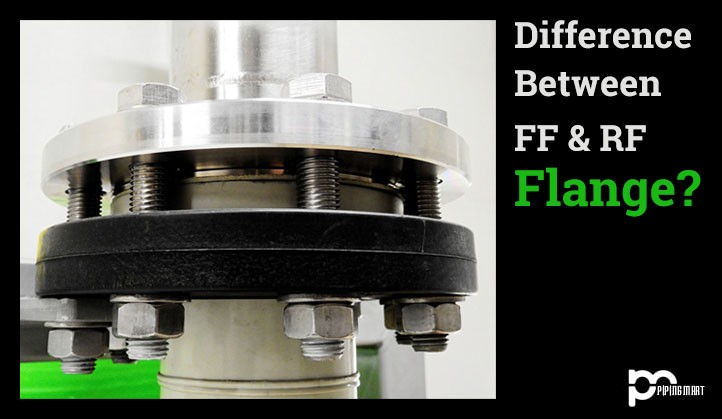
Introduction to Flange Faces
Flanges are essential connectors in the piping industry, joining two separate sections of pipe or equipment. Six primary flange face styles are commonly used: Flat Face (FF), Raised Face (RF), Ring‑Type Joint (RTJ), Lap Joint (M&F), Tongue & Groove (T&G), and ring‑style joints. Selecting the appropriate face type is crucial because each requires a specific gasket and must be mated correctly to avoid leakage. The surface finish—flat, lined, or serrated—also influences gasket performance. While flanges themselves carry a pressure class rating, the face design determines how that rating is applied in practice.
Flange faces provide the contact surface for gaskets. They must be smooth and properly matched to maintain a leak‑free seal under the intended temperature and pressure conditions. In this article we focus on the two most prevalent faces—Flat Face and Raised Face—explaining their construction, typical applications, and key distinctions.
Flat Face Flanges (FF)
Flat Face flanges have a gasket surface that lies in the same plane as the bolt circle. Because the face is level, full‑contact sealing is achieved across the entire flange area, which is ideal for low‑pressure, low‑temperature systems where a soft, full‑face gasket is used. Commonly, FF flanges are fabricated from cast iron, a material chosen for its cost‑effectiveness in applications that do not demand high strength or elevated temperatures.
Key points:
- FF flanges should not be mated to inverted or raised‑face flanges; doing so can compromise the gasket seal and increase the risk of leakage.
- According to ASME B31.1, when mating a cast‑iron FF flange with a carbon‑steel flange, the raised face on the carbon‑steel side must be removed, and a full‑face gasket must be used to avoid splashing of brittle cast‑iron material into the void.
- FF joints are best suited for systems operating at pressures up to 600 psi and temperatures below 400 °F, where the gasket material and flange thickness provide adequate sealing.
Raised Face Flanges (RF)
Raised Face flanges are the most common choice in modern process plants. Their defining feature is a raised gasket surface that sits above the bolt circle, allowing the gasket to be compressed over a smaller area. This design concentrates sealing pressure, enhancing the joint’s ability to contain higher pressures and temperatures.
Key points:
- RF flanges accommodate a wide range of gasket types—including flat ring sheets, spiral‑wrapped, and double‑jacketed composites—making them versatile for many process conditions.
- ASME B16.5 specifies the flange diameter, face height, and pressure class, ensuring that the gasket is correctly sized for the operating conditions.
- Because the gasket area is smaller, RF flanges typically handle pressures from 300 psi to 3500 psi, with temperature limits up to 1200 °F, depending on the material and gasket choice.
- When selecting an RF flange, ensure that the gasket material is compatible with the fluid, temperature, and pressure to avoid premature wear or failure.
In summary, choose Flat Face flanges for low‑pressure, low‑temperature, cast‑iron applications where full‑face contact is required. Opt for Raised Face flanges when higher pressure, temperature, or material compatibility demands a more robust sealing surface and a smaller gasket area.
Metal
- Cloud vs. Virtualization: Key Differences & Business Impact
- Sensors vs. Transducers: Clear Differences & Practical Applications
- FRP vs Fiberglass: Understanding the Key Differences and Industrial Benefits
- Bolts vs. Screws: How to Choose the Right Fastener for Your Project
- Inconel vs. Incoloy: Key Differences, Properties, and Ideal High‑Temperature Applications
- Understanding DN and PN Designations on Flanges: A Comprehensive Guide
- Copper, Bronze, and Brass: How to Distinguish Between Them
- Understanding the Difference Between Tube Steel (TS) and Hollow Structural Steel (HSS)
- Python vs PHP: Key Differences, Strengths, and Choosing the Right Language
- Python 2 vs Python 3: Key Differences and Choosing the Right Version