



Flanges in Petrochemical Industries: Types, Applications, and Best Practices
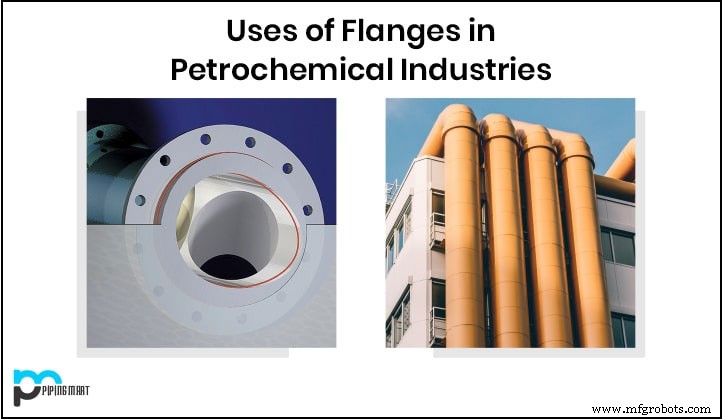
Overview
A flange is a standardized joint that connects pipe sections, valves, pumps, and other equipment, allowing for reliable, leak‑tight seals and easy maintenance. Flanges are typically welded or bolted together with a gasket, and they come in a variety of materials—including stainless steel, carbon steel, copper, and alloy—chosen to match the operating environment.
In petrochemical facilities, the demand for high‑integrity pipe fittings has surged as production lines expand and safety regulations tighten. Flanges must withstand corrosive fluids, extreme temperatures, and high pressures, making material selection and design critical.
Flanges form the backbone of the global chemical distribution network, commonly referred to as “flow piping.” These systems transport everything from steam and water to hydrocarbons and specialty chemicals. The integrity of each joint determines overall safety, making robust flange selection essential.
Common Flange Types in Petrochemical Operations
- Weld‑Neck Flanges – Featuring a tapered neck, these flanges provide excellent strength and are ideal for high‑pressure, high‑temperature service (ASME B16.5).
- Slip‑On Flanges – The pipe is slipped over the flange face and welded in place. Slip‑ons are cost‑effective and easier to install than weld‑neck flanges, making them popular in moderate‑pressure applications.
- Lap‑Joint Flanges – These flanges are not welded; instead, they are clamped over a lap‑joint stub. The joint relies on the pressure of the flange and gasket for a seal, suitable for rapid installation or temporary connections.
- Threaded Flanges – Designed for high‑wall thickness pipe, threaded flanges provide a mechanical connection without welding, often used in deep‑well or offshore settings.
- Blind Flanges – A solid plate without a bore, used to close off the end of a pipe or to create a pressure‑vessel flange. Blind flanges are common in safety‑critical sections.
Key Applications of Flanges in Petrochemical Facilities
Petrochemical plants rely on flanges for:
- Connecting high‑pressure pipelines that transport crude oil, natural gas, and refined products.
- Securing valves, pumps, and heat exchangers in process lines.
- Facilitating maintenance through quick‑disassembly and re‑assembly.
- Providing a secure interface for instrumentation and monitoring devices.
Material choice is pivotal. Duplex stainless steel and carbon steel are the most common alloys, selected for their corrosion resistance, mechanical strength, and cost efficiency. Industry standards such as API 594, ASME B16.5, and ISO 5208 guide the selection, dimensioning, and testing of flanges to ensure reliability.
High‑quality flanges reduce downtime, lower maintenance costs, and enhance safety, aligning with the stringent safety regulations that govern the petrochemical sector.
Metal
- 10 Key Applications of Indium in Modern Industry
- Iridium: Key Uses, Properties, and Industrial Applications
- Top 10 Industrial Applications of Niobium: From Steel to Superconductors
- Key Applications of Hafnium: From Nuclear Control Rods to Advanced Alloys
- Niobium: Applications in Industry, Jewelry, Gravimetry, and Orthopedic Implants
- Aluminum Bronze: Applications, Properties, and Advantages
- Pneumatic Actuators Explained: Types, Applications, and Key Uses
- Understanding Containerization: Efficient Global Shipping & Logistics
- Understanding the Come‑Along: A Compact Hand‑Operated Winch
- Lye Explained: Uses, Hazards, and Safe Handling