



Iridium: Key Uses, Properties, and Industrial Applications
Iridium: Key Uses, Properties, and Industrial Applications
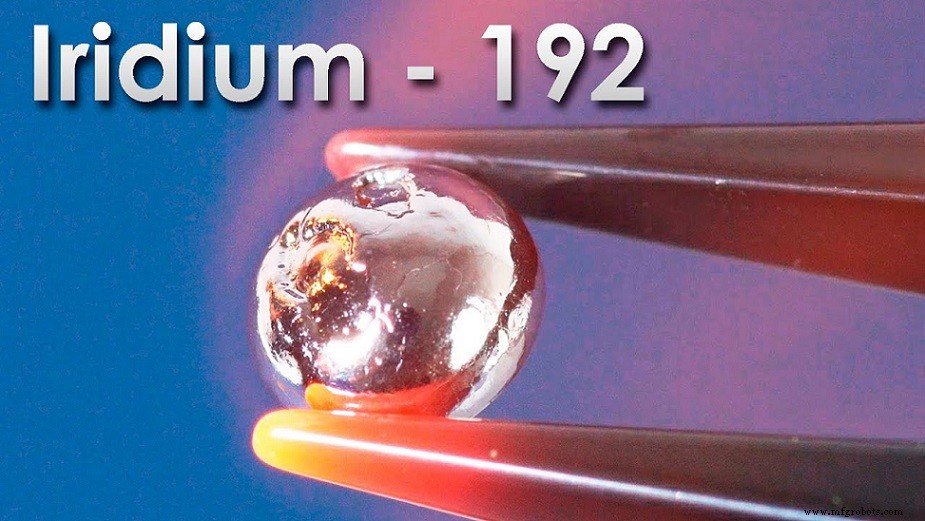
Iridium is a rare transition metal in Group VIII of the periodic table, with symbol Ir, atomic number 77, and atomic weight 192.2. It occurs in the earth’s crust at roughly one part in ten million, typically alongside other platinum‑group elements in alluvial ores.

Iridium Uses & Properties
Industrial Applications
Iridium’s extraordinary melting point (2,446 °C), hardness, and corrosion resistance make it indispensable for high‑temperature, high‑wear components. In its pure form or as part of iridium‑platinum or osmium‑iridium alloys, it is used to fabricate porous spinnerets for polymer extrusion (e.g., rayon), compass bearings, and weight‑scale components. It also serves as a durable alloy additive in aerospace and marine engineering; iridium‑titanium alloys line underwater pipelines, and iridium‑containing alloys are employed in long‑term aircraft engine parts. Pure platinum has a Vickers hardness of 56 HV, whereas 50 % iridium alloys can exceed 500 HV. In high‑temperature instruments, iridium alloys resist arc erosion, making them ideal for spark‑plug contacts, and iridium catalysts are used in the Cativa process to convert methanol into acetic acid.
Medical Applications
The radioisotope Ir‑192 is a pivotal gamma‑ray source for non‑destructive testing and brachytherapy. In brachytherapy, a sealed Ir‑192 source is positioned adjacent to or within tumorous tissue to deliver localized radiation, effectively treating prostate, cholangiocarcinoma, and cervical cancers.
Scientific Uses
The International Prototype Meter, established in 1889, is an alloy of 90 % platinum and 10 % iridium and is maintained by the International Bureau of Weights and Measures near Paris. Spacecraft such as Voyager, Viking, Pioneer, Cassini‑Huygens, Galileo, and New Horizons have employed iridium‑sealed radioisotope thermoelectric generators; iridium’s high‑temperature strength allows it to encapsulate plutonium‑238 in environments up to 2,000 °C. The Chandra X‑ray Observatory’s mirrors feature a 60‑nm iridium coating, chosen after extensive testing that confirmed iridium’s superior X‑ray reflectivity compared to nickel, gold, and platinum.

Iridium Uses in X‑ray Telescopes
Fundamental Properties
Iridium appears as a lustrous white metal with a slight yellow tint. It is hard, brittle, and has an extremely high melting point of 2,446 °C, making traditional casting impractical; powder metallurgy is the preferred fabrication method. Iridium retains excellent mechanical properties above 1,600 °C, and its boiling point places it tenth among all elements. It is the second‑densest metal (0.12 % less dense than osmium). Its chemical resistance is unmatched—at elevated temperatures it resists acids, aqua regia, molten metals, and silicates.
Conclusion
We hope this overview of iridium’s uses and properties has deepened your understanding of this remarkable metal. For further insights into iridium and other refractory metals, visit Advanced Refractory Metals (ARM). ARM, headquartered in Lake Forest, California, is a global leader in the manufacture and supply of high‑quality refractory metals such as tungsten, molybdenum, tantalum, rhenium, titanium, and zirconium.
Metal
- Tungsten Flux: Key Properties & Industrial Applications
- Properties and Applications of Tungsten Alloy Counterweights
- Tungsten Diselenide (WSe₂): Structure, Properties, and Key Applications
- Tungsten Alloy Balls: Properties, Production, and Key Applications
- Tungsten Carbide: Properties, Applications, and Industrial Impact
- 10 Key Applications of Indium in Modern Industry
- Top 10 Industrial Applications of Niobium: From Steel to Superconductors
- Flanges in Petrochemical Industries: Types, Applications, and Best Practices
- Chromium: Essential Trace Element, Properties, and Practical Applications
- Aluminium: Key Properties & Common Uses Explained