



ASME/API 526 Safety & Pressure Relief Valves: Types, Functions & Applications
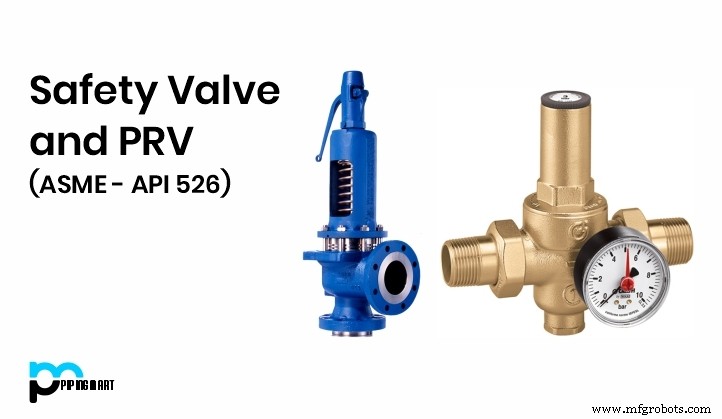
Safety Valves
Safety valves are critical protection devices that automatically relieve excess pressure in gas or liquid systems. When the system pressure rises above the set threshold, the valve opens to vent fluid, safeguarding personnel, equipment, and the environment from potential explosions or catastrophic failures. Once the pressure drops below the set point, the valve reseals and the system resumes normal operation.
Designed without external actuators, safety valves are the last line of defense when other protective devices have failed. They are widely used in gas storage tanks, pressure vessels, boilers, and piping networks, and are governed by industry standards such as ASME Boiler & Pressure Vessel Code Section VIII and API 526.
Common Safety Valve Types
- Spring‑Loaded Safety Valve – Uses a spring to counterbalance inlet pressure. Ideal for systems without significant back‑pressure.
- Balanced Bellows Safety Valve – Features a bellows that reduces the effect of back‑pressure, suitable for high‑back‑pressure environments.
- Pilot‑Operated Safety Valve – Incorporates a pilot pressure chamber; the valve opens only when inlet pressure exceeds the set point, offering precise control.
Pressure Relief Valves (PRVs)
A Pressure Relief Valve protects pressurized vessels from over‑pressure conditions that exceed the maximum allowable working pressure (MAWP). By venting excess fluid, a PRV preserves life, assets, and environmental integrity. PRVs are essential in scenarios where power loss or control failure could otherwise lead to uncontrolled pressure buildup.
PRVs can be integrated into pneumatic, electronic, or hydraulic systems and may operate independently of external power, ensuring reliability during outages.
Key PRV Configurations
- Pilot‑Operated PRV – Combines a primary relief element with a self‑actuating pilot valve for rapid response.
- Power‑Actuated PRV – Requires an external energy source (electric or pneumatic) to drive the relief mechanism.
- Temperature‑Actuated PRV – Triggers based on temperature or pressure changes at the inlet, useful in processes where temperature correlates with pressure.
Metal
- Ensuring Safety: Precise Pressure Valve Testing with Crystal XP2i
- ASME Releases Updated 2010 Boiler & Pressure Vessel Code – Enhancing Safety & Compliance
- Ensuring Drive and Machine Safety: Engineering Controls & Protective Measures
- Pressure Relief vs Pressure Safety Valves: Key Differences Explained
- PV Valve vs PV Breaker in Tankers: Key Differences & Functions
- Pneumatic Safety Components: Key Applications and Compliance Guidance
- Key Safety Devices & Considerations for Manufacturing Systems
- Enhance Safety & Efficiency in Gas Distribution Systems
- Understanding Overflow Valves: Purpose, Function, and Safety Benefits
- Pressure Relief Valve Explained: How It Safeguards Industrial Systems