



Three Essential Types of Control Valves in Hydraulic Systems
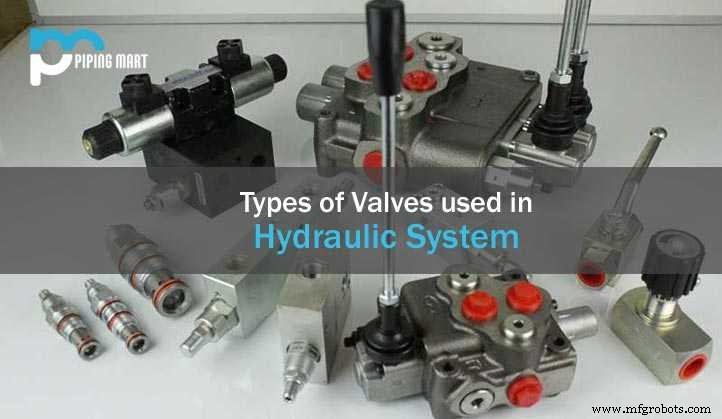
Hydraulic power systems are ubiquitous in automotive, aerospace, and industrial equipment, delivering a superior power‑to‑weight ratio and rapid, reversible operation. Their longevity and stability make them a trusted choice for demanding applications. Understanding the valve components that govern these systems is crucial for any engineer or technician designing, maintaining, or troubleshooting hydraulic machinery.
A hydraulic valve is a precision device that regulates the flow of fluid—typically oil—through a system. Constructed from high‑strength steel or cast iron, these valves can withstand pressures exceeding 3,000 psi, ensuring reliability under extreme conditions. Actuation methods vary: manual (lever, knob, or cam), electromechanical (solenoid), or pilot‑controlled. Valves are broadly classified into continuous‑flow and on/off types, each serving specific operational roles.
Directional Control Valves
Directional control valves determine the path of fluid flow, enabling the system to start, stop, or reverse motion. Common variants include two‑way, three‑way, four‑way, and five‑way valves, each suited to particular actuator configurations:
- Two‑way directional valves have an inlet and outlet port, similar to a household faucet, allowing fluid to flow or be shut off.
- Three‑way valves add an exhaust port, enabling single‑acting cylinder operation by diverting fluid to the atmosphere.
- Four‑way valves control double‑acting cylinders, directing fluid to either side of the piston.
- Five‑way valves provide a return path and are typically used in systems that require pressure relief or secondary functions.
Supporting devices such as test valves, prefill valves, and non‑return valves ensure proper system priming, prevent backflow, and maintain fluid integrity.
Pressure‑Control Valves
Pressure‑control valves protect hydraulic circuits from over‑pressure, thereby preventing leaks and catastrophic failures. They maintain a set pressure limit by redirecting excess fluid back to the reservoir. Key types include:
- Pressure relief valves – automatically release pressure when a predetermined threshold is exceeded.
- Series valves – allow flow to pass only when upstream pressure surpasses downstream pressure, useful for balancing systems.
- Counterbalance valves – provide a proportional response to load changes, ideal for precise load‑holding applications.
- Pressure‑reducing valves – lower high‑pressure fluid to a safer, operating level.
Standards such as ISO 4412 define performance criteria for these valves, ensuring consistency across manufacturers.
Flow‑Control Valves
Flow‑control valves regulate the velocity of fluid, directly influencing system efficiency and response time. By adjusting flow rates, they help maintain stable pressures and protect downstream components. Typical examples are:
- Throttle valves – provide a continuous range of flow speeds.
- Speed‑control valves – set a fixed flow rate to achieve a desired piston velocity.
- Manifold‑mounted flow valves – control flow within complex piping networks.
- Flow dividers – split a single inlet into multiple outlets, balancing load across several actuators.
By selecting the appropriate flow‑control device, engineers can fine‑tune hydraulic performance, reduce energy consumption, and extend component life.
Metal
- Pinch Valves & Peristaltic Pumps: The Gold Standard for Abrasive Lime Slurry Systems
- Comprehensive Guide to the Seven Key Types of Water Valves
- How Control Valves Operate: A Technical Overview
- Proportional Solenoid Valves: Precision Control in Modern Manufacturing
- Essential Air Control Valve Maintenance for Optimal System Performance
- Advanced Pneumatic Valves Drive Smarter Automation
- Optimal Welding Techniques for Hydraulic Systems
- Understanding Hydraulic Control Systems: Principles, Functions, and Applications
- Understanding Hydraulic Flow-Control Valves: Function, Types, and Applications
- 16 Key Hydraulic Machines Revolutionizing Construction Projects