



Why Low‑Carbon Steel Resists Heat‑Treating: Understanding Its Work‑Hardening Limits
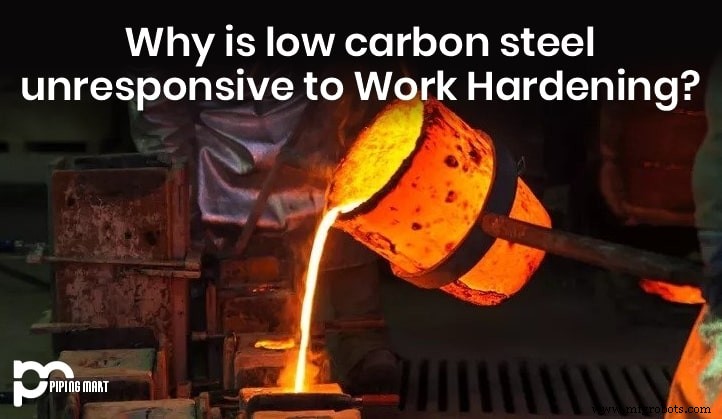
Low‑carbon steel, defined by less than 0.25 % carbon, is the workhorse of the steel industry. Because it contains so little carbon, it cannot be hardened by the typical heat‑treating route that produces a martensitic microstructure. Instead, it relies on cold work (strain hardening) to reach its required strength. This makes low‑carbon steel exceptionally ductile, easy to machine, weld, and shape, yet it remains limited in maximum hardness.
High‑strength low‑alloy (HSLA) steels, a sub‑category of low‑carbon steels, are engineered with trace additions of elements such as copper, nickel, vanadium, and molybdenum. These alloys can reach up to 10 % of the steel’s total composition and provide enhanced strength through heat treatment while preserving good ductility. However, HSLA steels are more susceptible to corrosion than plain low‑carbon grades.
When annealed, low‑carbon steel’s microstructure is primarily ferrite with a small amount of pearlite. This yields low strength but excellent plasticity and toughness. Cold forming techniques—crimping, twisting, pressing—capitalize on this formability to shape products such as steel edges, channels, I‑beams, sheets, strips, and plates used in construction, machinery, and automotive components.
Why Heat Treating Low‑Carbon Steel Is Problematic
Heat treatment of low‑carbon steel is ineffective because the carbon content is too low to stabilize the martensite phase required for hardening. Typical hardening involves heating the steel to 850–900 °C followed by rapid quenching. To achieve a martensitic transformation, quench rates above 35,000 °C per second would be necessary—far beyond practical industrial capability.
While steels with more than 0.3 % carbon can be significantly hardened through quenching and tempering, those with less than 0.3 % carbon—i.e., low‑carbon steels—do not respond to this process. Consequently, manufacturers rely on cold work to strengthen these materials, accepting that the maximum hardness attainable remains modest compared to high‑carbon or alloy steels.
In practice, low‑carbon steel is used in rolled forms (edges, channels, I‑beams, sheets, strips, plates) and is further shaped into thin sheets for deep‑drawn automotive parts or bars for low‑strength mechanical components. Its combination of weldability, machinability, and cost makes it indispensable, even though it cannot be hardened by heat treatment.
Metal
- Carbon Steel vs Stainless Steel: Choosing the Right Material for Your Project
- Forging Carbon Steel: How Heat and Pressure Transform Strength and Toughness
- Why Welding Carbon Steel to Stainless Steel Wire Can Compromise Performance
- Carbon Steel vs Stainless Steel: Key Differences & Choosing the Right Material
- Optimizing Steel Quality: The Critical Role of Deoxidation
- ULCOS: Revolutionizing Steel Production with Ultra Low CO2 Emissions
- Carbon Steel vs Stainless Steel: Choosing the Right Alloy for Your Project
- Is Carbon Steel Better Than Mild Steel? Clarifying the Differences
- ASTM A595 Grade A Carbon Steel – Premium Low‑Carbon Alloy
- Discover the Advantages of Partnering with a Custom Structural Steel Fabricator