



Understanding Tool Steel Grades: Types, Properties, and Applications
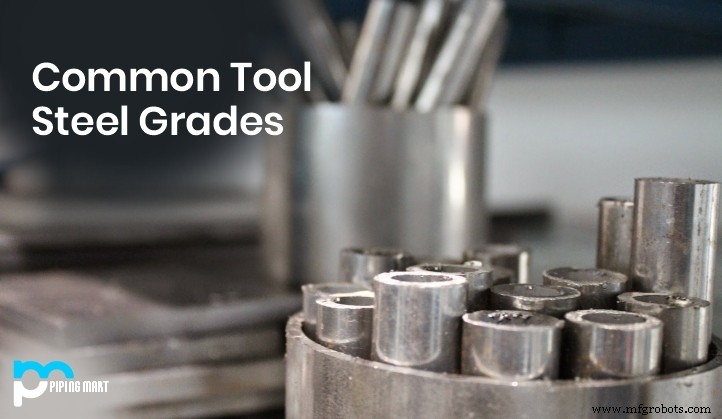
Tool steels form the backbone of precision manufacturing and repair for both machine and hand tools. Their exceptional hardness, high abrasion resistance, and ability to retain cutting edges at elevated temperatures make them indispensable in demanding machining environments.
By alloying carbon with elements such as chromium, tungsten, and molybdenum, manufacturers tailor tool steels to meet specific performance criteria. The resulting grades are categorized by their heat‑treatment processes and intended service conditions.
Five Principal Tool Steel Families
Tool steels are grouped into five primary families, each offering distinct mechanical properties, temperature tolerances, and cost profiles:
- Water‑hardening (W‑Grades)
- Cold‑working (A‑, D‑, and O‑Grades)
- Shock‑resisting (S‑Grades)
- High‑speed (HSS)
- Hot‑working (H‑Grades)
1. Water‑Hardening (W‑Grades)
W‑Grades are low‑cost, high‑hardness carbon steels that are quenched in water. While they achieve superior surface hardness, the rapid cooling often introduces cracking and warping, limiting their use in high‑temperature operations.
Typical applications include:
- Cutters and knives
- Cutlery
- Embossing tools
- Drills, razor blades, and lathe tools
2. Cold‑Working Steels
Cold‑working steels are designed for operations that involve minimal heat generation. They are subdivided into three sub‑categories:
2.1 Air‑Hardening (A‑Grades)
A‑Grades contain higher chromium content, which improves response to heat treatment and enhances wear resistance and toughness. They are ideal for:
- Bending, blanking, coining, embossing, and lamination dies
- Cams, chipper knives, lathe centers
- Plastic injection molds and cold extrusion punches
2.2 D‑Grades (Cold‑Working)
D‑Grades combine the carbon richness of W‑Grades with the alloying benefits of A‑Grades. Despite their “stainless” label, corrosion resistance is limited.
Applications include:
- Burnishing tools, lamination dies, cutters
- Cold extrusion dies, lathe centers, woodworking knives
- Drawing punches, seaming and forming rolls
2.3 Oil‑Hardening (O‑Grades)
O‑Grades deliver high abrasion resistance and strength, making them versatile for a broad range of tools.
Common uses are:
- Bushings, gauges, punch chasers, thread‑cutting tools
- Collets, master engraving rolls
- Similar applications to A‑ and D‑Grades
3. Shock‑Resisting (S‑Grades)
S‑Grades are low‑carbon tool steels with exceptional toughness, enabling them to withstand high and low‑temperature shocks. However, their abrasion resistance is comparatively lower.
They are typically employed in:
- Jackhammer parts, blacksmith chisels, cold and hot‑working chisels
- Hot‑forming dies, hot stamps, cold gripper dies
- Chipper knives, clutch components, pneumatic tools
4. High‑Speed Tool Steel (HSS)
High‑speed steels maintain hardness even under the intense heat generated by cutting operations. This makes them the preferred choice for high‑temperature machining.
Typical applications:
- Power‑saw blades, drill bits, milling and gear cutters
- Router bits, and other high‑speed cutting tools
5. Hot‑Working (H‑Grades)
H‑Grades are formulated to operate at extremely high temperatures while preserving strength and durability. Their low carbon content, combined with high alloying elements, ensures stable performance over prolonged periods.
Common uses include:
- Casings, hot forging, dummy blocks for hot extrusion
- Plastic injection molds, hot‑working punches
Choosing the Right Tool Steel
When selecting a tool steel, consider the following critical factors:
- Surface hardness and wear resistance
- Operating temperature range
- Durability and shock tolerance
- Cost and material availability
- Specific machining requirements (edge geometry, heat treatment)
With this framework, you can confidently match a tool steel grade to your project's performance demands.
Metal
- Hot Rolled Steel Grades & Applications – A Comprehensive Guide
- The Role of Nitrogen in Steel Performance
- Tool Steel: The Ultimate Durable Alloy for Precision Cutting
- Stainless Steel Grades: Types, Properties & Common Uses
- Choosing the Right Tool Steel Grades for Optimal Performance
- Optimizing Punch and Die Performance with Premium Tool Steel Grades
- Understanding Tool Steel Grades: Properties and Applications
- Tool Steel Explained: Key Properties & Applications in Construction & Manufacturing
- Key Factors for Selecting the Right Tool Steel Grade
- Tool Steel: Types, Properties, and Key Industrial Applications