



Visualizing Oceanic Dissolved Carbon at the Atomic Scale
Dissolved Ocean Carbon (DOC) is the planet’s largest reduced carbon reservoir, roughly 200 times the mass of the living biosphere and comparable to the atmospheric CO₂ pool. Yet, only about 10 % of DOC has been chemically characterized, leaving a critical knowledge gap for predicting how this vast store will respond to rising temperatures and other climate‑change stresses.
In a collaboration between IBM Research – Zurich and leading chemical oceanographers from the University of Zurich, UC Irvine and UC Santa Cruz, researchers have, for the first time, imaged the individual molecules that compose DOC. The results, now published in the peer‑reviewed journal Geophysical Research Letters, open a new window into the ocean carbon cycle.
Unraveling the Mystery of Ancient Ocean Carbon
While DOC is largely derived from surface phytoplankton, radiocarbon dating shows that its mean age is about 2,400 years older than expected, implying that a fraction of this carbon survives multiple deep‑water mixing cycles. One leading hypothesis attributes this longevity to the chemical structure of DOC, a hypothesis that could not be tested until now.
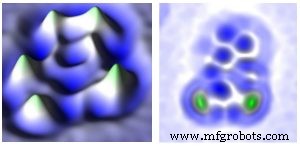
On left: AFM image of 5,6,8‑trimethyl‑2,3‑dihydro‑1H‑cyclopenta[b]naphthalene, a deep‑ocean molecule. On right: AFM image of a molecule from the deep North Pacific Ocean.
Cross‑Disciplinary Collaboration Breaks New Ground
Combining advanced analytical chemistry with marine science, the team employed atomic force microscopy (AFM) to capture individual DOC molecules at atomic resolution—a technique pioneered by IBM scientists in 2009. The AFM images reveal the precise structural details that determine how DOC behaves in the ocean.
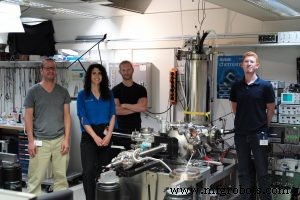
From left to right: Leo Gross (IBM Research – Zurich); Alysha Inez Coppola (University of Zurich); Fabian Schulz (IBM Research – Zurich); Shadi Fatayer (IBM Research – Zurich).
Samples from both the surface and 2,500 m depth in the North Pacific were examined. The analysis shows that deep‑water molecules are more planar and contain fewer aliphatic groups than surface molecules, supporting the idea that structural recalcitrance underpins the ancient age of deep DOC.
Why DOC Matters
DOC represents a carbon store comparable to the atmosphere. Understanding its structural resilience is essential for predicting how the ocean carbon cycle will shift in a warming world, especially as pollution continues to burden marine ecosystems. The ability to visualize individual molecules offers a powerful tool for assessing ocean health and guiding climate policy.
Direct visualization of individual aromatic compound structures in low molecular weight marine dissolved organic carbon, DOI: 10.1029/2018GL077457
Nanomaterials
- Carbon Nanotubes Deliver Record Flexibility and Speed in Electronics
- Why Carbon Fiber Is Transforming Aerospace: Strength, Weight, and Performance Benefits
- Carbon Fiber Prosthetics: How High‑Performance Materials Transform Limb Replacement
- Comprehensive Atomic & Electronic Analysis of Stacked-Cup Carbon Nanofibers
- Optimizing Buffer Layers via Atomic Layer Deposition for High‑Performance Vertically Aligned Carbon Nanotube Arrays
- Recycled Carbon Fiber: Current Landscape & Future Outlook
- Holiday Gift Ideas: The Best Carbon Fiber Gadgets
- Revolutionizing Computing: The Rise of Atomic-Scale Semiconductor Chips
- Carbon Fiber: The Ultimate Strength‑to‑Weight Advantage
- How Carbon Shapes Steel: Enhancing Strength and Versatility